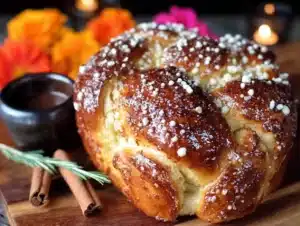
Love this? Save it for later!
Share the inspiration with your friends
The craving hit me out of nowhere. Not for a snack, not for something sweet, but for Pan de Muerto—that soft, pillowy Mexican bread traditionally made for Día de Muertos. The thing is, I didn’t have any of the “right” reasons to make it. No altar to build, no November 1st on the calendar, no family gathering to impress. I just had a restless energy and a kitchen that felt too quiet. I didn’t have the traditional anise seed my grandmother’s recipe calls for, but I had a bottle of orange blossom water I’d impulse-bought months ago and never opened. And I had this wild idea that maybe, just maybe, this bread could be more than a holiday tradition. Maybe it could be a Tuesday-night comfort ritual.
So I pulled out my mixer at damn-near midnight, hoping my neighbors wouldn’t complain about the hum. I measured flour with sleepy eyes and realized I was out of bread flour—all-purpose would have to do. Honestly, that little constraint made the whole thing better. The dough came together softer, more forgiving. And when I brushed that orange blossom glaze over the warm loaves at 1 AM, the whole apartment smelled like a garden in bloom. I stood there, leaning against the counter, eating a piece still warm from the oven, and I knew this was going to be one of those recipes I’d keep coming back to. Not because it was perfect, but because it felt like mine.
Why You’ll Love This Cozy Pan de Muerto with Orange Blossom Glaze
Let me tell you, this isn’t just another bread recipe. This is the kind of bake that makes you feel like you’ve got your life together, even when you’re making it at midnight in your pajamas. I’ve tested this version at least six times—twice for friends who didn’t even know what Pan de Muerto was, once for a neighbor who swore she couldn’t bake, and three times just for myself on cold, quiet evenings. Every single time, it worked. That’s the kind of reliability you want in a recipe.
- Quick & Easy: Despite looking like something from a fancy bakery, this comes together in under 3 hours total. Most of that is rising time where you can binge-watch something or, you know, finally fold that laundry.
- Simple Ingredients: You probably have 90% of these in your pantry right now. No weird specialty flours or hard-to-find extracts—except maybe the orange blossom water, but trust me, it’s worth the $8 investment.
- Perfect for Cozy Evenings: This bread was made for cold weather, rainy afternoons, or those nights when you just need something warm and sweet to hold onto. It’s comfort in carbohydrate form.
- Crowd-Pleaser: I’ve served this to kids who usually only eat chicken nuggets and to my aunt who “doesn’t do sweets.” Both asked for seconds. It’s that good.
- Unbelievably Delicious: The texture is like a dream—soft, slightly springy, with a tender crumb that practically melts. And that glaze? It’s floral without being perfumey, sweet without being cloying.
What makes this recipe different from the dozens of others out there? It’s the orange blossom glaze. Most traditional versions use a simple sugar glaze or just a dusting of sugar. But I found that brushing the warm bread with this fragrant, citrusy syrup transforms it into something absolutely next-level. It seeps into the crust, keeping it soft and giving every bite this subtle floral note that pairs perfectly with the orange zest in the dough. It’s comfort food reimagined—faster, more aromatic, but with the same soul-soothing satisfaction that makes you close your eyes after the first bite.
What Ingredients You Will Need
This recipe uses simple, wholesome ingredients to deliver bold flavor and satisfying texture without the fuss. Most of these are pantry staples, which means you can whip this up on a whim—even at 11 PM on a Wednesday.
For the Dough
- All-purpose flour, 3 ½ cups (440g) — I prefer Gold Medal or King Arthur for consistent results. Bread flour works too, but all-purpose gives a softer, more tender crumb that I personally love for this bread.
- Granulated sugar, ½ cup (100g) — Regular white sugar is fine. Don’t use brown sugar here; it’ll change the color and flavor too much.
- Active dry yeast, 2 ¼ teaspoons (1 packet, 7g) — I use Fleischmann’s or Red Star. Make sure your yeast is fresh; expired yeast is the #1 reason bread fails.
- Warm milk, ½ cup (120ml), heated to 105-110°F — Whole milk works best for richness, but 2% is fine. If you’re dairy-free, unsweetened oat milk is a solid substitute.
- Warm water, ¼ cup (60ml) — Just tap water, warmed up. Nothing fancy.
- Unsalted butter, 6 tablespoons (85g), softened — Salted butter works if that’s all you have; just reduce the added salt by ¼ teaspoon.
- Large eggs, 3, room temperature — This is crucial. Cold eggs will shock your dough and make it harder to rise. Set them out 30 minutes before starting, or place them in a bowl of warm water for 5 minutes.
- Orange zest, 2 tablespoons (from about 2 oranges) — Use a microplane for the best texture. Avoid the white pith—it’s bitter.
- Orange blossom water, 1 tablespoon — Look for it in the international aisle or a Middle Eastern grocery store. Nielsen-Massey makes a good one. A little goes a long way.
- Salt, ½ teaspoon — Fine sea salt or table salt. Don’t skip it; salt controls yeast activity and strengthens the gluten structure.
- Vanilla extract, 1 teaspoon — Pure vanilla extract, not imitation. It adds warmth and depth.
For the Orange Blossom Glaze
- Powdered sugar, 1 cup (120g) — Sift it if it’s lumpy. Nobody wants lumpy glaze.
- Orange blossom water, 2 tablespoons — This is the star of the show. Don’t substitute with regular water unless you absolutely have to.
- Fresh orange juice, 1 tablespoon — Squeeze it from the oranges you zested. Fresh makes a difference.
- Pinch of salt — Just a tiny one. It balances the sweetness.
For Topping (Optional but Traditional)
- Granulated sugar, ¼ cup (50g), for sprinkling — Coarse sugar or turbinado sugar adds a nice crunch if you have it.
- Orange zest, 1 teaspoon, for garnish — Because we’re fancy like that.
Equipment Needed
You don’t need a professional bakery setup for this. Here’s what I used in my tiny apartment kitchen, and it worked perfectly.
- Stand mixer with dough hook attachment — Honestly, you could knead by hand, but the mixer saves your arms. I use a KitchenAid Artisan and it handles this dough beautifully. If you’re kneading by hand, budget an extra 10 minutes and some elbow grease.
- Large mixing bowl — Glass or stainless steel works best. Plastic can retain odors.
- Baking sheet, 13×18 inches — Line it with parchment paper for easy cleanup. I’ve used the same Nordic Ware sheet for years and it’s never let me down.
- Microplane or fine zester — For getting that orange zest without the bitter pith. A box grater works in a pinch, but microplane is worth the $12.
- Pastry brush — For applying the glaze. A silicone one is easier to clean, but a natural bristle brush works too.
- Plastic wrap or a clean kitchen towel — For covering the dough while it rises. I prefer a damp kitchen towel; it keeps the dough from drying out.
- Digital kitchen scale — Not strictly necessary, but measuring flour by weight is way more accurate. I use an OXO scale and it’s been a game-changer for my baking consistency.
- Instant-read thermometer — For checking milk temperature and water temperature. You can guess, but why risk killing your yeast?
Preparation Method
Alright, let’s make some bread. I’ll walk you through every step, including the little things I learned the hard way.
- Activate the yeast: In a small bowl, combine the warm milk (105-110°F) and warm water. Sprinkle the yeast over the top and add 1 teaspoon of the sugar. Let it sit for 5-10 minutes until it’s foamy and smells like bread. If it doesn’t foam, your yeast is dead—start over with fresh yeast. I learned this the hard way after wasting an entire batch of ingredients.
- Mix the dry ingredients: In the bowl of your stand mixer, whisk together the flour, remaining sugar, and salt. Make a well in the center.
- Combine the wet ingredients: In a separate bowl, whisk together the eggs, orange zest, orange blossom water, and vanilla extract until well combined.
- Bring it together: Pour the yeast mixture and the egg mixture into the well of dry ingredients. Mix on low speed with the dough hook until a shaggy dough forms, about 2 minutes. Scrape down the sides of the bowl as needed.
- Add the butter: With the mixer running on low, add the softened butter one tablespoon at a time. Wait until each piece is mostly incorporated before adding the next. The dough will look messy and greasy at this point—that’s normal. Don’t panic.
- Knead the dough: Increase the speed to medium-low and knead for 8-10 minutes. The dough should become smooth, elastic, and slightly tacky (but not sticky). It should pass the “windowpane test”—stretch a small piece of dough thin enough to see light through without it tearing. If it tears, knead for 2 more minutes and test again.
- First rise: Transfer the dough to a lightly greased bowl, turning once to coat. Cover tightly with plastic wrap and let it rise in a warm, draft-free place for 1-1.5 hours, or until doubled in size. I usually put mine in the oven with the light on (oven off!) and it rises perfectly. The dough should feel puffy and airy when you poke it.
- Shape the loaves: Punch down the dough gently to release the gas. Turn it out onto a lightly floured surface. Divide the dough into two equal pieces (about 500g each). Set aside a small piece (about 50g) from each half to make the bone decorations. Shape each main piece into a round ball by tucking the edges under and rotating it on the counter. Place them on your parchment-lined baking sheet, spaced at least 4 inches apart.
- Make the decorations: Divide the reserved dough into small pieces. Roll each piece into a rope about 4 inches long and ½ inch thick. Cut each rope into smaller pieces to form the “bones”—traditional Pan de Muerto has 4 strips per loaf, crossed in an X pattern on top. Also roll a small ball for the top center. Gently press the decorations onto the shaped loaves. They’ll puff up during baking and look more prominent.
- Second rise: Cover the shaped loaves loosely with plastic wrap or a clean towel. Let them rise for another 45-60 minutes, until they look puffy and have increased in size by about 50%. They should hold a slight indentation when gently poked.
- Preheat and bake: About 20 minutes before the second rise is done, preheat your oven to 350°F (175°C). Place the baking sheet on the middle rack and bake for 22-28 minutes, or until the loaves are deep golden brown and sound hollow when tapped on the bottom. Internal temperature should reach 190-200°F. My oven runs hot, so I check at 22 minutes.
- Cool and glaze: Let the loaves cool on the baking sheet for 5 minutes, then transfer to a wire rack. While still warm (but not hot), whisk together the glaze ingredients until smooth. Brush generously over the tops and sides of the loaves. The glaze will soak in and create a beautiful, glossy finish. Sprinkle with granulated sugar and extra orange zest if desired.
- Patience (the hardest part): Let the glazed loaves cool completely before slicing, about 1 hour. I know, I know—it’s torture. But the texture is so much better when it’s fully set. Trust me on this one.
Cooking Tips & Techniques
I’ve made this bread enough times to have a few battle scars—and a few tricks up my sleeve. Here’s what I’ve learned.
Temperature is everything. The first time I made this, I killed my yeast by using milk that was too hot. I was impatient and didn’t check the temperature. Dead yeast means flat, dense bread that tastes like sadness. Use a thermometer. It’s worth the extra 10 seconds.
Don’t over-flour your surface. When shaping the dough, use as little flour as possible. Too much flour makes the dough dry and tough. If it’s sticking, use a bench scraper to lift it rather than dumping on more flour. Your bread will be softer for it.
The windowpane test is your friend. I used to just knead for the time the recipe said and hope for the best. But dough is like people—it doesn’t always follow the same timeline. The windowpane test (stretching the dough thin enough to see light) tells you exactly when the gluten is developed enough. Once you learn this, your bread game changes forever.
Glaze while warm, but not hot. If the bread is too hot, the glaze will just run off and pool at the bottom. Too cold, and it won’t soak in properly. I wait about 10-15 minutes after pulling the bread from the oven. It should feel warm to the touch but not burning.
Multitask like a pro. While the dough is doing its first rise, zest your oranges, measure out your glaze ingredients, and clean up your workspace. By the time the dough is ready, you’ll have a tidy kitchen and everything at your fingertips. Future you will be grateful.
Variations & Adaptations
This recipe is wonderfully flexible. Here are a few ways I’ve adapted it for different cravings and dietary needs.
Gluten-Free Version: I tested this with a 1:1 gluten-free flour blend (Cup4Cup is my go-to) and it worked surprisingly well. The texture is a bit more crumbly, so handle the dough gently. Add an extra tablespoon of milk to compensate for the drier flour blend. The glaze stays the same.
Dairy-Free Adaptation: Swap the butter for vegan butter (I like Miyoko’s) and use unsweetened oat milk instead of whole milk. The dough will be slightly less rich, but still delicious. I made this for a friend with lactose intolerance and she couldn’t tell the difference.
Citrus Twist: Not an orange blossom fan? Substitute the orange blossom water with rose water for a more floral, Middle Eastern-inspired version. Or use lemon zest and lemon juice instead of orange for a brighter, tarter flavor. I tried a grapefruit version once and it was surprisingly good—just a little more bitter.
Chocolate Lover’s Version: Add ¼ cup of cocoa powder to the dry ingredients and reduce the flour by the same amount. The orange blossom glaze pairs beautifully with chocolate—it’s like a fancy chocolate-orange confection in bread form. My niece declared this her favorite version.
Savory Twist: Skip the sugar in the dough (reduce to 2 tablespoons) and omit the orange zest and orange blossom water. Add 1 teaspoon of dried rosemary and ½ cup of grated Parmesan cheese. Glaze with melted butter and garlic salt instead of the sweet glaze. It’s unconventional, but honestly? It makes incredible breakfast toast.
Serving & Storage Suggestions
This bread is best served warm, but it’s pretty fantastic at room temperature too. Here’s how I like to enjoy it.
Serving Temperature: Serve at room temperature or slightly warmed. If you’re reheating, pop individual slices in a 300°F oven for 5 minutes or microwave for 15 seconds. The microwave will make it softer; the oven will crisp the edges slightly.
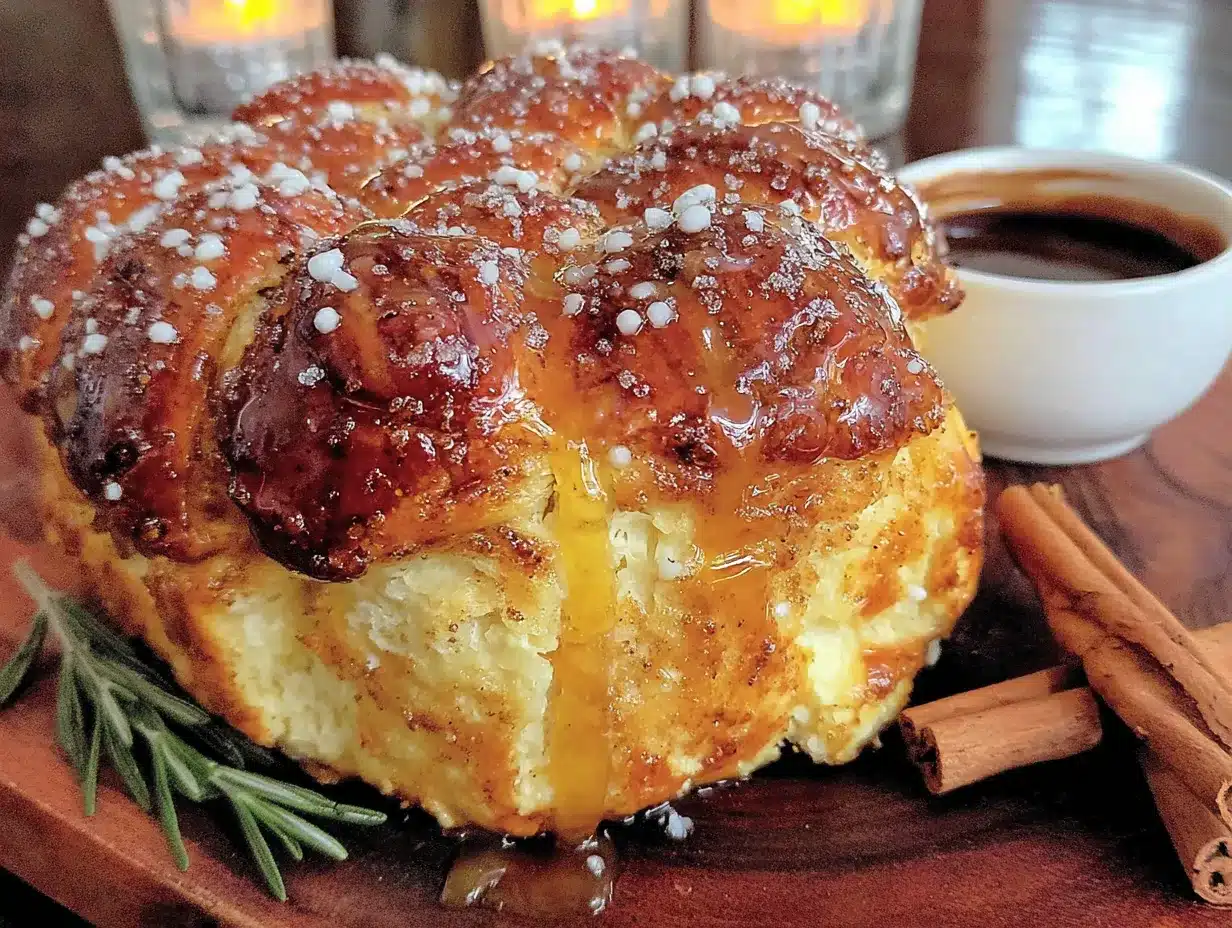
Presentation: Arrange the loaves on a wooden board or a pretty plate. Dust with extra powdered sugar and garnish with fresh orange slices or edible flowers like pansies or marigolds (in honor of the bread’s traditional roots). It makes a stunning centerpiece for a Dia de Muertos altar or a cozy fall brunch table.
Complementary Dishes: This bread pairs beautifully with a cup of Mexican hot chocolate (the kind with cinnamon and a hint of chili), a strong cup of coffee, or a warm mug of atole. For a more indulgent treat, serve with a side of whipped cream or a drizzle of chocolate sauce. I’ve also used leftover slices to make an incredible bread pudding—just cube it up, soak in custard, and bake.
Storage: Store the bread in an airtight container at room temperature for up to 3 days. Do not refrigerate—it will dry out faster. If you live in a humid climate, add a paper towel to the container to absorb excess moisture. The glaze will stay soft and slightly sticky, which is exactly how it should be.
Freezing: This bread freezes beautifully. Wrap the cooled, unglazed loaves tightly in plastic wrap, then in aluminum foil. Freeze for up to 3 months. When ready to serve, thaw at room temperature, then warm in a 300°F oven for 10 minutes. Glaze after warming. I always make a double batch and freeze one loaf for later—it’s like finding a treasure in your freezer.
Flavor Development: Honestly, this bread tastes even better the next day. The orange blossom flavor mellows and deepens overnight, and the texture becomes even more tender. If you can resist eating it all in one sitting, you’re in for a treat.
Nutritional Information & Benefits
Let’s be real—this is a treat, not a health food. But that doesn’t mean it’s without its redeeming qualities.
Estimated Nutrition per Serving (1/8 of a loaf):
| Nutrient | Amount |
|---|---|
| Calories | 285 |
| Total Fat | 9g |
| Saturated Fat | 5g |
| Carbohydrates | 46g |
| Fiber | 1g |
| Sugar | 18g |
| Protein | 6g |
Health Highlights: Oranges are packed with vitamin C and antioxidants, and the orange blossom water has been used in traditional medicine for its calming properties. The eggs provide high-quality protein, and the butter (in moderation) contains fat-soluble vitamins A, D, E, and K. Plus, there’s something to be said for the mental health benefits of baking—the process itself is meditative, and sharing baked goods with loved ones boosts mood and connection.
Dietary Considerations: This recipe contains gluten, dairy, and eggs. For gluten-free, dairy-free, or vegan adaptations, see the Variations section above. It’s not low-carb or keto-friendly, but it is nut-free and soy-free as written.
Potential Allergens: Wheat, milk, eggs. If you’re serving guests with allergies, always check your specific ingredient brands for potential cross-contamination.
My Personal Wellness Perspective: I believe in balance. This bread is a celebration—whether of a holiday, a quiet evening, or just making it through another Tuesday. It’s meant to be enjoyed without guilt. One slice with your morning coffee, shared with someone you love, is a small act of self-care. That matters.
Conclusion
This Cozy Pan de Muerto with Orange Blossom Glaze has become my go-to recipe for those moments when I need to slow down and create something beautiful. It’s not just about the bread—it’s about the ritual of measuring flour, the anticipation of the rise, the way the kitchen fills with that intoxicating orange blossom scent. It’s about taking something traditional and making it your own, whether that means baking it at midnight on a Wednesday or serving it at a family gathering.
I hope you’ll try this recipe and make it yours too. Maybe you’ll add a little more orange zest, or skip the decorations, or serve it with a drizzle of honey instead of the glaze. That’s the beauty of baking—it’s flexible, forgiving, and always rewarding. Don’t be afraid to experiment. And if something goes wrong? That’s just a story to tell later. I’ve had my share of flat loaves and burnt tops, and I’m still here, still baking, still loving every minute of it.
So go ahead. Pull out your mixer, put on some music, and make some bread. Your kitchen will smell amazing, your heart will feel full, and you’ll have something delicious to show for it. And when you take that first warm, glazed bite? You’ll understand why I keep coming back to this recipe, again and again.
Have you made this recipe? I’d love to hear about it! Drop a comment below and tell me how it turned out, what variations you tried, or just share your favorite baking memory. Don’t forget to pin this recipe for later and share it with someone who needs a little cozy baking in their life.
Frequently Asked Questions
Can I make Pan de Muerto without a stand mixer?
Absolutely! You can knead the dough by hand on a lightly floured surface. It’ll take about 12-15 minutes of steady kneading instead of the mixer’s 8-10 minutes. The key is to keep going until the dough passes the windowpane test. It’s a great arm workout, honestly.
What can I substitute for orange blossom water?
If you can’t find orange blossom water, you can use 1 teaspoon of orange extract mixed with 1 tablespoon of water as a substitute in the dough. For the glaze, use fresh orange juice instead of orange blossom water—it won’t have the same floral note, but it’ll still be delicious. Rose water is another lovely alternative if you want to keep the floral element.
Why didn’t my bread rise?
This is usually a yeast issue. Either your yeast was expired, your milk was too hot (over 115°F kills yeast), or your kitchen was too cold. Make sure your milk is between 105-110°F and let the dough rise in a warm spot—the oven with the light on, or on top of the refrigerator. If your yeast didn’t foam during activation, start over with fresh yeast.
Can I freeze the dough instead of the baked bread?
Yes! After the first rise, punch down the dough, shape it into a ball, wrap tightly in plastic wrap, and freeze for up to 1 month. When ready to bake, thaw in the refrigerator overnight, then let it come to room temperature for about 30 minutes before shaping and proceeding with the second rise. The texture might be slightly less airy, but it’s still wonderful.
How do I know when the bread is fully baked?
Look for a deep golden-brown color on top and bottom. The bread should sound hollow when you tap the bottom. For the most accurate check, use an instant-read thermometer—the internal temperature should read 190-200°F. If the top is browning too quickly but the inside isn’t done, tent the loaf with aluminum foil for the last 5-10 minutes of baking.
Pin This Recipe!

Cozy Pan de Muerto with Orange Blossom Glaze: Easy Recipe
A soft, pillowy Mexican bread traditionally made for Día de Muertos, this version features a fragrant orange blossom glaze that transforms it into a comforting treat perfect for any cozy evening.
- Prep Time: 30 minutes
- Cook Time: 25 minutes
- Total Time: 2 hours 55 minutes
- Yield: 8 servings
- Category: Bread
- Cuisine: Mexican
Ingredients
- All-purpose flour, 3 ½ cups (440g)
- Granulated sugar, ½ cup (100g)
- Active dry yeast, 2 ¼ teaspoons (1 packet, 7g)
- Warm milk, ½ cup (120ml), heated to 105-110°F
- Warm water, ¼ cup (60ml)
- Unsalted butter, 6 tablespoons (85g), softened
- Large eggs, 3, room temperature
- Orange zest, 2 tablespoons (from about 2 oranges)
- Orange blossom water, 1 tablespoon
- Salt, ½ teaspoon
- Vanilla extract, 1 teaspoon
- Powdered sugar, 1 cup (120g)
- Orange blossom water, 2 tablespoons (for glaze)
- Fresh orange juice, 1 tablespoon (for glaze)
- Pinch of salt (for glaze)
- Granulated sugar, ¼ cup (50g), for sprinkling (optional)
- Orange zest, 1 teaspoon, for garnish (optional)
Instructions
- Activate the yeast: In a small bowl, combine the warm milk (105-110°F) and warm water. Sprinkle the yeast over the top and add 1 teaspoon of the sugar. Let it sit for 5-10 minutes until it’s foamy and smells like bread.
- Mix the dry ingredients: In the bowl of your stand mixer, whisk together the flour, remaining sugar, and salt. Make a well in the center.
- Combine the wet ingredients: In a separate bowl, whisk together the eggs, orange zest, orange blossom water, and vanilla extract until well combined.
- Bring it together: Pour the yeast mixture and the egg mixture into the well of dry ingredients. Mix on low speed with the dough hook until a shaggy dough forms, about 2 minutes. Scrape down the sides of the bowl as needed.
- Add the butter: With the mixer running on low, add the softened butter one tablespoon at a time. Wait until each piece is mostly incorporated before adding the next.
- Knead the dough: Increase the speed to medium-low and knead for 8-10 minutes. The dough should become smooth, elastic, and slightly tacky. It should pass the ‘windowpane test’.
- First rise: Transfer the dough to a lightly greased bowl, turning once to coat. Cover tightly with plastic wrap and let it rise in a warm, draft-free place for 1-1.5 hours, or until doubled in size.
- Shape the loaves: Punch down the dough gently. Turn it out onto a lightly floured surface. Divide the dough into two equal pieces (about 500g each). Set aside a small piece (about 50g) from each half to make the bone decorations. Shape each main piece into a round ball. Place them on your parchment-lined baking sheet, spaced at least 4 inches apart.
- Make the decorations: Divide the reserved dough into small pieces. Roll each piece into a rope about 4 inches long and ½ inch thick. Cut each rope into smaller pieces to form the ‘bones’—traditional Pan de Muerto has 4 strips per loaf, crossed in an X pattern on top. Also roll a small ball for the top center. Gently press the decorations onto the shaped loaves.
- Second rise: Cover the shaped loaves loosely with plastic wrap or a clean towel. Let them rise for another 45-60 minutes, until they look puffy and have increased in size by about 50%.
- Preheat and bake: About 20 minutes before the second rise is done, preheat your oven to 350°F (175°C). Place the baking sheet on the middle rack and bake for 22-28 minutes, or until the loaves are deep golden brown and sound hollow when tapped on the bottom. Internal temperature should reach 190-200°F.
- Cool and glaze: Let the loaves cool on the baking sheet for 5 minutes, then transfer to a wire rack. While still warm (but not hot), whisk together the glaze ingredients until smooth. Brush generously over the tops and sides of the loaves. Sprinkle with granulated sugar and extra orange zest if desired.
- Patience: Let the glazed loaves cool completely before slicing, about 1 hour.
Notes
Temperature is everything. Use a thermometer to ensure milk is between 105-110°F. Don’t over-flour your surface when shaping. The windowpane test is your friend. Glaze while warm, but not hot. Multitask while dough rises.
Nutrition
- Serving Size: 1/8 of a loaf
- Calories: 285
- Sugar: 18
- Sodium: 150
- Fat: 9
- Saturated Fat: 5
- Carbohydrates: 46
- Fiber: 1
- Protein: 6
Keywords: Pan de Muerto, Mexican bread, orange blossom, Día de Muertos, holiday bread, easy bread recipe