Love this? Save it for later!
Share the inspiration with your friends
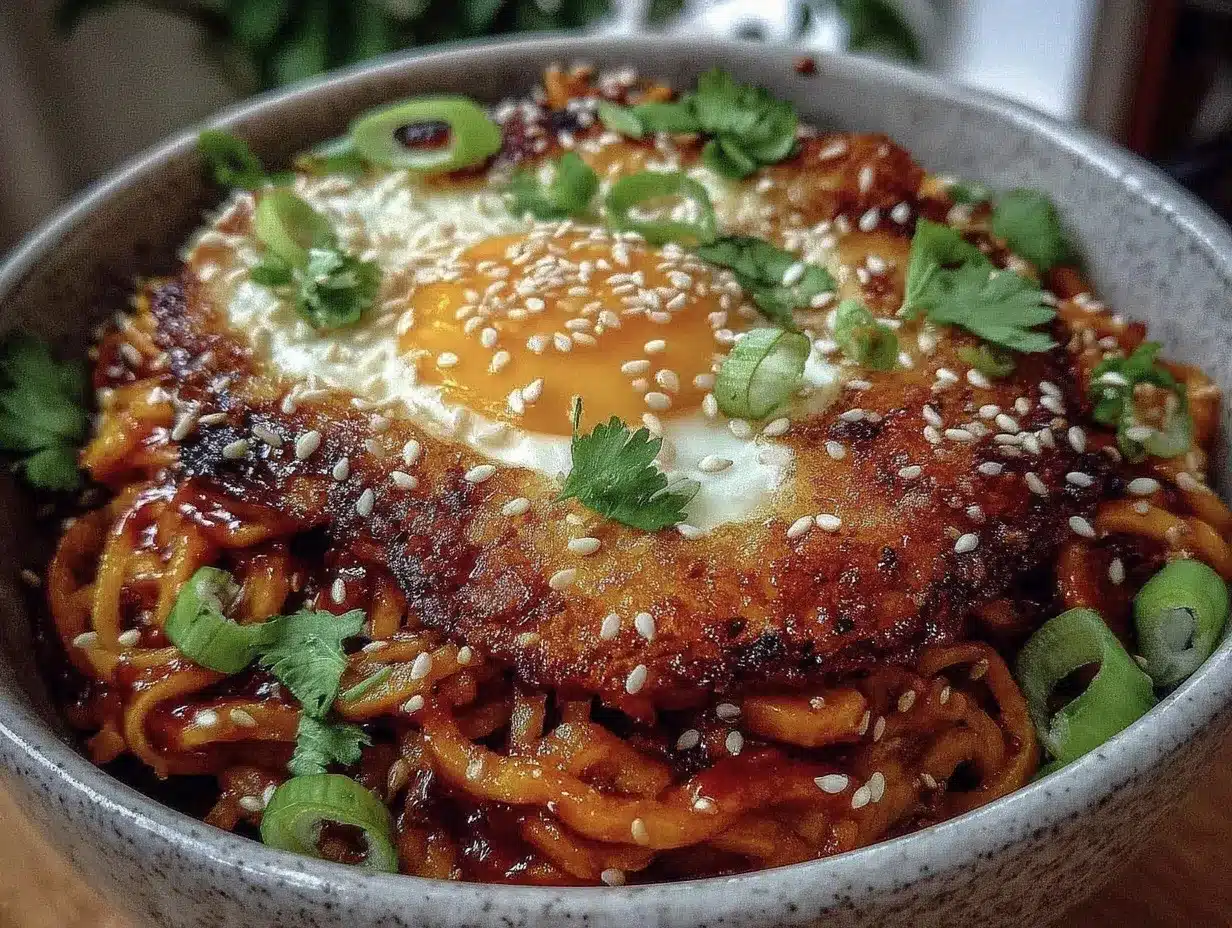
“You’ve got to taste this,” my friend Jae insisted one chilly Thursday evening as she slid a steaming bowl across the table. I wasn’t expecting much—just another quick dinner from her tiny apartment in the city. But the moment I twirled the glossy, translucent sweet potato noodles coated in a fiery red gochujang sauce, I knew this was different. The layers of smoky, sweet, and spicy flavors hit my tongue like a surprise party, and then there was that golden sesame fried egg nestled on top, its yolk begging to be broken and mixed in.
Honestly, I was a little skeptical at first. Sweet potato noodles? Gochujang? I mean, I’d heard of these ingredients, sure—but putting them together in a roasted, saucy bowl felt like a gamble. Plus, Jae was juggling fixing a leaky faucet earlier that day, so this meal was whipped up in between wrench turns and dripping pipes. Somehow, that made the whole experience even better (and yes, there was a tiny mess involving a spilled bottle of sesame oil—classic kitchen chaos!).
Maybe you’ve been there—caught between craving something comforting yet fresh, bold but easy to make. That’s exactly why this Flavorful Korean Gochujang Roasted Sweet Potato Noodle Bowl with Sesame Fried Egg has become my go-to. It’s not just a recipe; it’s a little story of friendship, quick fixes, and unexpected magic on a plate. If you like dishes that bring a punch of umami with a cozy vibe, you’re about to find a new favorite.
Why You’ll Love This Recipe
This Korean gochujang roasted sweet potato noodle bowl is honestly one of those dishes that feels fancy but comes together effortlessly. I’ve tested it multiple times, tweaking the balance between spicy and sweet until it hits just right. Here’s why this bowl stands out:
- Quick & Easy: Ready in under 30 minutes, perfect for busy nights or when you want a satisfying meal fast.
- Simple Ingredients: No need for obscure items—everything can be found at your local grocery or Asian market.
- Perfect for Weeknight Dinners: It’s hearty without being heavy, so you won’t feel weighed down.
- Crowd-Pleaser: My family, friends, and even picky eaters have all come back for seconds.
- Unbelievably Delicious: The sweet roasted potatoes paired with the spicy, tangy gochujang sauce create a flavor combo that’s hard to forget.
What sets this recipe apart is the way the sweet potatoes roast to caramelized perfection, adding a natural sweetness that balances the boldness of the gochujang. And that sesame fried egg? It’s the final touch that brings creaminess and a bit of crunch from the sesame seeds. I mean, it’s like a hug in a bowl—but with a kick.
Whether you’re cooking for yourself or aiming to impress friends with minimal effort, this recipe hits the sweet spot. It’s the kind of meal that makes you close your eyes the moment you taste it and think, “Yep, I’m making this again.”
What Ingredients You Will Need
This recipe uses straightforward ingredients that create a bold, balanced flavor without any fuss. Most are pantry staples or easy to find in any grocery or Asian food store. Here’s the breakdown:
- For the Roasted Sweet Potatoes:
- 2 large sweet potatoes, peeled and diced into 1-inch cubes (look for firm, vibrant orange potatoes for the best texture)
- 2 tablespoons olive oil (or neutral oil like avocado oil)
- Salt and black pepper, to taste
- For the Gochujang Sauce:
- 3 tablespoons gochujang (Korean chili paste – I prefer Chung Jung One brand for its balanced heat)
- 1 tablespoon soy sauce (or tamari for gluten-free option)
- 1 tablespoon rice vinegar (adds a nice tang)
- 1 tablespoon honey or maple syrup (to balance the spice)
- 1 teaspoon toasted sesame oil (adds depth and nuttiness)
- 2 cloves garlic, minced (fresh is best here)
- For the Sweet Potato Noodles:
- 8 ounces sweet potato noodles (also called glass noodles or dangmyeon; check the Asian aisle)
- For the Sesame Fried Egg:
- 4 large eggs
- 1 tablespoon sesame oil (for frying)
- 1 teaspoon toasted sesame seeds (for garnish)
- Salt and pepper, to taste
- Optional Garnishes:
- Thinly sliced scallions
- Fresh cilantro or parsley
- Crushed red pepper flakes (if you want extra heat)
If you’re looking for substitutions, you can swap honey with agave for a vegan twist or use tamari instead of soy sauce if gluten is a concern. The sweet potato noodles are essential for authenticity, but glass noodles made from mung beans can work in a pinch (though texture will vary).
Equipment Needed
You don’t need anything fancy for this recipe—just some basic kitchen tools that most home cooks have. Here’s what I used:
- A large baking sheet for roasting the sweet potatoes (a rimmed sheet helps catch any drips)
- A large pot to boil the sweet potato noodles
- A large skillet or nonstick pan for frying the eggs (I like using a heavy-bottomed pan for even heat)
- Mixing bowls for the sauce and tossing the noodles
- A small whisk or fork to blend the sauce ingredients smoothly
If you don’t have a nonstick pan, a well-seasoned cast iron skillet works beautifully for the fried eggs, though be careful with the heat to avoid sticking. For roasting, a silicone mat or parchment paper can make cleanup easier, but I usually just go straight on the baking sheet (a quick scrub afterward is no big deal).
Preparation Method
- Preheat your oven to 425°F (220°C). Line a baking sheet with parchment paper or lightly oil it. Toss the diced sweet potatoes with olive oil, salt, and pepper until evenly coated. Spread them out in a single layer to ensure they roast evenly. Roast for 25-30 minutes, flipping halfway through, until tender and caramelized on the edges. You want those golden brown spots for maximum flavor.
- While the potatoes roast, prepare the gochujang sauce. In a small bowl, whisk together the gochujang, soy sauce, rice vinegar, honey, toasted sesame oil, and minced garlic. The sauce should be smooth and glossy. Taste and adjust sweetness or acidity if needed (I sometimes add a splash more vinegar if it feels too sweet).
- Cook the sweet potato noodles. Bring a large pot of water to a boil. Add the noodles and cook according to package instructions—usually 6-8 minutes. They should be tender but still slightly chewy. Drain and rinse under cold water to stop cooking and prevent sticking. Toss with a little sesame oil to keep them from clumping.
- Combine the noodles and roasted sweet potatoes. In a large bowl, mix the drained noodles with the gochujang sauce until everything is evenly coated. Gently fold in the roasted sweet potatoes, so the sauce clings to all the pieces without breaking the noodles apart.
- Fry the sesame eggs. Heat 1 tablespoon of sesame oil in a nonstick skillet over medium heat. Crack in the eggs one at a time, cooking until the whites are set but yolks remain runny (about 2-3 minutes). Season with salt and pepper. Sprinkle toasted sesame seeds on top just before serving.
- Assemble the bowls. Divide the saucy noodle and sweet potato mixture between serving bowls. Top each with a fried sesame egg. Garnish with sliced scallions, a sprinkle of sesame seeds, and fresh herbs if you like. Serve immediately for best texture and flavor.
Quick tip: If you find the noodles a bit sticky after mixing, add a splash of water or a few drops of oil and toss again. Also, keep an eye on the eggs—too much heat can crisp the edges too much, but a little crispness adds a nice texture contrast.
Cooking Tips & Techniques
Cooking this Korean gochujang roasted sweet potato noodle bowl is straightforward, but here are a few tricks I’ve picked up:
- Roast sweet potatoes evenly: Cut the cubes as uniformly as possible to avoid some pieces burning while others stay firm.
- Gochujang sauce balance: Gochujang can vary in heat and sweetness between brands. Always taste before adding more honey or vinegar to keep the sauce balanced.
- Noodles care: Rinsing the noodles under cold water after boiling stops them from overcooking and getting mushy—don’t skip this step.
- Frying the egg: Sesame oil has a lower smoke point, so medium heat is key to avoid burnt flavor. If you want a runnier yolk, cover the pan briefly to steam the top gently.
- Timing: Start roasting the potatoes first, then prep the sauce and noodles while they cook. This way, everything finishes around the same time to serve fresh and hot.
One time I got distracted by a phone call (you know how it goes), and my potatoes got a little too crispy. Honestly, that added a smoky edge I didn’t mind. So don’t stress if things aren’t perfect—the flavors here are forgiving and flexible.
Variations & Adaptations
This recipe is pretty versatile, and I’ve played around with it a few ways depending on mood and ingredients:
- Protein swap: Try shredded rotisserie chicken or tofu cubes instead of the fried egg for a different texture and added protein.
- Spice level: Add a pinch of Korean red pepper flakes (gochugaru) for extra heat or tone it down by reducing the gochujang.
- Seasonal veggies: In cooler months, roasted Brussels sprouts or carrots make a lovely addition alongside or instead of sweet potatoes.
- Gluten-free option: Use tamari instead of soy sauce and check that your gochujang is gluten-free (some brands vary).
- Vegetarian/vegan: Skip the fried egg and toss in pan-fried tempeh or roasted chickpeas for crunch and protein.
My personal favorite tweak is adding a handful of toasted crushed peanuts on top for an unexpected crunch that contrasts beautifully with the silky noodles and creamy egg.
Serving & Storage Suggestions
This gochujang roasted sweet potato noodle bowl is best enjoyed fresh and warm, right after assembly. The fried egg yolk creates a luscious sauce when mixed through the noodles, so try not to let it sit too long before eating.
Pair it with a light cucumber salad or kimchi to cut through the richness and add brightness. A chilled glass of iced green tea or sparkling water with a lemon wedge complements the flavors well.
Leftovers keep well in an airtight container in the fridge for up to 2 days. Reheat gently in a skillet over low heat, adding a splash of water or broth to loosen the sauce. The noodles can firm up a bit once refrigerated, so stirring often while warming helps maintain their texture.
Don’t refrigerate the fried egg on top; it’s better to fry fresh when serving leftovers. The flavors meld nicely overnight, so sometimes the bowl tastes even better the next day!
Nutritional Information & Benefits
This dish offers a great balance of nutrients. Sweet potatoes provide complex carbs, fiber, and beta-carotene—a powerful antioxidant. The gochujang sauce adds flavor with relatively low calories but is rich in fermented goodness that can support digestion.
Eggs contribute high-quality protein and healthy fats, while the sesame oil and seeds add heart-healthy fats and a dose of calcium and magnesium. Using sweet potato noodles instead of wheat noodles lowers the gluten content, which can be easier on sensitive stomachs.
Overall, this recipe is a wholesome, satisfying meal that hits the comfort food spot without feeling heavy or overly processed. Just be mindful of sodium levels if you’re watching salt intake, as soy sauce and gochujang contain salt naturally.
Conclusion
If you’re looking for a Korean-inspired recipe that’s flavorful, easy, and just a little bit special, this gochujang roasted sweet potato noodle bowl with sesame fried egg should be on your list. It’s the kind of dish that feels like a warm welcome home—comforting but with a bit of a spicy kick to keep things interesting.
Make it your own by swapping in favorite veggies, adjusting the heat, or adding a personal touch like crunchy peanuts or fresh herbs. I love how forgiving and adaptable this recipe is, which means you can keep coming back to it, each time with a new twist.
Give it a try, and don’t forget to share your variations or tips in the comments—I’d love to hear how this bowl fits into your kitchen story. Happy cooking!
FAQs
What can I substitute for sweet potato noodles?
You can use glass noodles made from mung beans or even rice noodles as alternatives, but the texture and flavor will be a bit different.
Is gochujang spicy?
Gochujang has a mild to moderate heat with a sweet and savory flavor. You can adjust the amount to suit your spice tolerance.
Can I make this dish vegan?
Yes! Simply omit the fried egg and add tofu or chickpeas for protein. Use maple syrup instead of honey in the sauce.
How do I prevent the noodles from sticking together?
After cooking, rinse the noodles under cold water and toss them with a little sesame oil to keep them separated.
Can I prepare this recipe ahead of time?
You can roast the sweet potatoes and make the sauce in advance, but fry the eggs fresh when serving for best taste and texture.
Pin This Recipe!
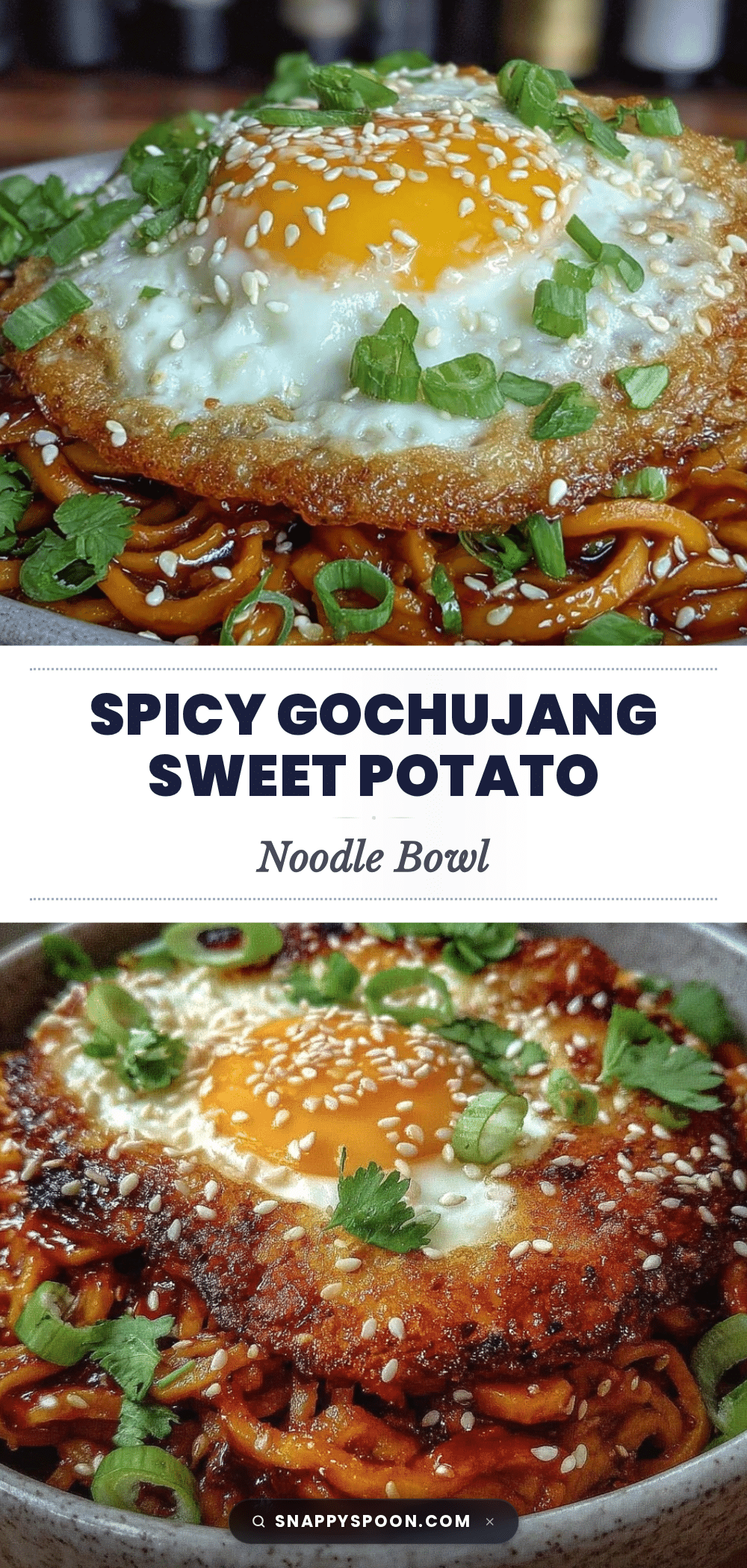
Flavorful Korean Gochujang Roasted Sweet Potato Noodle Bowl Recipe Easy and Delicious
A quick and easy Korean-inspired noodle bowl featuring roasted sweet potatoes, spicy-sweet gochujang sauce, and a creamy sesame fried egg. Perfect for a comforting yet fresh weeknight meal.
- Prep Time: 10 minutes
- Cook Time: 25-30 minutes
- Total Time: 35-40 minutes
- Yield: 4 servings 1x
- Category: Main Course
- Cuisine: Korean
Ingredients
- 2 large sweet potatoes, peeled and diced into 1-inch cubes
- 2 tablespoons olive oil (or neutral oil like avocado oil)
- Salt and black pepper, to taste
- 3 tablespoons gochujang (Korean chili paste)
- 1 tablespoon soy sauce (or tamari for gluten-free option)
- 1 tablespoon rice vinegar
- 1 tablespoon honey or maple syrup
- 1 teaspoon toasted sesame oil
- 2 cloves garlic, minced
- 8 ounces sweet potato noodles (glass noodles or dangmyeon)
- 4 large eggs
- 1 tablespoon sesame oil (for frying)
- 1 teaspoon toasted sesame seeds (for garnish)
- Salt and pepper, to taste
- Optional garnishes: thinly sliced scallions, fresh cilantro or parsley, crushed red pepper flakes
Instructions
- Preheat your oven to 425°F (220°C). Line a baking sheet with parchment paper or lightly oil it. Toss the diced sweet potatoes with olive oil, salt, and pepper until evenly coated. Spread them out in a single layer and roast for 25-30 minutes, flipping halfway through, until tender and caramelized.
- While the potatoes roast, prepare the gochujang sauce by whisking together gochujang, soy sauce, rice vinegar, honey, toasted sesame oil, and minced garlic until smooth and glossy. Adjust sweetness or acidity as needed.
- Bring a large pot of water to a boil. Cook the sweet potato noodles according to package instructions (6-8 minutes). Drain and rinse under cold water to stop cooking and prevent sticking. Toss with a little sesame oil.
- In a large bowl, mix the drained noodles with the gochujang sauce until evenly coated. Gently fold in the roasted sweet potatoes.
- Heat 1 tablespoon sesame oil in a nonstick skillet over medium heat. Fry the eggs one at a time until whites are set but yolks remain runny (about 2-3 minutes). Season with salt and pepper and sprinkle toasted sesame seeds on top.
- Divide the noodle and sweet potato mixture between serving bowls. Top each with a fried sesame egg and garnish with scallions, sesame seeds, and fresh herbs if desired. Serve immediately.
Notes
Cut sweet potatoes uniformly for even roasting. Taste and adjust gochujang sauce balance before mixing. Rinse noodles under cold water after boiling to prevent sticking. Use medium heat when frying eggs to avoid burnt flavor. Add a splash of water or oil if noodles stick after mixing. For vegan option, omit eggs and use tofu or chickpeas; substitute honey with maple syrup.
Nutrition
- Serving Size: 1 bowl with 1 fried
- Calories: 420
- Sugar: 10
- Sodium: 700
- Fat: 18
- Saturated Fat: 3.5
- Carbohydrates: 50
- Fiber: 6
- Protein: 12
Keywords: Korean, gochujang, sweet potato noodles, roasted sweet potatoes, sesame fried egg, easy dinner, spicy, umami, weeknight meal