Love this? Save it for later!
Share the inspiration with your friends
“You have to try this,” my barista said, sliding a small container across the counter with a knowing smile. It was a rainy Thursday afternoon, and I was nursing a lukewarm coffee, trying to escape the drizzle outside. Honestly, I wasn’t expecting much—just a quick caffeine fix and maybe a snack. But that container held what would become my new obsession: a Korean beef bibimbap bowl packed with bold flavors, topped with fiery gochujang, and balanced by tangy pickled veggies.
The story behind this recipe isn’t from some fancy cooking class or a trip to Seoul. No, it came from a simple lunchtime chat with an unexpected culinary enthusiast—my local barista who moonlights as a food blogger. She swore by her homemade bibimbap, claiming it was the perfect comfort food that hits all the right notes: spicy, sweet, savory, and fresh. I was skeptical at first, especially with the pickled veggies (I mean, pickles in a rice bowl?), but the taste was unforgettable.
That day, I spilled some of the sauce on my sleeve—classic me—and had to laugh it off while digging in. The combination of marinated Korean beef with the vibrant veggies and that unmistakable kick of gochujang was a revelation. Maybe you’ve been there, craving something that feels both exotic and familiar, all in one bite. Since then, I’ve made this flavorful Korean beef bibimbap bowl more times than I can count. It’s quick, satisfying, and honestly, just what the soul needs on a hectic day.
Let me tell you, once you try this recipe, it sticks with you. It’s the kind of meal that’s easy enough to whip up on a weeknight but impressive enough to serve when friends come over. So, grab your apron — we’re about to make something truly special.
Why You’ll Love This Recipe
This Korean beef bibimbap bowl recipe is one of those dishes that just clicks. I’ve tested it in my kitchen countless times, tweaking the marinade here, adjusting the pickling time there, and honestly, it’s become a favorite for good reason.
- Quick & Easy: Ready in under 30 minutes, perfect for those busy evenings when you want something hearty without the hassle.
- Simple Ingredients: No need to hunt down rare spices — most ingredients are pantry staples or easily found at your local grocery store.
- Perfect for Weeknight Dinners: Whether you’re cooking for one or a few, this recipe scales up nicely and keeps everyone happy.
- Crowd-Pleaser: The rich, savory beef paired with the tangy, crunchy pickled veggies always garners compliments — even from picky eaters.
- Unbelievably Delicious: The gochujang sauce adds a spicy-sweet punch that ties everything together beautifully.
What makes this bibimbap bowl stand out from the rest? It’s the balance — the tender Korean beef marinated with garlic and soy, the crispness of freshly pickled cucumbers and carrots, and the warm, fluffy rice underneath. I sometimes blend a touch of toasted sesame oil into the rice for that extra nutty aroma, a trick I picked up from my barista friend. It’s comfort food with a twist, and honestly, that’s why I keep coming back to it.
What Ingredients You Will Need
This recipe uses straightforward, wholesome ingredients to create bold flavors and satisfying texture without any fuss. Most are pantry staples, and a few can be swapped to suit what you have on hand.
- For the Korean Beef:
- 1 lb (450 g) ground beef (preferably lean)
- 3 cloves garlic, minced (adds depth)
- 2 tbsp soy sauce (I usually use Kikkoman for consistent flavor)
- 1 tbsp brown sugar (for that subtle sweetness)
- 1 tbsp sesame oil (toasting it first adds nuttiness)
- 1 tsp freshly grated ginger (optional but recommended)
- 1/4 tsp black pepper
- For the Pickled Veggies:
- 1 cup thinly sliced cucumber (English cucumber works great)
- 1 cup julienned carrots
- 1/2 cup rice vinegar
- 2 tbsp sugar
- 1 tsp salt
- Optional: 1/2 tsp chili flakes for a mild kick
- For the Bowl Assembly:
- 3 cups cooked short-grain white rice (warm)
- 2 eggs (fried or sunny-side up, optional)
- 2 green onions, thinly sliced (for garnish)
- 1 tbsp toasted sesame seeds
- 3 tbsp gochujang (Korean chili paste, adjust for heat preference)
- Optional: fresh spinach or sautéed mushrooms for extra veggies
Tip: If you can’t find gochujang locally, many online Asian markets carry it. Or try substituting with a mild chili paste mixed with a little miso paste for a similar flavor punch.
Equipment Needed
- Non-stick skillet or frying pan for cooking the beef
- Mixing bowls for marinating beef and pickling veggies
- Sharp knife and cutting board for slicing the vegetables
- Medium saucepan or rice cooker to prepare rice
- Measuring spoons and cups for accuracy
- Optional: small whisk or fork for mixing pickling solution
If you don’t have a rice cooker, no worries — a heavy-bottomed pot with a tight-fitting lid works just fine. I learned that the hard way when mine broke mid-week! For the skillet, a cast-iron pan adds beautiful sear marks and flavor but a regular non-stick pan is just as effective and easier to clean.
Preparation Method
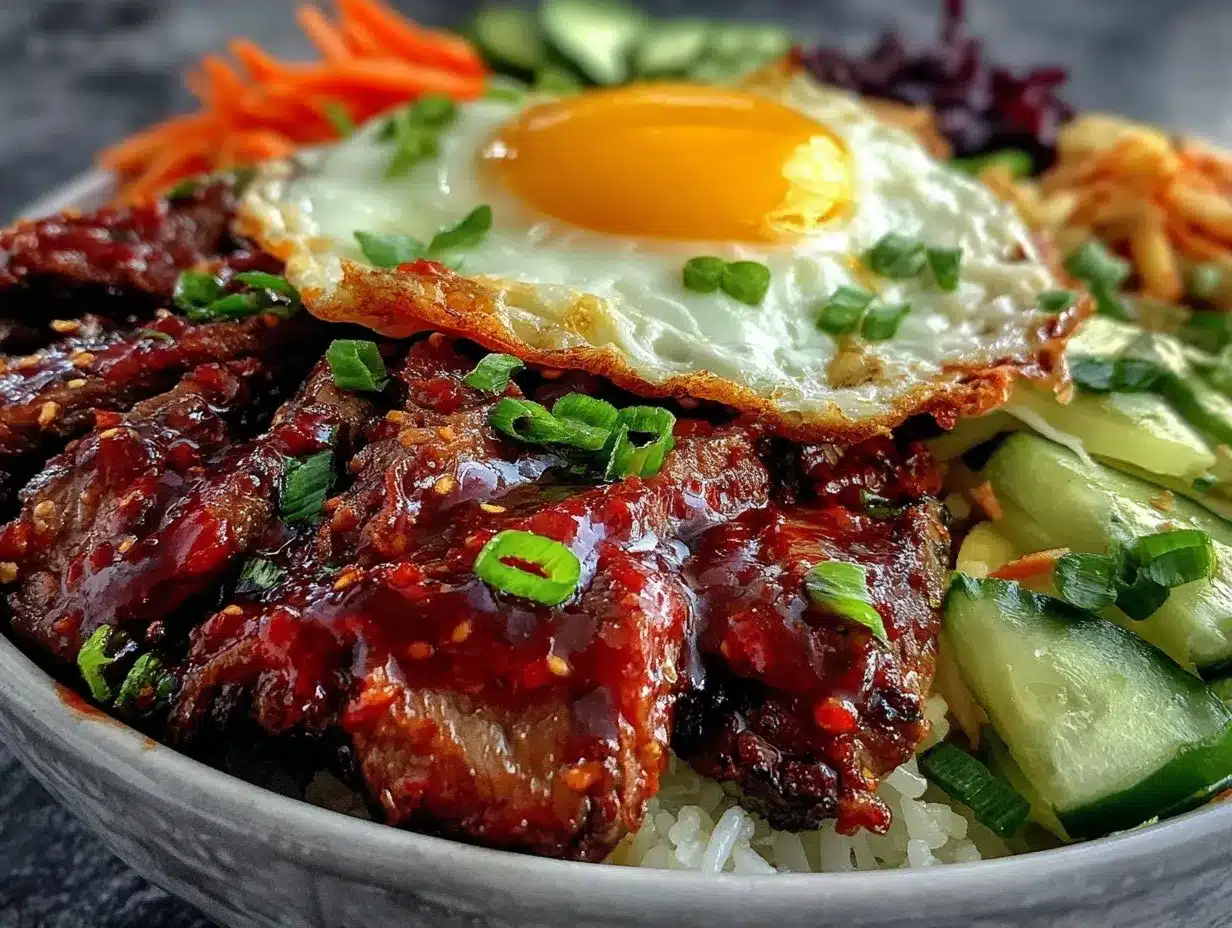
- Prepare the pickled veggies: In a bowl, combine rice vinegar, sugar, salt, and chili flakes (if using). Stir until sugar and salt dissolve. Add the sliced cucumbers and carrots, toss to coat. Let sit for at least 15 minutes while you prepare other ingredients. The quick pickling softens the veggies slightly but keeps them crisp.
- Cook the rice: Rinse 1.5 cups (about 300 g) of short-grain rice under cold water until the water runs clear. Cook according to your rice cooker or stovetop instructions (about 20 minutes). Keep warm.
- Make the Korean beef: In a mixing bowl, combine ground beef, minced garlic, soy sauce, brown sugar, sesame oil, grated ginger, and black pepper. Mix gently but thoroughly to combine flavors.
- Heat a skillet: Place over medium-high heat and add the marinated beef. Cook for 6–8 minutes, breaking it apart with a spatula until fully cooked and browned. Watch for any liquid; let it reduce to concentrate flavor. Taste and adjust seasoning if needed.
- Cook the eggs: In a separate pan, fry the eggs sunny-side up or to your liking. The runny yolk adds richness to the bibimbap.
- Assemble the bowl: Scoop warm rice into bowls. Top with Korean beef, a generous spoonful of pickled veggies, fried egg, and a drizzle of gochujang. Garnish with sliced green onions and sesame seeds. If you have extra veggies like sautéed mushrooms or spinach, add those too.
- Final touch: Just before eating, mix everything together — the spicy, sweet, tangy, and savory meld into one harmonious bite.
Note: If your gochujang is too thick, thin it with a teaspoon of warm water before drizzling. Also, if you want to save time, prep the pickled veggies the night before — they taste even better after a few hours.
Cooking Tips & Techniques
When making this Korean beef bibimbap bowl, a few tricks can really make your dish shine. First, don’t rush the pickling process. Even a quick 15-minute soak transforms the crisp veggies, balancing the rich beef beautifully.
Avoid overcooking the beef — it should be browned but still juicy. I learned this the hard way after one batch ended up dry and crumbly. Adding a splash of water mid-cooking can help keep it tender.
For the rice, rinsing it well removes excess starch and prevents clumping. And honestly, using short-grain rice is key — it sticks just enough to hold the bowl together without turning mushy.
Multitasking helps here: start the pickled veggies, then cook rice, and while that’s going, mix and cook the beef. Fry the egg last so it’s fresh and perfect.
Also, don’t skip the sesame oil — even just a drizzle on the finished rice adds a subtle, toasty aroma that brings the whole bowl together.
Variations & Adaptations
This bibimbap bowl is versatile, so feel free to make it your own.
- Vegetarian option: Swap the beef for sautéed tofu or tempeh marinated in the same sauce. Mushrooms also work wonderfully for a meaty texture.
- Gluten-free: Use tamari instead of soy sauce and double-check that your gochujang is gluten-free (some brands include wheat).
- Seasonal veggies: In spring, fresh spinach or bean sprouts add vibrant crunch. In winter, roasted root veggies like sweet potatoes are a cozy swap.
- Spice level: Adjust gochujang quantity or add extra chili flakes to suit your heat preference.
- Personal twist: I once added kimchi for a tangy, fermented punch — it was a game-changer. You might like to try that too!
Serving & Storage Suggestions
Serve this Korean beef bibimbap bowl warm, ideally right after assembling so the egg yolk can mingle with the other ingredients. Presentation-wise, a wide, shallow bowl helps showcase the colorful layers, making it as pretty as it is tasty.
Pair it with a light cucumber salad or a simple miso soup to round out the meal. For drinks, chilled green tea or a crisp lager complements the flavors well.
Leftovers keep well in the fridge for up to 3 days. Store components separately if possible — rice, beef, and pickled veggies in airtight containers. Reheat gently in a skillet or microwave, adding a splash of water to the rice if needed to keep it moist.
The pickled veggies actually taste better after a day or two as the flavors meld, so feel free to make a batch ahead.
Nutritional Information & Benefits
This bibimbap bowl packs a balanced nutritional punch. The lean ground beef provides quality protein, essential for muscle repair and energy. The pickled veggies offer a dose of probiotics, supporting digestion and gut health. Rice supplies carbohydrates for sustained energy, while the gochujang adds antioxidants from chili peppers.
Per serving, you can expect roughly 450-500 calories depending on portion size, with moderate fat content mainly from the sesame oil and beef. It’s gluten-friendly if you opt for tamari, and can easily be made dairy-free.
From a wellness perspective, this dish combines fresh and fermented elements, which is great for overall gut balance and provides a satisfying, nutrient-dense meal.
Conclusion
If you’re looking for a meal that’s vibrant, flavorful, and surprisingly easy to make, this Korean beef bibimbap bowl ticks all the boxes. It’s a recipe that invites you to mix and match flavors and textures, making it truly your own.
I love this dish because it’s a reminder that comfort food doesn’t have to be complicated or boring. Plus, every time I make it, I think back to that rainy afternoon and a little container that changed my weeknight dinners forever.
Give this recipe a try, tweak it to your taste, and let me know how it turns out. I can’t wait to hear about your favorite variations and any delicious twists you come up with!
FAQs
What type of rice is best for bibimbap?
Short-grain white rice is ideal because it’s sticky enough to hold together yet soft and fluffy. You can also use medium-grain rice if short-grain isn’t available.
Can I make the pickled veggies ahead of time?
Absolutely! Pickled veggies actually taste better after sitting for a few hours or even a day. Just keep them refrigerated in an airtight container.
Is gochujang very spicy?
Gochujang has moderate heat with a sweet and savory flavor. If you’re sensitive to spice, start with a small amount and adjust to taste.
Can I use ground chicken or turkey instead of beef?
Yes, ground chicken or turkey works well. The flavor will be lighter, so you might want to increase the garlic or soy sauce slightly for more depth.
How do I store leftover bibimbap?
Store leftover components separately in airtight containers in the fridge for up to 3 days. Reheat gently before serving to preserve texture and flavor.
For a delightful meal with a perfect balance of spicy, savory, and tangy, this Korean beef bibimbap bowl recipe will quickly become a go-to favorite in your kitchen.
Pin This Recipe!
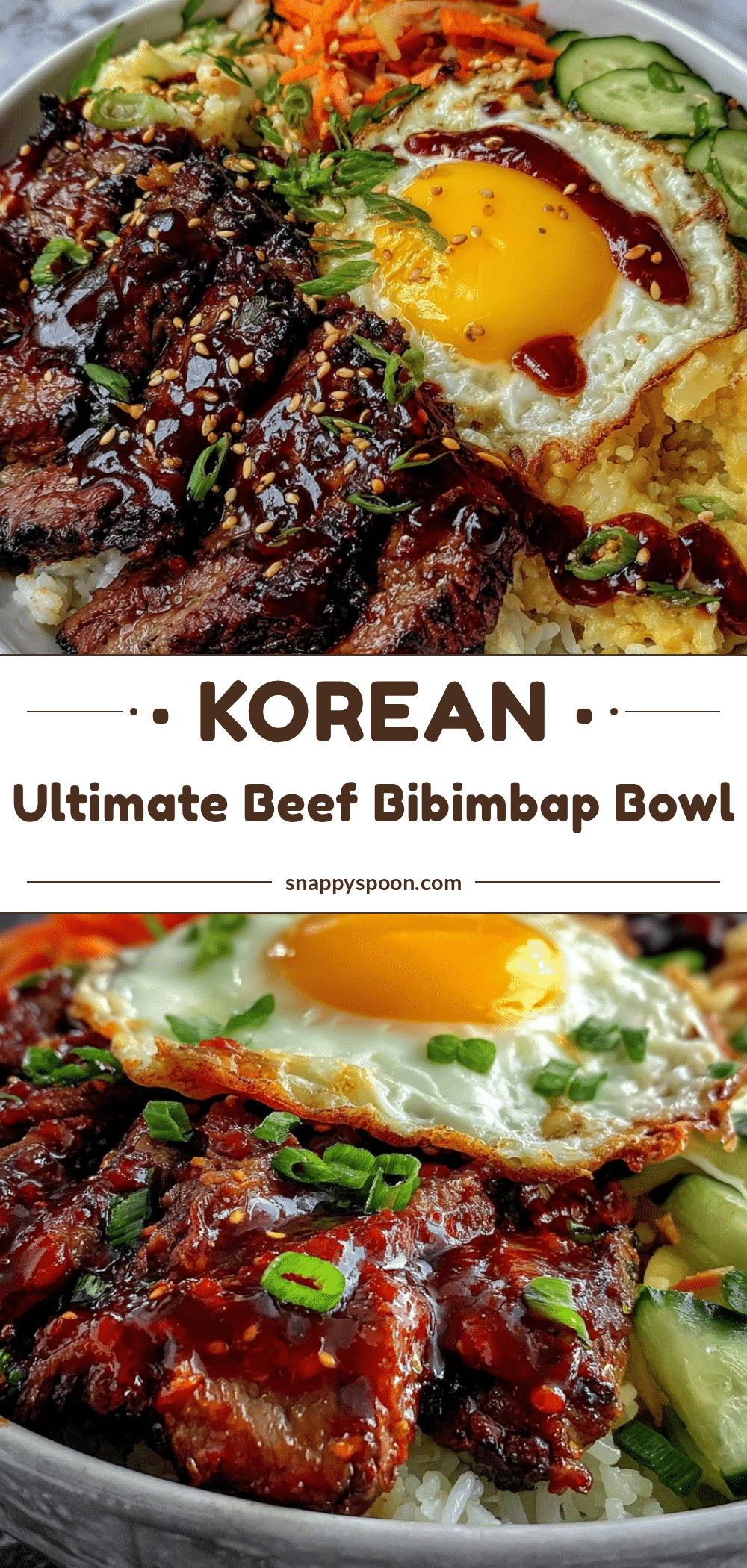
Korean Beef Bibimbap Bowl Recipe Easy Homemade Gochujang Pickled Veggies
A quick and easy Korean beef bibimbap bowl featuring marinated ground beef, spicy-sweet gochujang sauce, and tangy pickled cucumbers and carrots, perfect for a flavorful weeknight dinner.
- Prep Time: 15 minutes
- Cook Time: 20 minutes
- Total Time: 35 minutes
- Yield: 4 servings 1x
- Category: Main Course
- Cuisine: Korean
Ingredients
- 1 lb (450 g) ground beef (preferably lean)
- 3 cloves garlic, minced
- 2 tbsp soy sauce
- 1 tbsp brown sugar
- 1 tbsp sesame oil (toasted)
- 1 tsp freshly grated ginger (optional)
- 1/4 tsp black pepper
- 1 cup thinly sliced cucumber (English cucumber works great)
- 1 cup julienned carrots
- 1/2 cup rice vinegar
- 2 tbsp sugar
- 1 tsp salt
- 1/2 tsp chili flakes (optional)
- 3 cups cooked short-grain white rice (warm)
- 2 eggs (fried or sunny-side up, optional)
- 2 green onions, thinly sliced
- 1 tbsp toasted sesame seeds
- 3 tbsp gochujang (Korean chili paste)
- Optional: fresh spinach or sautéed mushrooms for extra veggies
Instructions
- Prepare the pickled veggies: In a bowl, combine rice vinegar, sugar, salt, and chili flakes (if using). Stir until sugar and salt dissolve. Add the sliced cucumbers and carrots, toss to coat. Let sit for at least 15 minutes.
- Cook the rice: Rinse 1.5 cups (about 300 g) of short-grain rice under cold water until the water runs clear. Cook according to your rice cooker or stovetop instructions (about 20 minutes). Keep warm.
- Make the Korean beef: In a mixing bowl, combine ground beef, minced garlic, soy sauce, brown sugar, sesame oil, grated ginger, and black pepper. Mix gently but thoroughly.
- Heat a skillet over medium-high heat and add the marinated beef. Cook for 6–8 minutes, breaking it apart with a spatula until fully cooked and browned. Let any liquid reduce. Taste and adjust seasoning if needed.
- Cook the eggs in a separate pan sunny-side up or to your liking.
- Assemble the bowl: Scoop warm rice into bowls. Top with Korean beef, a generous spoonful of pickled veggies, fried egg, and a drizzle of gochujang. Garnish with sliced green onions and sesame seeds. Add extra veggies if desired.
- Before eating, mix everything together to combine the flavors.
Notes
If gochujang is too thick, thin with a teaspoon of warm water before drizzling. Pickled veggies taste better after a few hours or overnight. Avoid overcooking beef to keep it juicy. Toast sesame oil before use for extra nuttiness. Rice rinsing prevents clumping. Can substitute beef with tofu, tempeh, or mushrooms for vegetarian option. Use tamari for gluten-free soy sauce alternative.
Nutrition
- Serving Size: 1 bowl (approximatel
- Calories: 475
- Sugar: 10
- Sodium: 700
- Fat: 22
- Saturated Fat: 6
- Carbohydrates: 45
- Fiber: 3
- Protein: 28
Keywords: Korean beef bibimbap, bibimbap bowl, gochujang, pickled veggies, Korean recipe, easy dinner, weeknight meal, spicy beef bowl