Love this? Save it for later!
Share the inspiration with your friends
I’d stopped by my neighbor’s place last September to borrow a ladder, and the smell hit me before I even knocked. It was this deep, sweet, almost caramelized tomato scent that made my stomach actually growl—loud enough that I’m pretty sure her dog heard it through the door.
She opened up with flour on her shirt and a wooden spoon in her hand, completely unbothered. “Oh, that’s just my small-batch canned tomato sauce,” she said, like it was nothing. Like she hadn’t just created something that smelled better than any restaurant I’d been to all year. I stood there in her kitchen for an hour, ladder completely forgotten, watching her work. She wasn’t trying to impress anyone—she was just making sauce because she had too many tomatoes from her garden.
Honestly, that’s the kind of cooking that sticks with you. Not the fancy stuff. The real stuff. The kind where someone knows exactly what they’re doing but acts like it’s no big deal. I went home that night with a jar of her sauce and a head full of questions. And maybe you’ve been there too—where one taste of something simple changes how you think about a whole category of food.
That sauce ruined store-bought for me. Completely. And now, years later, I’ve tweaked and tested and burned a batch or two, and I’m finally ready to share my own version of that small-batch canned tomato sauce. It’s not complicated. It’s not fancy. But let me tell you—it is everything.
Why You’ll Love This Recipe
Look, I’ve tested a lot of tomato sauce recipes. Some are too fussy. Some take all day and still taste flat. This one? It hits different. Here’s why I keep coming back to it year after year:
- Quick & Easy: From start to finish, you’re looking at about two hours—most of which is hands-off simmering. Perfect for a Saturday afternoon when you want to feel productive without chaining yourself to the stove.
- Simple Ingredients: Tomatoes, onions, garlic, olive oil, salt, and a few herbs. That’s it. No weird preservatives, no corn syrup, nothing you can’t pronounce.
- Perfect for Small Batches: This recipe makes exactly 4 to 5 pints. Not a massive canning operation that takes over your whole kitchen—just enough to stock your pantry and feel like a hero in the winter.
- Incredible Flavor: The secret is roasting the tomatoes first. It concentrates the sweetness and adds a smoky depth you just can’t get from a can.
- Customizable: Want it spicy? Add red pepper flakes. Prefer it smooth? Hit it with an immersion blender. This sauce bends to your mood.
- Crowd-Pleaser: I’ve given jars of this as gifts and gotten texts weeks later asking for the recipe. It’s that good.
This isn’t just another tomato sauce recipe. It’s the one you’ll make every summer when tomatoes are at their peak. It’s the one that makes pasta night feel special on a random Tuesday. And it’s the one that makes you wonder why you ever bought the stuff in a jar.
What Ingredients You Will Need
This small-batch canned tomato sauce relies on a short list of ingredients, but each one pulls its weight. No fillers, no shortcuts—just honest, good food. Here’s what you’ll need:
For the Sauce Base
- 5 pounds Roma tomatoes (about 12-15 medium tomatoes) — Roma tomatoes are ideal because they have fewer seeds and thicker flesh, which means less watery sauce. If you can’t find Romas, San Marzano varieties work beautifully too.
- 2 tablespoons olive oil — I use a good-quality extra virgin olive oil here. It adds richness and helps the garlic and onions bloom. My personal favorite is California Olive Ranch for everyday cooking.
- 1 large yellow onion, diced — Yellow onions have the right balance of sweetness and bite. White onions can be too sharp, and red onions will change the color of your sauce.
- 4 cloves garlic, minced — Fresh garlic only, please. The pre-minced stuff in a jar has a different flavor that just doesn’t work here.
For Seasoning
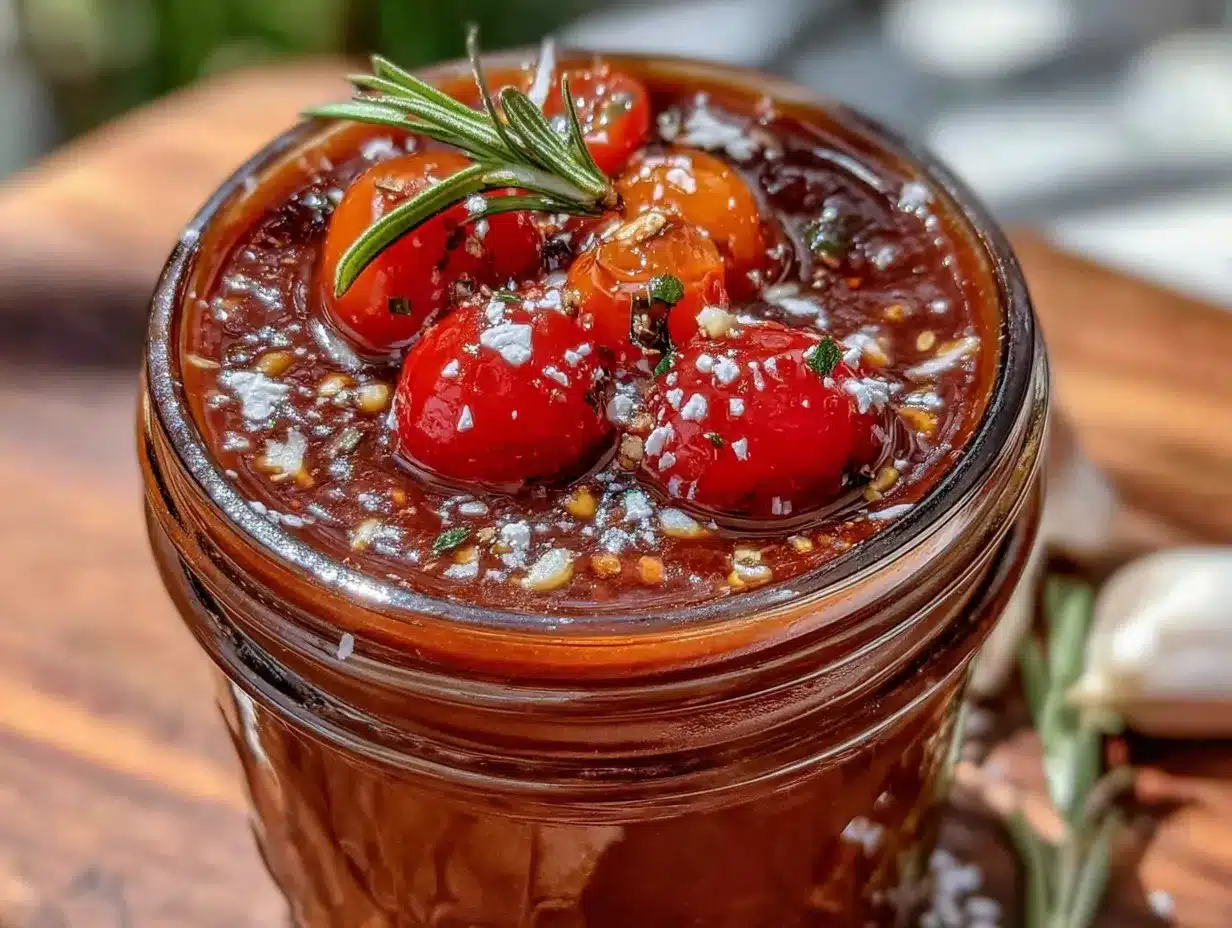
- 1 teaspoon salt — I recommend kosher salt for its clean taste. Table salt works, but start with ¾ teaspoon since it’s more concentrated.
- ½ teaspoon black pepper, freshly ground — Pre-ground pepper is fine in a pinch, but fresh really does make a difference here.
- 2 teaspoons dried oregano — Oregano is the backbone of Italian-style tomato sauce. I prefer dried here because it rehydrates beautifully during the simmer.
- 1 teaspoon dried basil — You can use fresh basil too—add about 2 tablespoons chopped fresh basil in the last 10 minutes of cooking.
- 1 tablespoon balsamic vinegar — This is my secret ingredient. It adds depth and a subtle sweetness without making the sauce taste vinegary. Trust me on this one.
- 1 teaspoon sugar (optional) — Only add this if your tomatoes are particularly acidic. Taste first, then decide.
For Canning (if you plan to preserve the sauce)
- 4-5 pint-sized canning jars with lids and bands — Make sure they’re sterilized. I run mine through the dishwasher on the sanitize cycle.
- Lemon juice or citric acid — You’ll need 1 tablespoon of bottled lemon juice or ¼ teaspoon citric acid per pint jar to ensure safe acidity levels.
That’s it. No long list of specialty items. Most of these are probably in your kitchen right now. The tomatoes are the star here, so spend a little extra time finding good ones. Farmers’ markets in late summer are my go-to.
Equipment Needed
You don’t need a ton of fancy gear for this small-batch canned tomato sauce. Here’s what I use:
- Large stockpot or Dutch oven — A 6- to 8-quart pot works perfectly. I use my enameled Le Creuset Dutch oven because it distributes heat evenly and doesn’t scorch the sauce. But honestly, any heavy-bottomed pot will do.
- Baking sheet with rimmed edges — For roasting the tomatoes. A half-sheet pan (18×13 inches) is ideal.
- Food mill or immersion blender — A food mill gives you the smoothest sauce and removes seeds and skins in one step. If you don’t have one, an immersion blender works great—just be prepared for a slightly chunkier texture.
- Canning pot or large stockpot for water bath — You need a pot deep enough to cover your jars with at least 1 inch of water. I bought a basic enamel canning pot for $25 and it’s lasted years.
- Jar lifter and canning funnel — These are non-negotiable for safe canning. A jar lifter saves your fingers from boiling water, and a funnel keeps the jar rims clean for a good seal.
- Clean kitchen towels — For drying jars and catching spills.
If you’re new to canning, don’t stress. You can also just refrigerate or freeze this sauce. The canning step is optional—the recipe itself is what matters.
Preparation Method
Alright, let’s get cooking. This small-batch canned tomato sauce comes together in stages, but none of them are hard. Just give yourself a couple of hours and put on some music.
Step 1: Prep the Tomatoes (15 minutes)
Preheat your oven to 400°F (200°C). Wash your tomatoes thoroughly and cut them in half lengthwise. Remove the core—that tough little green part where the stem attaches. Arrange the tomato halves cut-side down on your rimmed baking sheet. Don’t crowd them too much; you want air to circulate. Drizzle with 1 tablespoon of olive oil and a pinch of salt.
Step 2: Roast the Tomatoes (45 minutes)
Roast the tomatoes for 40 to 45 minutes, until the skins are wrinkled and starting to char in spots. The edges should look slightly caramelized. Your kitchen will smell incredible at this point—like summer concentrated into a single scent. Let the tomatoes cool on the pan for about 10 minutes. They’ll release some liquid, and that’s fine. Don’t pour it off.
Step 3: Sauté the Aromatics (10 minutes)
While the tomatoes cool, heat the remaining 1 tablespoon of olive oil in your large pot over medium heat. Add the diced onion and cook for 5 to 6 minutes, stirring occasionally, until it’s soft and translucent. Add the minced garlic and cook for another minute—just until fragrant. Don’t let the garlic brown, or it will turn bitter.
Step 4: Process the Tomatoes (10 minutes)
Now, work the roasted tomatoes through your food mill directly into the pot with the onions and garlic. If you’re using an immersion blender, transfer the tomatoes to the pot first, then blend until smooth. Be careful—the tomatoes are still warm, and blending hot liquid can splatter. I learned this the hard way and had tomato sauce on my ceiling. True story.
Step 5: Simmer the Sauce (45 minutes to 1 hour)
Stir in the salt, pepper, oregano, dried basil, and balsamic vinegar. Bring the sauce to a gentle simmer—you want small bubbles, not a rolling boil. Reduce the heat to low and let it cook uncovered for 45 minutes to 1 hour, stirring every 10 minutes or so. The sauce will thicken and darken as it reduces. You’re looking for a consistency where it coats the back of a spoon without being too watery.
If the sauce tastes too acidic at this point, stir in the optional teaspoon of sugar. Taste and adjust salt and pepper as needed.
Step 6: Prepare for Canning (15 minutes)
While the sauce simmers, wash your jars, lids, and bands in hot soapy water. Rinse well. Place the jars in your canning pot, cover with water, and bring to a boil. Turn off the heat and let the jars sit in the hot water until you’re ready to fill them. Place the lids in a small bowl and cover with hot water (not boiling) to soften the sealing compound.
Step 7: Fill and Process the Jars (20 minutes)
When the sauce is ready, add 1 tablespoon of bottled lemon juice (or ¼ teaspoon citric acid) to each pint jar. Ladle the hot sauce into the jars, leaving ½ inch of headspace at the top. Run a clean knife or chopstick around the inside of each jar to release any air bubbles. Wipe the jar rims with a clean, damp towel—any residue here can prevent a good seal. Center the lids and screw on the bands until they’re fingertip-tight (not too tight).
Lower the jars into the boiling water bath using your jar lifter. Make sure they’re covered by at least 1 inch of water. Cover the pot, bring the water back to a full boil, and process for 35 minutes (adjust for altitude if needed—add 5 minutes for every 1,000 feet above sea level).
Step 8: Cool and Check Seals (12 hours)
Turn off the heat and let the jars sit in the water for 5 minutes. Then lift them out and place them on a clean towel on the counter, leaving at least 1 inch of space between jars. Let them cool completely for 12 to 24 hours. You’ll hear the satisfying “pop” as each jar seals. After 12 hours, press the center of each lid—if it doesn’t flex up and down, it’s sealed. Any unsealed jars should go straight into the fridge and be used within a week.
Cooking Tips & Techniques
I’ve made this small-batch canned tomato sauce probably two dozen times by now, and I’ve picked up a few tricks along the way. Here’s what I wish someone had told me:
Don’t skip the roasting step. I know it adds time, but roasting transforms the flavor completely. Raw tomatoes boiled into sauce taste flat. Roasted tomatoes taste like they’ve been simmering for hours. It’s the single biggest flavor shortcut you can take.
Watch your heat during the simmer. The first time I made this, I got distracted and let the sauce boil hard. It splattered everywhere, and the sauce ended up thicker than I wanted. Low and slow is the way to go. If you see big bubbles, turn it down.
Use a food mill if you can. I used an immersion blender for years and thought it was fine. Then I bought a food mill at a garage sale for $8, and the texture difference was night and day. The mill removes every seed and bit of skin, leaving you with velvet-smooth sauce. Plus, it saves you from peeling tomatoes, which is my least favorite kitchen task.
Test your acidity. Tomatoes vary in acidity depending on the variety and how ripe they are. The balsamic vinegar helps balance things, but taste before you add the optional sugar. I’ve had some batches that needed it and others that didn’t. Trust your palate.
Label your jars. I know it sounds obvious, but I’ve definitely opened a jar months later and wondered what was inside. Write the date and contents on the lid with a permanent marker. Future you will be grateful.
Variations & Adaptations
One of the best things about this small-batch canned tomato sauce is how flexible it is. Here are a few ways to make it your own:
Spicy Arrabbiata Style: Add ½ teaspoon of red pepper flakes along with the garlic. It gives the sauce a gentle heat that builds as you eat it. I made this version last fall and gave jars to my spice-loving friends. They still text me about it.
Herb-Forward Version: Swap the dried herbs for fresh ones. Add ¼ cup fresh basil, 2 tablespoons fresh oregano, and a sprig of fresh rosemary during the last 30 minutes of simmering. Remove the rosemary sprig before canning. The fresh herbs give the sauce a brighter, more garden-fresh flavor.
Roasted Garlic Variation: Instead of sautéing the garlic, roast a whole head of garlic alongside the tomatoes. Squeeze the soft, caramelized cloves into the pot when you add the onions. It adds a mellow, almost sweet garlic flavor that’s completely different from raw or sautéed garlic.
Low-Sodium Option: Omit the salt entirely and rely on the herbs and balsamic vinegar for flavor. You can always add salt when you open a jar and use the sauce. This is great if you’re watching your sodium intake.
Smoky Twist: Add 1 teaspoon of smoked paprika along with the dried herbs. It gives the sauce a subtle smokiness that pairs beautifully with roasted vegetables or grilled meats.
Serving & Storage Suggestions
This small-batch canned tomato sauce is ridiculously versatile. Here’s how I use it throughout the year:
Serving: Serve it hot over your favorite pasta—I’m partial to spaghetti or rigatoni. It’s also amazing as a pizza sauce, spread thin on homemade or store-bought dough. For a quick weeknight meal, simmer it with meatballs or Italian sausage for 20 minutes. You can even use it as a dipping sauce for garlic bread or mozzarella sticks.
Temperature: Serve the sauce hot, straight from the stove or reheated. Cold sauce isn’t doing anyone any favors.
Complementary Dishes: Pair it with a simple green salad dressed with lemon and olive oil, or serve it alongside crusty bread and a glass of red wine. For a full Italian-inspired meal, start with an antipasto platter and end with a light dessert like panna cotta or fresh fruit.
Storage: Canned jars of this sauce will keep in a cool, dark pantry for up to 18 months. Once opened, store the jar in the refrigerator and use it within 5 to 7 days. If you don’t want to can the sauce, you can freeze it in airtight containers for up to 6 months. Leave about an inch of headspace in the container to allow for expansion.
Reheating: Pour the sauce into a small saucepan and warm it over medium-low heat, stirring occasionally. If the sauce has thickened in storage, add a splash of pasta water or broth to thin it out. Don’t microwave it—the heat distribution is uneven and can affect the texture.
One thing I love about this sauce is that the flavors actually deepen after a few weeks in the jar. It’s like the ingredients get to know each other better over time. So don’t be afraid to let it sit for a month or two before cracking one open.
Nutritional Information & Benefits
This small-batch canned tomato sauce is as wholesome as it gets. Here’s the estimated nutritional breakdown per ½-cup serving:
| Nutrient | Amount |
|---|---|
| Calories | 65 |
| Total Fat | 3.5g |
| Saturated Fat | 0.5g |
| Sodium | 295mg |
| Total Carbohydrates | 8g |
| Dietary Fiber | 2g |
| Sugars | 5g |
| Protein | 1.5g |
Tomatoes are packed with lycopene, a powerful antioxidant linked to heart health and reduced inflammation. Cooking tomatoes actually increases the bioavailability of lycopene, so this sauce is even more nutritious than eating raw tomatoes. The olive oil adds healthy monounsaturated fats, which help your body absorb the fat-soluble nutrients in the tomatoes.
This recipe is naturally gluten-free, dairy-free, and vegan. If you’re watching your sodium, you can reduce or omit the salt. The only potential allergen here is the garlic, which is rare. Overall, this is a nutrient-dense, whole-food sauce that you can feel good about feeding your family.
Conclusion
Honestly, I never thought I’d be the person who makes their own canned tomato sauce. It sounded like something my grandmother’s generation did—not something a regular person with a regular kitchen would tackle. But that day at my neighbor’s house changed my mind. She made it look so easy, so natural, that I had to try it myself.
And now? I can’t go back. This small-batch canned tomato sauce has become a late-summer ritual for me. It’s my way of capturing August in a jar, of saving a little bit of sunshine for the gray days of winter. It’s not perfect every time—I’ve had batches that were too watery, too salty, too garlicky. But every batch teaches me something.
I hope you give this recipe a try. Maybe you’ll make it exactly as written, or maybe you’ll tweak it a dozen times until it’s yours. That’s the beauty of cooking—there’s no wrong way to make something good. If you do make it, I’d love to hear how it turns out. Drop a comment below and tell me about your sauce. What did you change? What did you love? What did you learn?
Happy cooking, friends. And remember—the best recipes are the ones you share.
Frequently Asked Questions
Can I use other types of tomatoes besides Roma?
Absolutely. San Marzano tomatoes are a great alternative. Beefsteak tomatoes work too, but they’re more watery, so you’ll need to simmer the sauce longer to thicken it. Avoid cherry or grape tomatoes—they’re too small and sweet for this recipe.
Do I have to can this sauce, or can I just refrigerate it?
You don’t have to can it! This recipe makes about 4 to 5 pints, which is manageable for the fridge if you plan to use it within a week. You can also freeze the sauce in quart-sized freezer bags or containers for up to 6 months. Just leave some headspace for expansion.
Why do I need to add lemon juice or citric acid for canning?
Tomatoes are borderline in terms of acidity for safe water bath canning. Adding bottled lemon juice or citric acid ensures the sauce is acidic enough to prevent the growth of harmful bacteria like botulism. It’s a small step that makes a big difference for food safety.
My sauce tastes bitter. What went wrong?
Bitterness usually comes from burnt garlic or over-roasted tomatoes. Next time, keep an eye on your garlic—it only needs a minute in the pan. Also, check your tomatoes for any green spots before roasting. Green parts can add bitterness. A pinch of sugar can help balance the flavor if you’ve already made the sauce.
Can I double this recipe?
You can, but be careful not to overcrowd your roasting pan. If you double the recipe, use two baking sheets and rotate them halfway through roasting. The simmering time may also need to increase by 15 to 20 minutes since you’ll have more liquid to reduce. Just watch the consistency and trust your instincts.
Pin This Recipe!
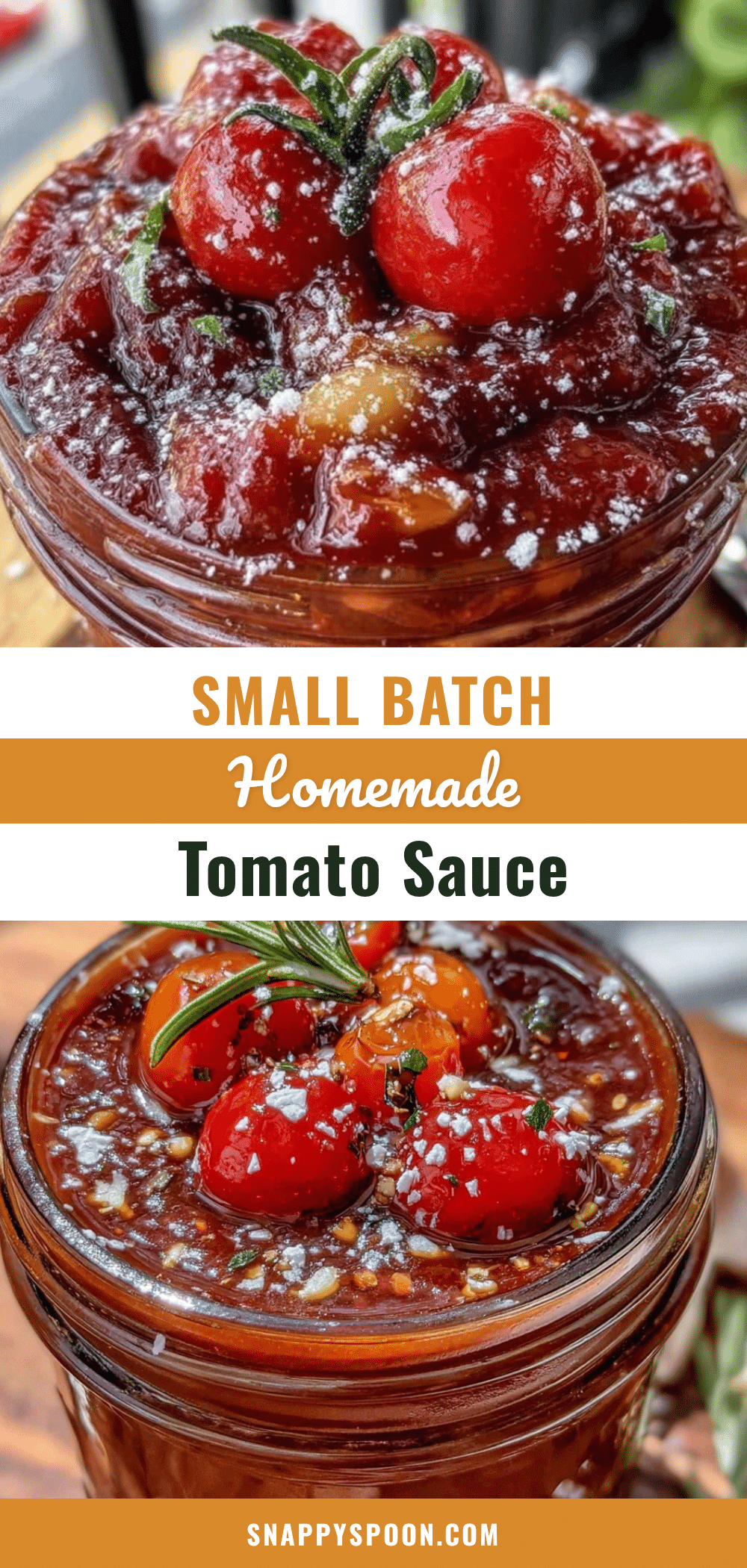
Best Small-Batch Canned Tomato Sauce Recipe

This small-batch canned tomato sauce is quick, easy, and made with simple ingredients. Roasting the tomatoes first concentrates their sweetness and adds a smoky depth, resulting in an incredible flavor that will ruin store-bought sauce for you forever.
- Prep Time: 15 minutes
- Cook Time: 1 hour 45 minutes
- Total Time: 2 hours
- Yield: 4-5 pints 1x
- Category: Sauce
- Cuisine: Italian
Ingredients
- 5 pounds Roma tomatoes (about 12–15 medium tomatoes)
- 2 tablespoons olive oil
- 1 large yellow onion, diced
- 4 cloves garlic, minced
- 1 teaspoon salt
- ½ teaspoon black pepper, freshly ground
- 2 teaspoons dried oregano
- 1 teaspoon dried basil
- 1 tablespoon balsamic vinegar
- 1 teaspoon sugar (optional)
- 4–5 pint-sized canning jars with lids and bands
- Lemon juice or citric acid (1 tablespoon bottled lemon juice or ¼ teaspoon citric acid per pint jar)
Instructions
- Preheat oven to 400°F (200°C). Wash tomatoes, cut in half lengthwise, remove cores. Arrange cut-side down on a rimmed baking sheet. Drizzle with 1 tablespoon olive oil and a pinch of salt.
- Roast tomatoes for 40-45 minutes until skins are wrinkled and starting to char. Let cool on pan for 10 minutes.
- Heat remaining 1 tablespoon olive oil in a large pot over medium heat. Add diced onion and cook 5-6 minutes until soft and translucent. Add minced garlic and cook 1 minute until fragrant.
- Process roasted tomatoes through a food mill directly into the pot with onions and garlic. If using an immersion blender, transfer tomatoes to pot first, then blend until smooth.
- Stir in salt, pepper, oregano, dried basil, and balsamic vinegar. Bring to a gentle simmer, then reduce heat to low. Cook uncovered for 45 minutes to 1 hour, stirring every 10 minutes, until sauce thickens and coats the back of a spoon. Add optional sugar if too acidic.
- While sauce simmers, wash jars, lids, and bands in hot soapy water. Place jars in canning pot, cover with water, and bring to a boil. Turn off heat and let jars sit in hot water. Place lids in a small bowl and cover with hot water.
- Add 1 tablespoon bottled lemon juice or ¼ teaspoon citric acid to each pint jar. Ladle hot sauce into jars, leaving ½ inch headspace. Run a clean knife around inside to release air bubbles. Wipe jar rims, center lids, and screw on bands fingertip-tight.
- Lower jars into boiling water bath, ensuring they are covered by at least 1 inch of water. Cover pot, bring to a full boil, and process for 35 minutes (adjust for altitude: add 5 minutes per 1,000 feet above sea level).
- Turn off heat, let jars sit in water for 5 minutes. Lift out and place on a clean towel, leaving 1 inch space between jars. Cool completely for 12-24 hours. Check seals after 12 hours by pressing center of each lid.
Notes
Don’t skip the roasting step—it transforms the flavor. Watch your heat during simmering; low and slow is best. Use a food mill for the smoothest texture. Test acidity before adding optional sugar. Label jars with date and contents. Canned sauce keeps up to 18 months in a cool, dark pantry. Once opened, refrigerate and use within 5-7 days. Can also freeze for up to 6 months.
Nutrition
- Serving Size: ½ cup
- Calories: 65
- Sugar: 5
- Sodium: 295
- Fat: 3.5
- Saturated Fat: 0.5
- Carbohydrates: 8
- Fiber: 2
- Protein: 1.5
Keywords: small-batch canned tomato sauce, homemade tomato sauce, canning recipe, roasted tomato sauce, easy tomato sauce