Love this? Save it for later!
Share the inspiration with your friends
Introduction
“You know that moment when you’re standing in your kitchen, staring down a recipe that looks more like a science experiment than dinner? That was me last Wednesday. I was trying to impress my new roommate with something a bit fancy—nothing too crazy, just a few ‘advanced’ cooking techniques I’d heard about but never dared to try. Honestly, it felt like juggling flaming knives while blindfolded at first. But here’s the thing: after a few slip-ups, some burned edges, and a slightly chaotic kitchen (I might have forgotten to preheat the pan), I managed to pull off a meal that didn’t just taste good but looked like it came from a restaurant.
It wasn’t about being a master chef overnight. It was about unlocking simple, approachable steps that make you feel like you’re cooking at a whole new level—even if you’re just starting out. Maybe you’ve been there, too, caught between wanting to move beyond basic scrambled eggs but feeling stuck on where to begin. That’s exactly why I put together these easy advanced cooking techniques for beginners. Because cooking smarter, not harder, is what really counts. And trust me, when you nail these tips, your confidence in the kitchen will soar, and your meals will taste that much better.
Plus, I’ll share a few personal stories about how these techniques transformed my own cooking—like the time I almost ruined dinner because I didn’t know a simple sear could make or break a steak, or when learning to deglaze a pan saved me from wasting a sauce. Let me tell you, these tips stuck with me, and they’ll stick with you, too.
Why You’ll Love This Recipe
These easy advanced cooking techniques for beginners aren’t just random tips thrown together—they come from countless hours of trial, error, and eventual success in my kitchen. Whether you’re a newbie or someone looking to push your skills just a bit further, these techniques will help you cook more confidently and efficiently.
- Quick & Easy: Each technique can be practiced in under 30 minutes, perfect for busy weeknights when you want to impress without stress.
- Simple Ingredients & Tools: No need for fancy gadgets or rare ingredients; these methods work with what you’ve got at home.
- Perfect for Any Occasion: Whether you’re preparing a casual dinner or a small gathering, these tips help you deliver dishes that look and taste professional.
- Crowd-Pleaser: Friends and family always notice the difference when you apply these little tricks—they say it tastes like you spent hours in the kitchen.
- Unbelievably Effective: The texture, flavor, and presentation boost you get from mastering these techniques are impressive.
What makes this guide stand out is that it breaks down intimidating techniques into manageable steps. For example, rather than just saying “use a sous vide,” I explain how to mimic its effects with a simple water bath. Or instead of glossing over knife skills, I offer practical pointers that actually changed how I prep ingredients—saving me time and frustration.
Honestly, this collection is like having a friendly mentor right there in your kitchen, showing you the ropes and cheering you on. It’s all about cooking smarter and gaining that “wow” factor without the overwhelm.
What Ingredients You Will Need
To practice these easy advanced cooking techniques for beginners, you don’t need a long shopping list. Most ingredients are pantry staples or everyday fresh items. Here’s a quick rundown grouped by their typical use in the techniques:
- For Basic Searing and Browning:
- High-smoke point oil (e.g., avocado oil, grapeseed oil) – great for crisp crusts
- Salt and freshly ground black pepper – essential for seasoning
- Boneless chicken breast or thighs, steak cuts, or firm fish fillets – ideal proteins for practicing searing
- For Deglazing and Sauce Making:
- Dry white wine or broth (chicken or vegetable) – to lift flavors from the pan
- Shallots or garlic, minced – adds aromatic depth
- Butter or cream – for finishing sauces with richness
- For Knife Skills and Prep:
- Firm vegetables like carrots, celery, and onions – great for practicing dice, julienne, and chiffonade cuts
- Fresh herbs (parsley, thyme, basil) – for chiffonade and garnishing
- For Roasting and Baking Techniques:
- Whole potatoes or root vegetables – excellent for roasting practice
- Olive oil – for coating
- Fresh rosemary or thyme sprigs – for flavor infusion
When it comes to brands, I personally prefer La Tourangelle avocado oil for searing because of its clean flavor and high smoke point. For broth, Pacific Foods organic chicken broth adds a great depth without overpowering. If you want to swap things up, almond milk works fine instead of cream in sauces for a lighter twist.
Seasonal variations are fun, too—try swapping root veggies for fresh summer squash or zucchini when it’s warmer out. The key is to start with ingredients that feel familiar so you can focus on the technique rather than the ingredient itself.
Equipment Needed
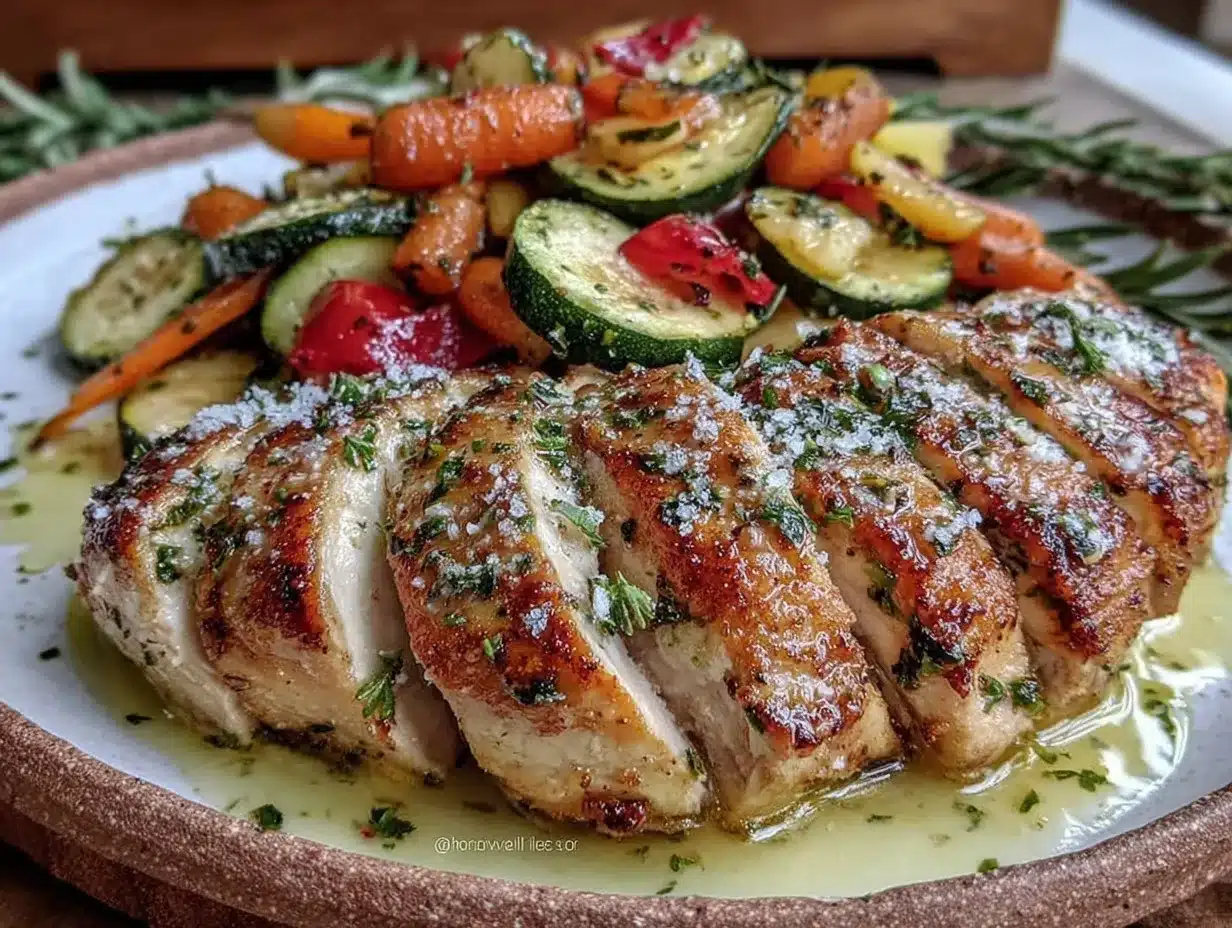
These easy advanced cooking techniques for beginners don’t demand a professional kitchen setup. Here’s a list of equipment that will make your life easier, but with budget-friendly alternatives:
- Heavy-bottomed skillet or cast iron pan: Perfect for searing. If you don’t have cast iron, a stainless steel pan works fine—just make sure it’s well-heated.
- Sharp chef’s knife: This is a must-have. A dull knife is not only frustrating but dangerous. If you’re on a budget, look for brands like Victorinox, which balance quality and price.
- Cutting board: Preferably wood or bamboo for knife longevity; plastic boards are easy to clean and dishwasher safe.
- Mixing bowls: Various sizes help with prep and mixing sauces.
- Measuring cups and spoons: Precision helps, especially when you’re mastering new techniques.
- Oven thermometer: Optional but useful for roasting; ovens can be unpredictable.
Personally, investing in a good cast iron skillet changed my searing game completely. Just remember to season it regularly—it’s worth the small effort. For knives, nothing beats the feel of a freshly sharpened blade. I keep a handheld sharpener nearby and use it before every cooking session.
Preparation Method
- Mastering the Sear:
Pat your protein dry with paper towels to prevent steaming. Heat your skillet over medium-high heat until it’s shimmering but not smoking (about 2-3 minutes). Add a tablespoon of high-smoke point oil and swirl to coat. Place your protein down gently—don’t crowd the pan. Let it cook undisturbed for 3-4 minutes (depending on thickness) until a golden crust forms. Flip and repeat. You’re aiming for a crusty exterior and juicy interior. Tip: If your meat sticks, it’s not ready to flip yet. - Deglazing the Pan:
After searing, remove the protein and lower heat to medium. Add minced shallots or garlic and sauté for 30 seconds until fragrant. Pour in 1/4 cup (60 ml) of white wine or broth, scraping the browned bits off the bottom with a wooden spoon—this is flavor gold. Let it reduce for 2-3 minutes, then swirl in a tablespoon of butter or cream for a silky sauce. Season with salt and pepper. - Knife Skills Basics:
Start with the claw grip to keep your fingertips safe. Practice dicing an onion: cut in half through the root, peel, then slice horizontally and vertically before chopping down. For julienne, slice carrots into thin sticks about 1/8 inch (3 mm) thick. Chiffonade herbs by stacking leaves, rolling tightly, and slicing thin ribbons. - Roasting Vegetables:
Preheat oven to 425°F (220°C). Cut vegetables into uniform pieces (~1 inch/2.5 cm). Toss in olive oil, salt, pepper, and herbs. Spread out on a baking sheet without overcrowding. Roast for 20-25 minutes, flipping halfway, until edges are golden and crispy. Note: Crowding causes steaming, not roasting. - Temperature Control:
Use an oven thermometer to keep your oven steady. For stovetop, adjust heat gradually rather than jumping to high immediately. Cooking is about patience—rushing often ruins texture and flavor. - Plating Like a Pro:
Use tongs to place your protein center plate. Arrange roasted veggies artfully around. Drizzle sauce over the top or on the side. A sprinkle of fresh herbs adds color and freshness. It’s all about balance and simplicity. - Cleaning As You Go:
Keep a damp cloth handy to wipe spills and a bowl for scraps. Staying organized saves time and stress, especially when juggling multiple steps.
Cooking Tips & Techniques
When you’re learning easy advanced cooking techniques for beginners, timing and observation are your best friends. For example, searing isn’t just about high heat; it’s about patience. I once flipped a steak too soon because I thought it was done, and that crust never formed properly—lesson learned.
Also, don’t underestimate the power of resting meat after cooking. Let it sit for 5-10 minutes; this helps juices redistribute, making the meat juicier and more tender.
For knife skills, practice is key. I used to rush chopping and end up with uneven pieces, which affected cooking times. Slowing down and focusing on technique improved my results dramatically.
Multitasking helps save time—while veggies roast, prepare your sauce or herbs. Just don’t overload yourself; keep mise en place (everything prepped and ready) to stay calm and efficient.
Finally, taste as you go. Salt and acid (like lemon juice or vinegar) brighten flavors and bring harmony. Add seasoning gradually; it’s easier to add than to fix an over-salted dish.
Variations & Adaptations
Once you’re comfortable with these easy advanced cooking techniques for beginners, feel free to experiment:
- Dietary: Swap butter for olive oil or coconut oil to keep things dairy-free. Use vegetable broth instead of chicken for vegetarian versions.
- Seasonal: Roast sweet potatoes or Brussels sprouts in fall; switch to asparagus or green beans come spring.
- Flavor Twists: Add spices like smoked paprika or curry powder to your roasting oil for a flavor boost. Experiment with fresh herbs like tarragon or dill for sauces.
- Cooking Methods: Instead of pan searing, try grilling your protein for a smoky taste. For roasting, use a grill pan indoors to get those char marks.
- Personal Variation: I once added a splash of balsamic vinegar during deglazing—it gave my sauce a sweet tang that blew me away. It’s those little tweaks that keep cooking exciting!
Serving & Storage Suggestions
Serve your seared proteins and roasted veggies hot, straight from the oven or stove. Presentation matters, so plate with care—use fresh herbs or a lemon wedge for a pop of color and brightness.
This kind of meal pairs beautifully with a simple green salad and a crisp white wine or sparkling water with lemon. For a cozy dinner, add crusty bread to soak up any extra sauce.
Leftovers store well in airtight containers in the fridge for up to 3 days. Reheat gently in a skillet over medium heat to preserve texture—microwaving can make proteins rubbery.
Flavors often deepen after a day in the fridge, so sometimes leftovers taste even better the next day—just like good memories in the kitchen.
Nutritional Information & Benefits
This collection of easy advanced cooking techniques for beginners promotes cooking with whole, fresh ingredients, which helps you control what goes into your meals. Proteins like chicken and fish provide lean, muscle-friendly nutrition, while roasting veggies retains vitamins and adds fiber.
Using healthy fats such as avocado or olive oil supports heart health. Reducing reliance on processed sauces and seasoning from scratch cuts down on sodium and additives.
These methods naturally fit into gluten-free, low-carb, and paleo diets with simple ingredient swaps. Just watch for allergens like dairy in sauces, which can be easily replaced.
From a wellness perspective, cooking at home with these techniques encourages mindful eating and appreciation for fresh flavors—something I find grounding and rewarding.
Conclusion
Easy advanced cooking techniques for beginners might sound like a contradiction, but trust me—they’re all about making cooking approachable and fun. Whether you want to impress guests or just feel more confident in your kitchen, these tips give you a solid foundation without overwhelming you.
Remember, there’s no one right way to cook; customize these techniques to your taste and lifestyle. I love that these methods helped me find joy in cooking again after feeling stuck in a rut. Hopefully, they’ll do the same for you.
Give these a try, tweak them, and share your kitchen wins with me—I’m excited to hear how they change your cooking game!
FAQs
What are the easiest advanced cooking techniques for beginners to start with?
Start with mastering a proper sear, deglazing a pan to make sauces, and basic knife skills like dicing and julienne. These form the backbone of many recipes and boost confidence quickly.
Can I practice these techniques without fancy equipment?
Absolutely! A good skillet, a sharp knife, and some basic measuring tools are enough. You can mimic advanced methods with simple kitchen gear.
How do I know when my protein is properly seared?
Look for a golden-brown crust that releases easily from the pan. If it sticks, it’s not ready to flip. The smell and sound of sizzling also help.
Is it okay to substitute ingredients in these techniques?
Yes! Swapping oils, broths, or vegetables to suit your diet or what’s on hand is encouraged. Just keep cooking times and temperatures in mind.
How do I avoid overcooking when roasting vegetables?
Cut veggies into uniform sizes and avoid overcrowding the pan. Roast at a high temperature (around 425°F/220°C) and check for tenderness and browning at the 20-minute mark.
For more inspiration on refining your cooking skills, you might find crispy garlic chicken techniques helpful, or explore quick roasted vegetables for tasty side ideas.
Pin This Recipe!
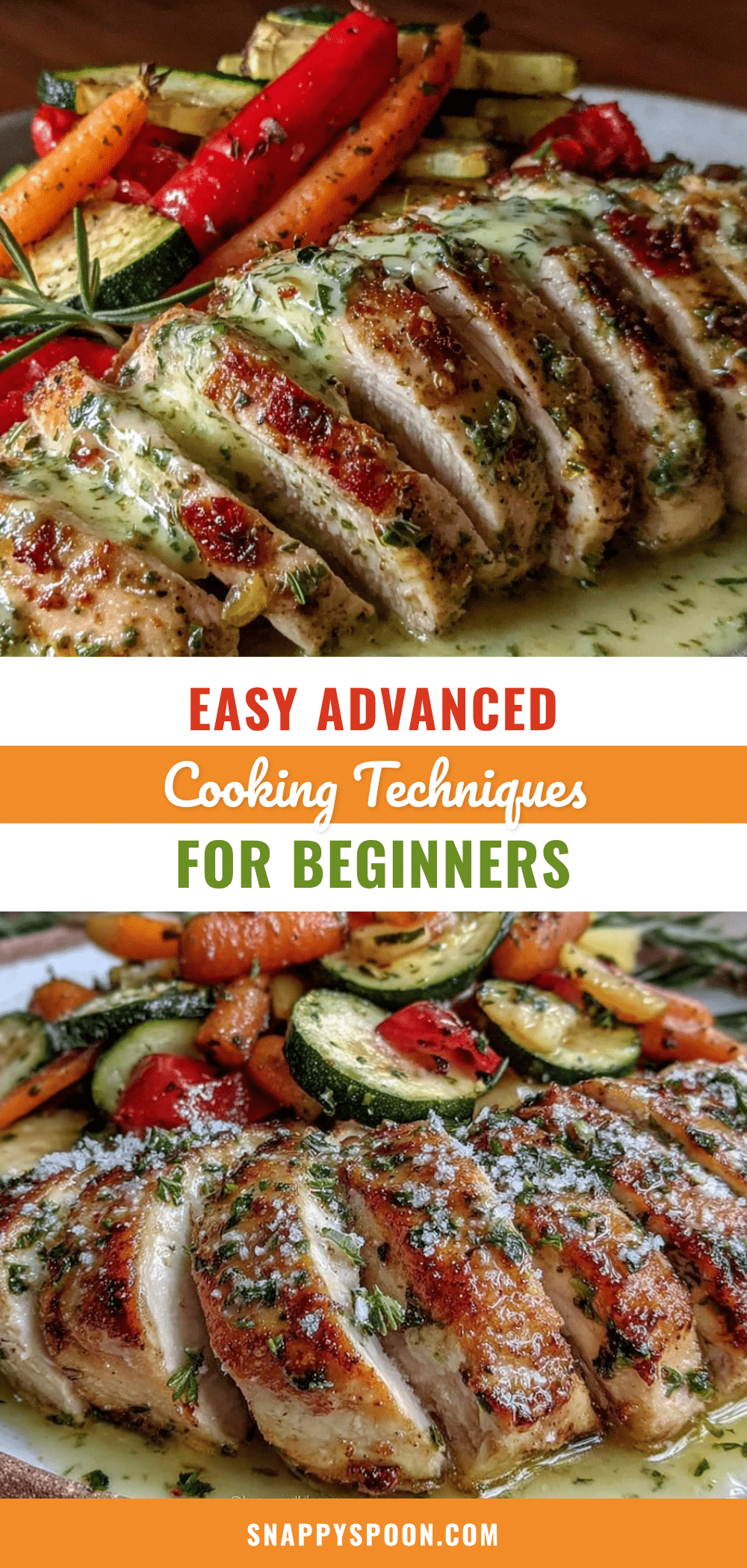
Easy Advanced Cooking Techniques for Beginners: 7 Perfect Tips to Master Faster
This guide offers simple, approachable advanced cooking techniques for beginners to boost confidence and improve meal quality with easy-to-follow steps and common ingredients.
- Prep Time: 15 minutes
- Cook Time: 30 minutes
- Total Time: 45 minutes
- Yield: 4 servings
- Category: Main Course
- Cuisine: American
Ingredients
- High-smoke point oil (e.g., avocado oil, grapeseed oil)
- Salt and freshly ground black pepper
- Boneless chicken breast or thighs, steak cuts, or firm fish fillets
- Dry white wine or broth (chicken or vegetable)
- Shallots or garlic, minced
- Butter or cream
- Firm vegetables like carrots, celery, and onions
- Fresh herbs (parsley, thyme, basil)
- Whole potatoes or root vegetables
- Olive oil
- Fresh rosemary or thyme sprigs
Instructions
- Mastering the Sear: Pat your protein dry with paper towels. Heat skillet over medium-high heat until shimmering but not smoking (about 2-3 minutes). Add 1 tablespoon of high-smoke point oil and swirl to coat. Place protein gently without crowding. Cook undisturbed for 3-4 minutes until golden crust forms. Flip and repeat.
- Deglazing the Pan: Remove protein and lower heat to medium. Add minced shallots or garlic and sauté for 30 seconds until fragrant. Pour in 1/4 cup (60 ml) white wine or broth, scraping browned bits with a wooden spoon. Let reduce for 2-3 minutes. Swirl in 1 tablespoon butter or cream. Season with salt and pepper.
- Knife Skills Basics: Use claw grip for safety. Dice an onion by cutting in half through root, peeling, slicing horizontally and vertically, then chopping down. Julienne carrots into thin sticks about 1/8 inch thick. Chiffonade herbs by stacking leaves, rolling tightly, and slicing thin ribbons.
- Roasting Vegetables: Preheat oven to 425°F (220°C). Cut vegetables into uniform ~1 inch pieces. Toss with olive oil, salt, pepper, and herbs. Spread on baking sheet without overcrowding. Roast 20-25 minutes, flipping halfway, until edges are golden and crispy.
- Temperature Control: Use oven thermometer to maintain steady oven temperature. Adjust stovetop heat gradually rather than jumping to high immediately.
- Plating Like a Pro: Use tongs to place protein center plate. Arrange roasted veggies around. Drizzle sauce over or on the side. Garnish with fresh herbs.
- Cleaning As You Go: Keep a damp cloth handy to wipe spills and a bowl for scraps to stay organized and reduce stress.
Notes
Pat proteins dry before searing to avoid steaming. Let meat rest 5-10 minutes after cooking for juiciness. Avoid overcrowding pans to prevent steaming instead of roasting. Use a sharp knife and proper grip for safety and efficiency. Taste as you go and add seasoning gradually. Substitute ingredients to fit dietary needs.
Nutrition
- Serving Size: 1 serving (protein w
- Calories: 350
- Sugar: 4
- Sodium: 350
- Fat: 18
- Saturated Fat: 4
- Carbohydrates: 15
- Fiber: 4
- Protein: 30
Keywords: advanced cooking techniques, beginner cooking tips, searing, deglazing, knife skills, roasting vegetables, cooking methods, easy cooking, kitchen confidence