Love this? Save it for later!
Share the inspiration with your friends
“I wasn’t expecting gourmet advice from my Uber driver, but there I was, nodding along while he described his secret to an amazing spaghetti dinner.” That’s how the story of this Easy Elevated Spaghetti with Rich Jarred Sauce began. Last Thursday evening, stuck in traffic and craving something comforting, I found myself chatting with Marco, a guy with an evident passion for simple, no-fuss cooking. He swore by starting with a good-quality jarred sauce and then adding a few pantry staples to transform it into something that feels homemade and special.
Honestly, I’ve always been skeptical of jarred sauces—they often seemed one-note or overly sweet. But Marco’s enthusiasm was contagious, and by the time I got home, I was rummaging through my pantry, determined to try his method. I forgot to pick up fresh basil like he suggested (typical me, right?), but the result was still incredible. The sauce simmered with garlic, a splash of red wine, and a handful of herbs I tossed in at the last minute. The aroma alone was enough to pull me from my usual spaghetti routine.
Maybe you’ve been there—needing a quick yet satisfying dinner that doesn’t involve twenty ingredients or hours of prep. This recipe stays with me because it’s the perfect balance of convenience and flavor, turning a humble jar of sauce into something that feels like a little celebration. Let me tell you, it’s become my go-to for busy nights when I want something comforting but don’t want to slave away in the kitchen. So, let’s talk about how to make this Easy Elevated Spaghetti with Rich Jarred Sauce your new weeknight hero.
Why You’ll Love This Recipe
After testing this recipe more times than I care to admit (and tweaking it based on Marco’s tips), I can say it’s a total winner. Here’s why you’re going to love it:
- Quick & Easy: Ready in about 25 minutes, perfect for busy weeknights or when you get home starving.
- Simple Ingredients: No need for fancy or hard-to-find items—everything comes from your pantry or fridge staples.
- Perfect for Casual Dinners: Whether you’re cooking for yourself or feeding a small family, it’s a fuss-free crowd-pleaser.
- Crowd-Pleaser: Everyone I’ve served it to, from picky teenagers to friends who claim they “don’t like jarred sauce,” asks for seconds.
- Unbelievably Delicious: The secret lies in layering flavors—sautéed garlic, a splash of wine, and fresh herbs bump the sauce up a notch.
What sets this version apart? Instead of just heating up sauce, you’re coaxing out deeper, richer flavors with a few simple tricks. The slow simmer, the splash of acidity from wine or balsamic, and a pinch of red pepper flakes bring complexity without any extra effort. Plus, finishing with a sprinkle of freshly grated Parmesan or a drizzle of good olive oil makes it feel like something special, even on a Tuesday night.
This isn’t just spaghetti; it’s comfort food redefined to be faster and more flavorful. It’s the kind of meal that hits the spot and leaves you feeling like you cooked something worth savoring. Trust me, once you try it this way, you’ll wonder why you ever settled for plain jarred sauce before.
What Ingredients You Will Need
This recipe uses straightforward ingredients that combine to create a rich, balanced sauce with satisfying texture and depth. You probably have most of these on hand, and if not, they’re easy to find at any grocery store.
- Spaghetti: About 12 ounces (340 grams) of dried spaghetti pasta—any brand works, but I prefer Barilla for consistent texture.
- Jarred Marinara Sauce: One 24-ounce (680 grams) jar of high-quality marinara sauce—look for brands with simple, natural ingredients like Rao’s or Victoria.
- Olive Oil: 2 tablespoons of extra virgin olive oil (adds richness and helps sauté the garlic).
- Garlic: 3 cloves, minced (fresh garlic is key for flavor).
- Red Onion: Half a small red onion, finely chopped (optional, but adds subtle sweetness).
- Red Wine or Balsamic Vinegar: 1/4 cup (60 ml) to add acidity and depth—choose a dry red wine you enjoy drinking.
- Dried Italian Herbs: 1 teaspoon (a mix of oregano, basil, and thyme works well).
- Red Pepper Flakes: 1/4 teaspoon for a gentle kick (adjust to your heat preference).
- Salt and Freshly Ground Black Pepper: To taste, for seasoning.
- Fresh Basil: A handful of fresh leaves, torn (can substitute with fresh parsley if preferred).
- Parmesan Cheese: Freshly grated, for garnish (optional but highly recommended).
Substitutions are straightforward: if you want to keep it vegan, skip the Parmesan or use a plant-based alternative. For gluten-free, swap spaghetti for your favorite gluten-free pasta. If you don’t have red wine, balsamic vinegar or even a splash of lemon juice can brighten the sauce nicely.
Equipment Needed
- Large pot for boiling pasta (a 6-quart pot or bigger works best to avoid sticking).
- Large skillet or saucepan for simmering the sauce (preferably non-stick or stainless steel).
- Colander for draining spaghetti.
- Wooden spoon or silicone spatula for stirring the sauce.
- Knife and cutting board for chopping garlic, onion, and herbs.
- Measuring cups and spoons for precise ingredient amounts.
If you don’t have a large skillet, a medium saucepan works fine—just be sure to stir frequently to prevent the sauce from sticking. For those on a budget, a basic non-stick pan will do the job perfectly. Also, a fine microplane grater for Parmesan makes finishing the dish quicker and easier, but a box grater works just as well.
Preparation Method
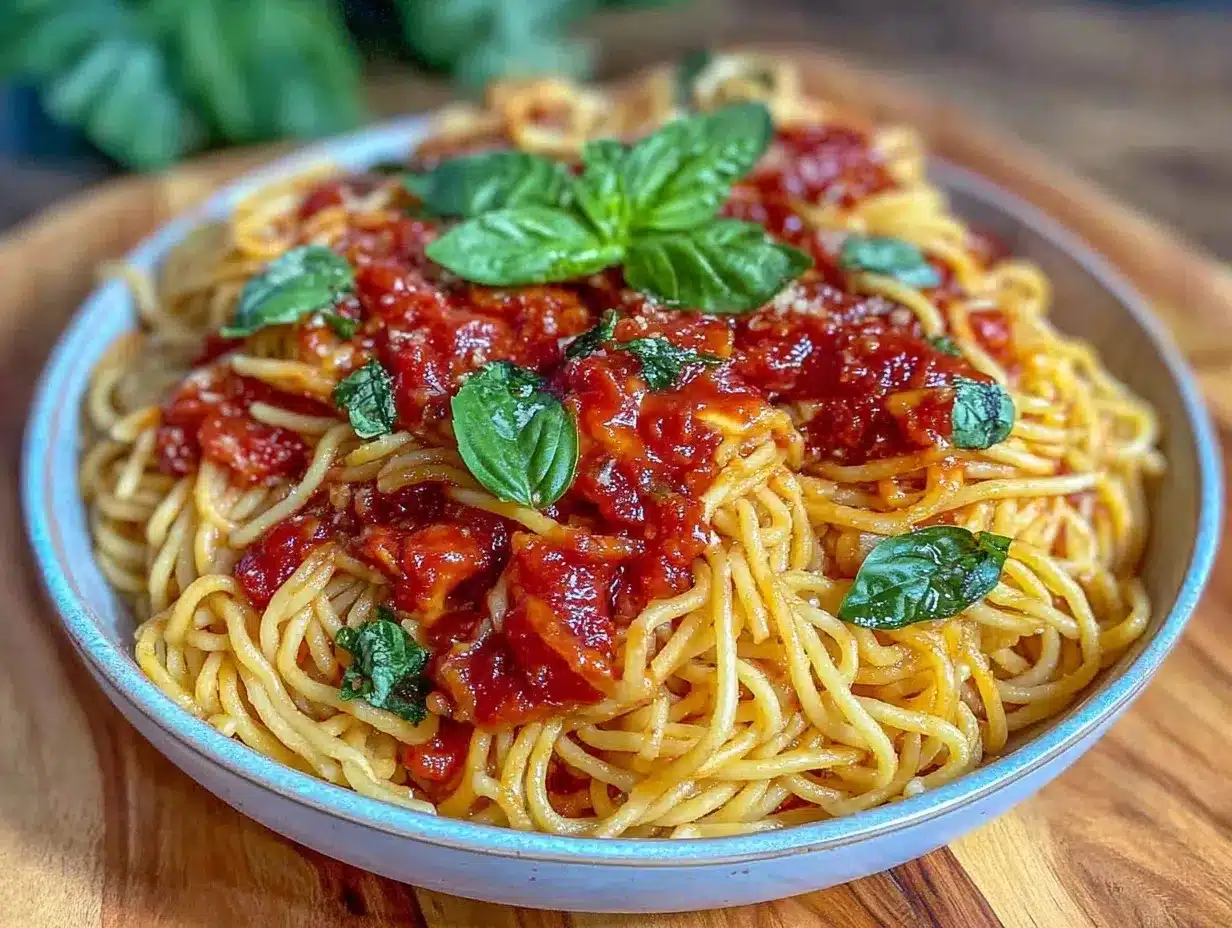
- Bring a large pot of salted water to a boil. Use about 4 quarts (3.8 liters) of water with 1 tablespoon of salt. This helps season the pasta as it cooks. It usually takes 8-10 minutes to reach a rolling boil.
- While waiting, heat olive oil in a large skillet over medium heat. Add the minced garlic and chopped red onion. Sauté for about 3-4 minutes until fragrant and the onion is soft but not browned. If your kitchen smells like garlic already, you’re on the right track!
- Add the jarred marinara sauce to the skillet. Pour in the entire 24-ounce (680 grams) jar. Stir to combine with the garlic and onion mixture.
- Pour in 1/4 cup (60 ml) of red wine or balsamic vinegar. This will add acidity and depth. Let the sauce come to a gentle simmer, then reduce heat to low.
- Season the sauce with dried Italian herbs, red pepper flakes, salt, and pepper. Stir thoroughly. Let it simmer for 12-15 minutes, stirring occasionally. This simmer allows the flavors to meld beautifully.
- Once the water boils, add the spaghetti. Cook according to package instructions (typically 8-10 minutes) until al dente. Stir occasionally to prevent sticking.
- Reserve 1/2 cup (120 ml) of pasta water before draining. This starchy water can loosen the sauce if needed.
- Drain the spaghetti and add it directly to the sauce skillet. Toss spaghetti gently in the sauce, adding reserved pasta water a few tablespoons at a time if the sauce feels too thick.
- Tear fresh basil leaves and stir them into the pasta and sauce. The bright herb adds freshness and color.
- Serve immediately with a generous sprinkle of freshly grated Parmesan cheese and a drizzle of olive oil. If you forgot the basil like me, don’t fret—Parmesan alone works wonders.
Pro tip: If your sauce tastes a bit flat, a tiny pinch of sugar can balance acidity. Also, don’t overcook pasta—it should have a little bite to hold up against the sauce.
Cooking Tips & Techniques
Honestly, the difference between good and great spaghetti often lies in technique rather than fancy ingredients.
- Salt your pasta water generously. It should taste like the sea—this is your first chance to season the pasta itself.
- Simmer the sauce gently. Avoid boiling vigorously; slow heat melds flavors better.
- Use the reserved pasta water. Those starchy droplets help the sauce cling to the noodles instead of sliding off.
- Don’t skip fresh herbs. Even a small handful adds brightness that cuts through the richness.
- Be patient with garlic. Cooking it low and slow prevents bitterness and brings out sweetness.
- Adjust seasoning last. Sauces can intensify as they cook, so taste before adding extra salt or pepper.
Early on, I used to rush the sauce simmer, which left it tasting flat. Now, I let it bubble gently while I multitask. Also, I once forgot to reserve pasta water—huge mistake! It made the sauce cling awkwardly and felt dry. Trust me, that step is worth remembering.
Variations & Adaptations
Want to mix things up or cater to dietary needs? Here are some easy ideas:
- Protein Boost: Add browned ground beef, Italian sausage, or sautéed mushrooms for a heartier meal.
- Vegetarian/Vegan: Use a vegan jarred sauce, skip cheese, and finish with nutritional yeast or vegan Parmesan.
- Spicy Kick: Increase red pepper flakes or add a splash of hot sauce to the simmering sauce.
- Gluten-Free: Swap regular spaghetti for a gluten-free pasta variety—brown rice or chickpea pasta works great.
- Seasonal Twist: Stir in roasted red peppers, olives, or fresh cherry tomatoes when in season for extra texture and flavor.
One of my favorite tweaks is adding a splash of cream or coconut milk at the end for a creamy tomato sauce version—super comforting on chilly nights.
Serving & Storage Suggestions
This Easy Elevated Spaghetti is best served hot, fresh from the pan, ideally with a simple side salad or crusty bread to soak up extra sauce. A glass of red wine pairs beautifully, echoing the splash of wine in the sauce.
Leftovers keep well in an airtight container in the fridge for up to 3 days. When reheating, add a splash of water or broth to loosen the sauce and heat gently on the stove to avoid drying out. Flavors actually deepen overnight, so sometimes I make it a day ahead and warm it up—it tastes even better the next day.
For longer storage, freeze the cooked pasta and sauce separately in freezer-safe containers for up to 2 months. Thaw overnight in the fridge and warm gently.
Nutritional Information & Benefits
This recipe provides a balanced meal with carbohydrates from pasta, healthy fats from olive oil, and antioxidants from tomatoes and herbs. Depending on your additions, you can boost protein and fiber content.
Using a quality jarred sauce means you get concentrated tomato flavor and lycopene, a powerful antioxidant linked to heart health. Olive oil contributes heart-healthy monounsaturated fats. Opting for whole wheat or legume-based pasta can increase fiber and protein, making the dish more filling.
Note: This recipe contains gluten and may include dairy if Parmesan cheese is added. Vegan and gluten-free adaptations are straightforward.
Conclusion
Easy Elevated Spaghetti with Rich Jarred Sauce is proof that simple ingredients, treated thoughtfully, can deliver a meal that feels both comforting and special. Whether you’re short on time or just want a satisfying dinner without fuss, this recipe hits the mark every time.
Feel free to customize it to your taste—add extra herbs, spice it up, or toss in your favorite veggies. Personally, this recipe reminds me that good food doesn’t have to be complicated; it just needs a little love and attention.
If you make it, I’d love to hear how you tweaked it or what your favorite jarred sauce brand is. Leave a comment below or share your version with friends—trust me, they’ll thank you!
Keep cooking, keep enjoying, and remember: sometimes, the best dinners come from the simplest ideas.
FAQs
Can I use any type of pasta for this recipe?
Absolutely! While spaghetti is classic, you can use penne, rigatoni, or even gluten-free pasta to suit your preference.
What if I don’t have red wine—can I skip it?
Yes, you can substitute with balsamic vinegar or a squeeze of lemon juice. These add brightness and depth without alcohol.
Is it okay to use store-bought jarred sauce?
Definitely. Choosing a high-quality jarred sauce with simple ingredients makes all the difference. Avoid ones with lots of added sugar or preservatives.
How do I prevent the pasta from sticking together?
Make sure to stir occasionally while cooking and use plenty of salted boiling water. Also, don’t rinse the pasta after draining to keep the starch that helps sauce cling.
Can I prepare this recipe ahead of time?
Yes, you can make the sauce a day ahead and reheat gently. Cooked pasta is best fresh but can be stored and reheated with a bit of extra sauce or water to keep it moist.
Pin This Recipe!
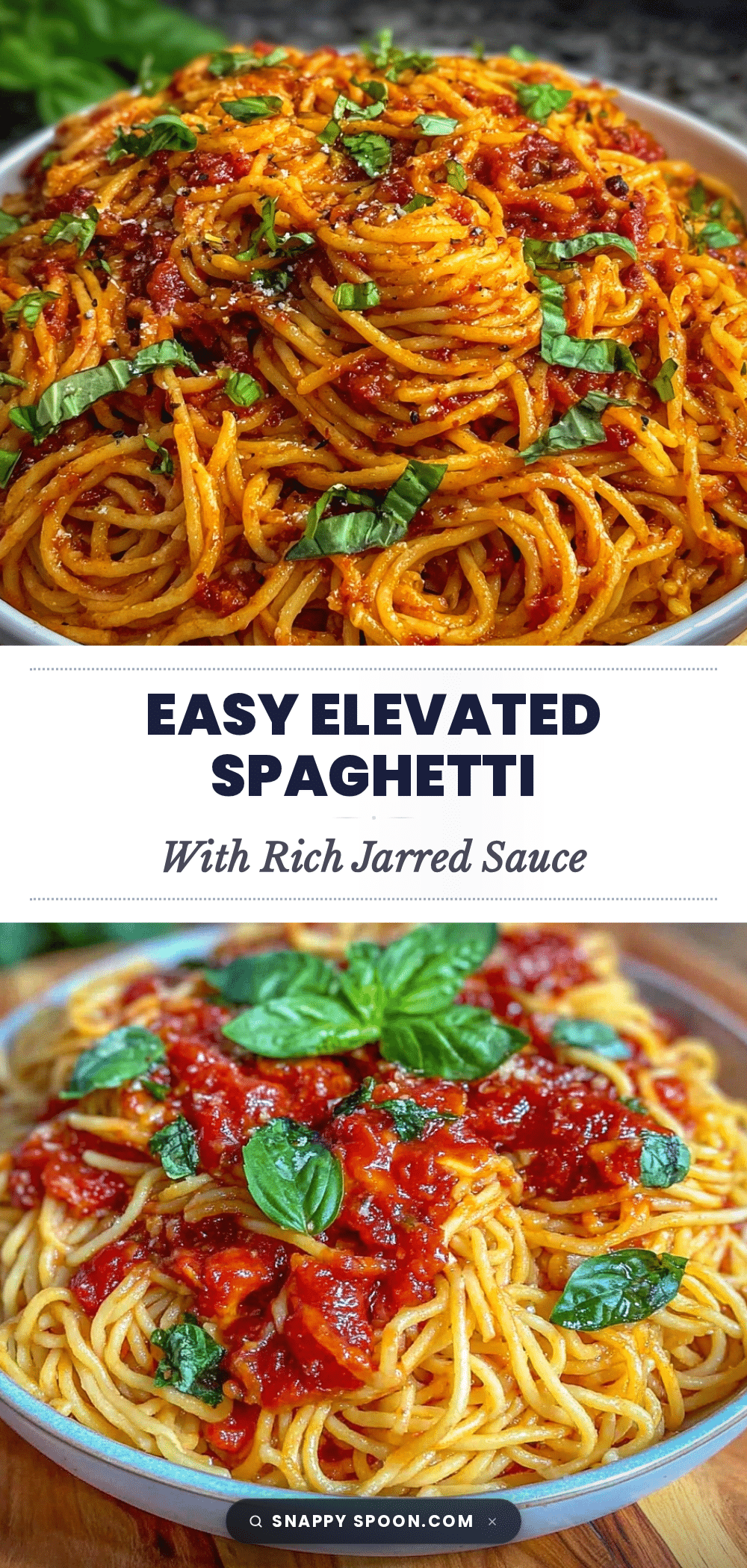
Easy Elevated Spaghetti Recipe with Rich Jarred Sauce for Perfect Dinner
A quick and flavorful spaghetti recipe that transforms a simple jarred marinara sauce into a rich, homemade-tasting dinner with a few pantry staples and simple techniques.
- Prep Time: 10 minutes
- Cook Time: 15 minutes
- Total Time: 25 minutes
- Yield: 4 servings 1x
- Category: Main Course
- Cuisine: Italian
Ingredients
- 12 ounces dried spaghetti pasta
- 1 (24-ounce) jar high-quality marinara sauce
- 2 tablespoons extra virgin olive oil
- 3 cloves garlic, minced
- 1/2 small red onion, finely chopped (optional)
- 1/4 cup red wine or balsamic vinegar
- 1 teaspoon dried Italian herbs (oregano, basil, thyme mix)
- 1/4 teaspoon red pepper flakes
- Salt, to taste
- Freshly ground black pepper, to taste
- Handful of fresh basil leaves, torn
- Freshly grated Parmesan cheese, for garnish (optional)
Instructions
- Bring a large pot of salted water (about 4 quarts) to a boil.
- While waiting, heat olive oil in a large skillet over medium heat. Add minced garlic and chopped red onion; sauté for 3-4 minutes until fragrant and onion is soft but not browned.
- Add the jarred marinara sauce to the skillet and stir to combine.
- Pour in 1/4 cup red wine or balsamic vinegar. Let the sauce come to a gentle simmer, then reduce heat to low.
- Season the sauce with dried Italian herbs, red pepper flakes, salt, and pepper. Let simmer for 12-15 minutes, stirring occasionally.
- Once the water boils, add spaghetti and cook according to package instructions (8-10 minutes) until al dente, stirring occasionally.
- Reserve 1/2 cup of pasta water before draining the spaghetti.
- Drain spaghetti and add it directly to the sauce skillet. Toss gently, adding reserved pasta water a few tablespoons at a time if sauce is too thick.
- Tear fresh basil leaves and stir into the pasta and sauce.
- Serve immediately with a sprinkle of freshly grated Parmesan cheese and a drizzle of olive oil.
Notes
If sauce tastes flat, add a tiny pinch of sugar to balance acidity. Do not overcook pasta; it should be al dente to hold up against the sauce. Use reserved pasta water to loosen sauce if needed. Fresh herbs add brightness and cut through richness. Vegan adaptations include skipping Parmesan or using plant-based alternatives. Gluten-free pasta can be substituted.
Nutrition
- Serving Size: 1 serving (about 1/4
- Calories: 420
- Sugar: 8
- Sodium: 600
- Fat: 12
- Saturated Fat: 2
- Carbohydrates: 62
- Fiber: 5
- Protein: 12
Keywords: spaghetti, jarred sauce, easy dinner, quick pasta recipe, marinara sauce, weeknight meal, simple spaghetti, Italian herbs, garlic pasta