Love this? Save it for later!
Share the inspiration with your friends
Introduction
“The sun was just setting, and I was standing in my tiny kitchen with a jar of elderflower cordial that I’d impulsively grabbed at the farmers market earlier that day. Honestly, I wasn’t sure what I was going to make with it—until I remembered that lemon cake recipe my friend Charlotte once mentioned. You know that feeling when a recipe idea just clicks? Well, that evening, with a cracked mixing bowl and a batter that looked a little too runny, I started experimenting with lemon and elderflower together. There was a moment when I thought I’d ruined it—I forgot to zest the lemons! But after baking it anyway, the cake came out light, fresh, and surprisingly floral. It tasted like springtime wrapped in a hug. I’ve made this Perfect Lemon Elderflower Celebration Cake with Floral Buttercream so many times since then, especially for birthdays and sunny afternoon teas. The buttercream frosting, scented delicately with elderflower, adds that extra magic, making it a standout dessert that everyone asks for again and again. Maybe you’ve been there—wanting a cake that’s not too heavy, bursting with bright flavors, but still feels special. This cake is exactly that, and I can’t wait to share it with you.”
Why You’ll Love This Recipe
After countless kitchen trials and a few happy accidents, this lemon elderflower celebration cake has become a go-to for marking special moments. Here’s why it stands out:
- Quick & Easy: The batter comes together in under 20 minutes, making it perfect for last-minute celebrations or when you’re craving something sweet but don’t want to fuss.
- Simple Ingredients: You likely have most of these in your pantry, and the elderflower cordial adds that sophisticated twist without complicated prep.
- Perfect for Any Occasion: Whether it’s a birthday, bridal shower, or just a weekend treat, this cake feels festive without being over the top.
- Crowd-Pleaser: From kids to grandparents, the light lemon flavor paired with the floral buttercream gets rave reviews every time.
- Unbelievably Delicious: The moist crumb and fragrant elderflower buttercream create a flavor combo that’s refreshing yet indulgent—the kind that makes you savor every bite.
This isn’t just another lemon cake recipe. The secret lies in balancing the tartness of fresh lemon with the delicate elderflower cordial in both the cake and the frosting. Plus, the floral buttercream is whipped to a silky texture that melts on your tongue. I’ve tested it extensively—sometimes swapping in local honey or adjusting the cordial amount depending on the season—and the results are always delightful. You’re not just baking a cake; you’re creating a moment that feels like a celebration in every slice.
What Ingredients You Will Need
This recipe calls for straightforward, wholesome ingredients that work together to create bold flavor and a satisfying texture without fuss. Most are pantry staples, with elderflower cordial adding a special seasonal touch.
- For the Cake Batter:
- All-purpose flour – 2 ½ cups (312 g), sifted for a light crumb
- Baking powder – 2 ½ teaspoons, to give the cake a nice lift
- Salt – ½ teaspoon, balances the sweetness
- Unsalted butter – 1 cup (227 g), softened (I prefer Plugrá for creaminess)
- Granulated sugar – 1 ¾ cups (350 g), for that perfect sweetness
- Large eggs – 4, room temperature (a must for fluffiness)
- Fresh lemons – zest of 3 lemons (about 3 tablespoons), plus ½ cup (120 ml) fresh lemon juice
- Buttermilk – 1 cup (240 ml), adds moisture and tenderness (or use plain yogurt mixed with a splash of milk)
- Elderflower cordial – ¼ cup (60 ml), look for a quality brand like Belvoir or make your own if you’re feeling adventurous
- For the Floral Buttercream:
- Unsalted butter – 1 cup (227 g), softened to room temperature
- Powdered sugar – 4 cups (480 g), sifted for smoothness
- Vanilla extract – 1 teaspoon, adds depth
- Elderflower cordial – 2 tablespoons, for that signature floral note
- Fresh lemon juice – 1 tablespoon, balances the sweetness
- Heavy cream – 2–3 tablespoons, to adjust consistency
If you’re baking in summer, fresh elderflowers (if you can find them) make a lovely garnish. For a gluten-free option, swapping the all-purpose flour with a 1-to-1 gluten-free blend works well but keep an eye on the baking time. I’ve also swapped butter for plant-based margarine to make a dairy-free version with tasty results.
Equipment Needed
- Two 8-inch (20 cm) round cake pans – non-stick or well-greased; I like using springform pans for easier release
- Electric mixer – stand or hand-held for creaming butter and sugar and whipping buttercream
- Mixing bowls – medium and large; glass or stainless steel preferred
- Zester or microplane – for fresh lemon zest
- Measuring cups and spoons – for accurate ingredient amounts (I keep a digital scale handy for grams)
- Rubber spatula – for folding batter gently
- Cooling racks – to prevent soggy cake bottoms
- Piping bag and tips (optional) – if you want to get fancy with the buttercream, but spreading with an offset spatula works just as well
If you don’t have a stand mixer, a sturdy hand mixer will do just fine—though you’ll want to mix a bit longer to get that fluffy texture. For budget-friendly baking, using silicone baking mats or parchment paper helps with cleanup and prevents sticking. I learned the hard way that letting your butter soften properly before mixing is key—too cold, and the batter looks lumpy, too warm, and it gets greasy.
Preparation Method
- Prep your pans and ingredients: Preheat your oven to 350°F (175°C). Grease and flour your two 8-inch pans or line with parchment paper. Bring your eggs and butter to room temperature; this usually takes about 30 minutes. Zest the lemons and then juice them, measuring out your liquids.
- Mix dry ingredients: In a medium bowl, sift together the all-purpose flour, baking powder, and salt. Set aside.
- Cream butter and sugar: Using your mixer, beat the softened butter on medium speed for about 2 minutes until smooth and creamy. Gradually add the granulated sugar and continue beating for another 3-4 minutes until light and fluffy. This step is key for a tender cake crumb.
- Add eggs: Crack eggs one at a time into the butter-sugar mixture, beating well after each addition. Scrape down the sides of the bowl as needed. The batter might look a bit curdled here, which is normal.
- Incorporate lemon and elderflower: Stir in the lemon zest, fresh lemon juice, and elderflower cordial. Mix until combined but don’t overdo it.
- Alternate adding dry ingredients and buttermilk: With the mixer on low, add about one-third of the flour mixture, then half the buttermilk, mixing just until combined. Repeat, ending with the flour. Overmixing can make the cake tough, so be gentle here.
- Divide and bake: Pour the batter evenly into the prepared pans and gently smooth the tops. Bake for 30-35 minutes or until a toothpick inserted in the center comes out clean. The cake should spring back lightly when pressed. Rotate pans halfway through baking if your oven heats unevenly.
- Cool completely: Let cakes cool in the pans for 10 minutes, then turn out onto wire racks to cool fully—this prevents sogginess and makes frosting easier.
- Make the floral buttercream: Beat softened butter on medium speed until creamy (about 2 minutes). Gradually add powdered sugar, one cup at a time, beating well after each. Stir in vanilla extract, elderflower cordial, and lemon juice. Add heavy cream a tablespoon at a time until you reach a smooth, spreadable consistency. Taste and adjust elderflower or lemon intensity as you prefer.
- Assemble the cake: Place one cake layer on your cake plate. Spread a generous layer of buttercream on top. Add the second cake layer, then frost the top and sides evenly. For a smooth finish, dip your spatula in hot water and wipe dry before smoothing the frosting.
Pro tip: If your buttercream feels too soft, pop it in the fridge for 10 minutes before frosting. And don’t rush cooling—warm cakes can melt the frosting, turning it into a mess. Remember the time I skipped that step and ended with a lopsided, buttercream puddle? Yeah, learned my lesson the hard way.
Cooking Tips & Techniques
Making this lemon elderflower cake really shines with a few kitchen tricks I picked up over time:
- Room temperature ingredients: Butter and eggs mix better when not cold—this helps trap air for a lighter texture.
- Zest before juicing: It’s easier to zest lemons when whole. Fresh zest packs more flavor than bottled.
- Measuring flour correctly: Use a spoon-and-level method instead of scooping directly to avoid dense cake.
- Don’t overmix: Once you add flour, mix just until combined. Overworking gluten develops a chewy cake, which we don’t want here.
- Check doneness early: Ovens vary, so start checking your cake at 30 minutes. Insert a toothpick into the center; if it comes out with moist crumbs but no wet batter, it’s perfect.
- Buttercream consistency: If it’s too stiff, a splash of cream loosens it. Too soft? Chill it briefly. I’ve learned to taste test before frosting to balance the elderflower and lemon just right.
- Multitasking tip: While the cake bakes, whip up the buttercream. It saves time and keeps you in the flow of the kitchen.
One time, I tried rushing the cooling step and started frosting a warm cake—lesson learned! The buttercream melted, and I ended up with a dripping disaster. Patience is key, my friend.
Variations & Adaptations
This cake is wonderfully adaptable depending on your mood or dietary needs. Here are some ideas:
- Gluten-Free Version: Swap all-purpose flour with a 1-to-1 gluten-free baking flour. The texture stays moist, but watch the baking time—it might be a few minutes less.
- Vegan Adaptation: Use plant-based butter and substitute eggs with flax eggs (1 tablespoon ground flaxseed + 3 tablespoons water per egg). Replace buttermilk with almond or soy milk plus a teaspoon of vinegar.
- Seasonal Twist: In late summer, try adding fresh raspberries between the layers or on top for a pop of color and tartness that pairs beautifully with elderflower.
- Herbal Infusion: Add a teaspoon of finely chopped fresh thyme or lavender to the batter or buttercream for an extra floral note.
- Sweetener Swap: Replace half of the granulated sugar with honey or maple syrup for a richer flavor profile.
Once, I made this cake with a splash of rose water instead of elderflower cordial—different but equally delightful. Feel free to experiment, because this cake’s delicate base welcomes creativity.
Serving & Storage Suggestions
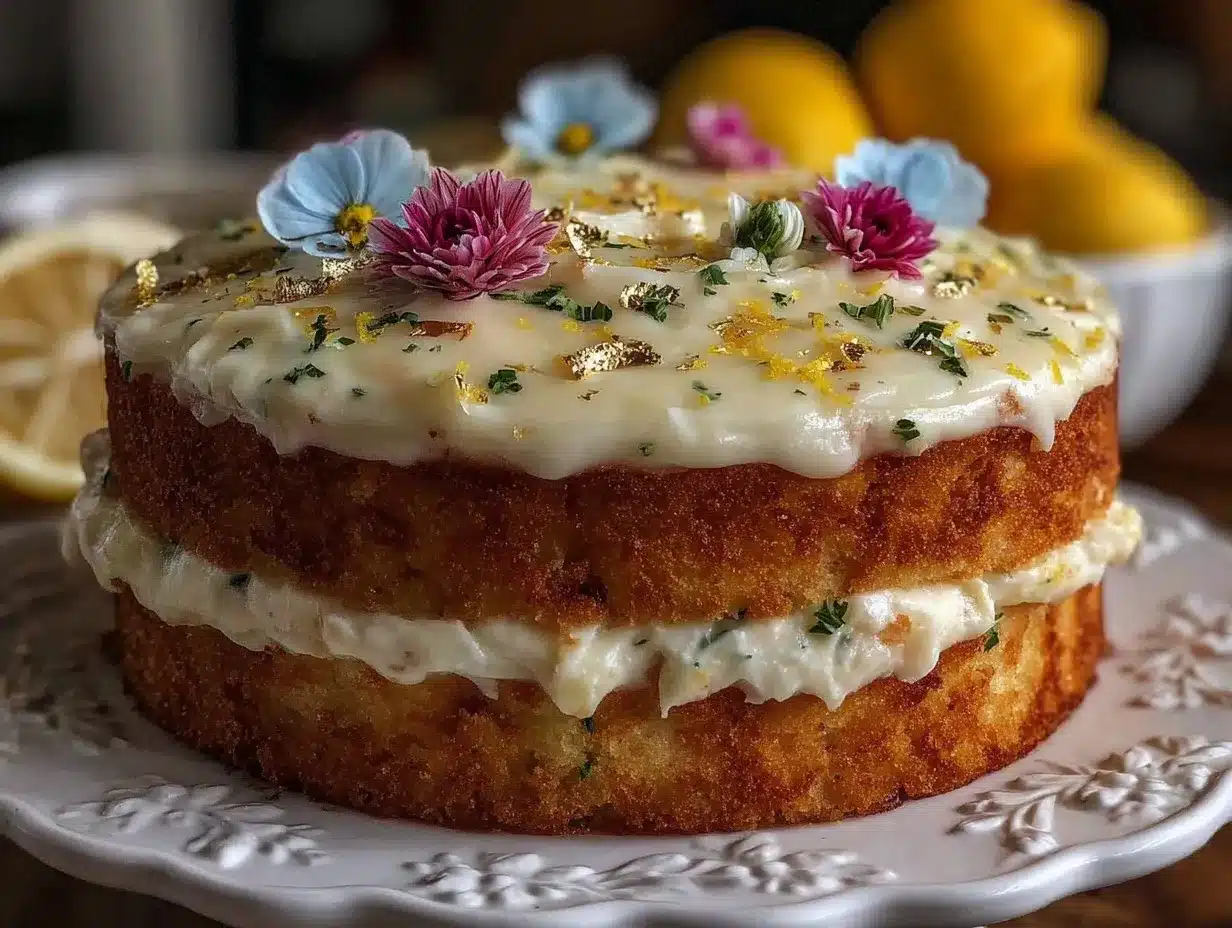
This cake shines when served at room temperature, allowing the lemon and elderflower flavors to fully bloom. For presentation, a light dusting of powdered sugar or a few edible flowers on top adds a charming touch. It pairs wonderfully with a cup of Earl Grey tea or a crisp glass of sparkling wine for celebrations.
Store leftover cake tightly wrapped in the refrigerator for up to 4 days. To freeze, wrap well in plastic wrap and then foil, freezing for up to 2 months. Thaw overnight in the fridge and bring to room temperature before serving.
Reheating isn’t necessary, but if you prefer, a quick 10-15 second zap in the microwave softens the buttercream slightly—just watch it doesn’t melt away. Interestingly, the flavors meld and deepen after a day, so sometimes waiting a bit makes it even tastier.
Nutritional Information & Benefits
Each slice of this lemon elderflower celebration cake provides an estimated 350-400 calories, depending on portion size. The cake offers moderate protein from eggs and a good dose of vitamin C thanks to fresh lemon juice and zest. Elderflower cordial, while adding flavor, contributes minimal calories but brings antioxidants linked to anti-inflammatory benefits.
This recipe can be tailored for lower sugar or dairy-free diets with simple swaps, making it accessible for many. The use of fresh ingredients and natural flavorings means you’re enjoying a treat that’s both indulgent and thoughtfully crafted. Plus, who says celebration cakes can’t have a little wellness boost?
Conclusion
This Perfect Lemon Elderflower Celebration Cake with Floral Buttercream isn’t just a dessert—it’s a little moment of joy wrapped in layers of bright, floral flavor. Whether you’re baking for a special occasion or just to brighten a random Tuesday afternoon, this recipe is easy enough to whip up and impressive enough to steal the show. I love how it manages to be both light and indulgent, with that delicate elderflower note that feels so unique.
Feel free to tweak the floral notes or add your own seasonal twist—baking is all about making a recipe your own. If you give this cake a try, I’d love to hear how it went or what variations you created. Go ahead, make something sweet today and celebrate those little moments that deserve cake!
FAQs
Can I make this cake ahead of time?
Yes! You can bake the cake layers up to two days in advance and keep them wrapped tightly in the fridge. Assemble and frost the day you plan to serve for the freshest taste.
What if I don’t have elderflower cordial?
You can substitute with a teaspoon of elderflower syrup or replace it with rose water for a different floral note. Just adjust to taste, as these can be more concentrated.
How do I prevent my buttercream from being grainy?
Make sure to sift your powdered sugar before mixing and beat your buttercream long enough until it’s silky smooth. Room temperature butter helps too.
Can I use lemon extract instead of fresh lemon juice and zest?
While lemon extract works in a pinch, fresh lemon juice and zest provide a brighter, more natural flavor that really makes this cake special.
Is this cake suitable for freezing?
Absolutely! Wrap layers tightly and freeze for up to 2 months. Thaw overnight in the fridge before frosting and serving.
Pin This Recipe!
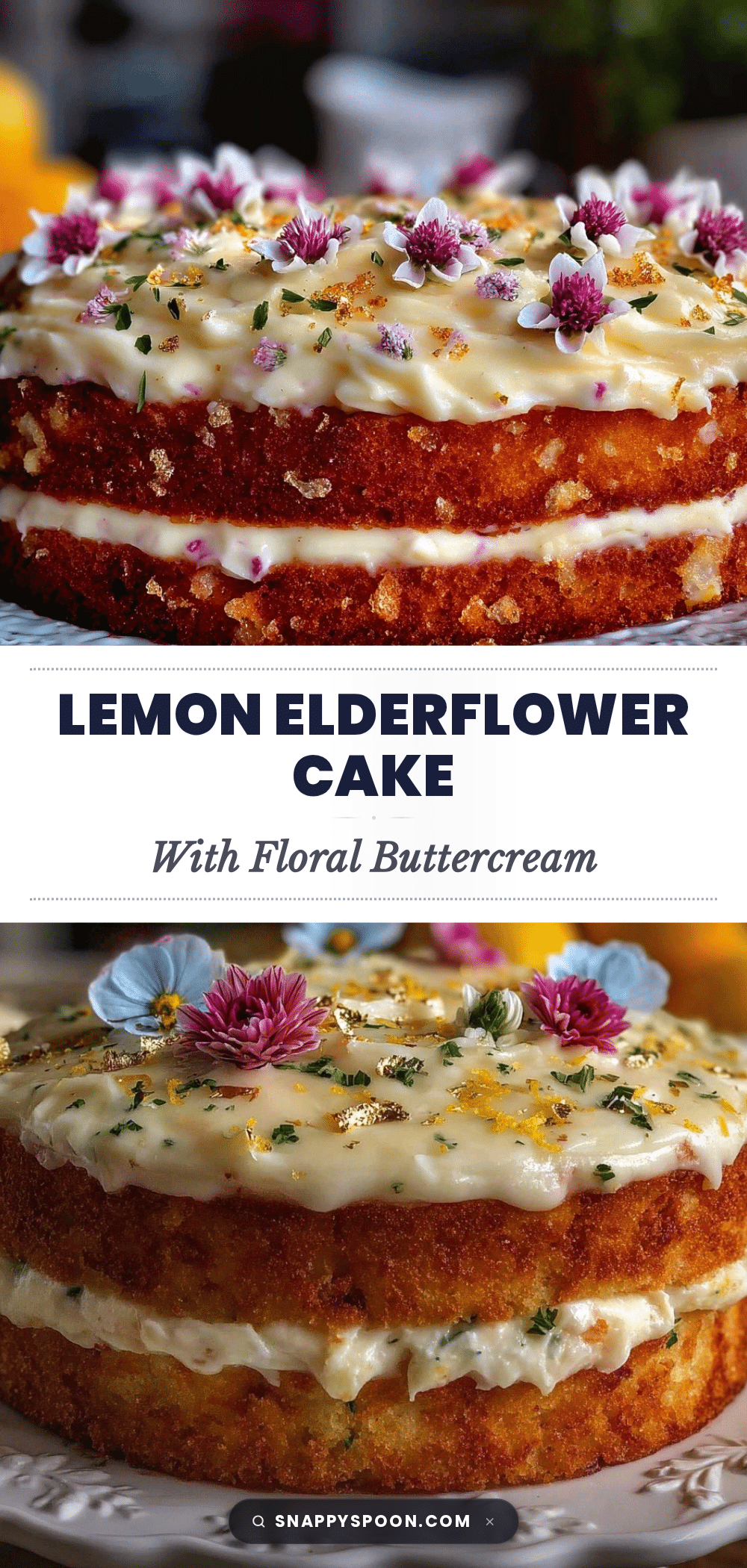
Perfect Lemon Elderflower Celebration Cake with Floral Buttercream
A light, fresh, and floral lemon cake enhanced with elderflower cordial and topped with a silky elderflower-scented buttercream. Perfect for celebrations and sunny afternoon teas.
- Prep Time: 20 minutes
- Cook Time: 30-35 minutes
- Total Time: 50-55 minutes
- Yield: 12 servings 1x
- Category: Dessert
- Cuisine: British
Ingredients
- 2 ½ cups (312 g) all-purpose flour, sifted
- 2 ½ teaspoons baking powder
- ½ teaspoon salt
- 1 cup (227 g) unsalted butter, softened
- 1 ¾ cups (350 g) granulated sugar
- 4 large eggs, room temperature
- Zest of 3 lemons (about 3 tablespoons)
- ½ cup (120 ml) fresh lemon juice
- 1 cup (240 ml) buttermilk (or plain yogurt mixed with a splash of milk)
- ¼ cup (60 ml) elderflower cordial
- For the Floral Buttercream:
- 1 cup (227 g) unsalted butter, softened to room temperature
- 4 cups (480 g) powdered sugar, sifted
- 1 teaspoon vanilla extract
- 2 tablespoons elderflower cordial
- 1 tablespoon fresh lemon juice
- 2–3 tablespoons heavy cream
Instructions
- Preheat oven to 350°F (175°C). Grease and flour two 8-inch round cake pans or line with parchment paper. Bring eggs and butter to room temperature. Zest and juice lemons.
- In a medium bowl, sift together flour, baking powder, and salt. Set aside.
- Using a mixer, beat softened butter on medium speed for about 2 minutes until smooth and creamy. Gradually add granulated sugar and beat for 3-4 minutes until light and fluffy.
- Add eggs one at a time, beating well after each addition. Scrape down bowl sides as needed.
- Stir in lemon zest, fresh lemon juice, and elderflower cordial until combined.
- With mixer on low, alternately add flour mixture and buttermilk in thirds and halves respectively, starting and ending with flour. Mix just until combined.
- Divide batter evenly between prepared pans and smooth tops gently.
- Bake for 30-35 minutes or until a toothpick inserted in the center comes out clean. Rotate pans halfway through baking if needed.
- Cool cakes in pans for 10 minutes, then turn out onto wire racks to cool completely.
- For the buttercream: Beat softened butter on medium speed until creamy (about 2 minutes). Gradually add powdered sugar, one cup at a time, beating well after each addition.
- Stir in vanilla extract, elderflower cordial, and lemon juice. Add heavy cream a tablespoon at a time until smooth and spreadable. Adjust elderflower and lemon to taste.
- Assemble cake by placing one layer on a plate, spreading a generous layer of buttercream on top. Add second layer and frost top and sides evenly.
- For a smooth finish, dip spatula in hot water, wipe dry, and smooth frosting.
- If buttercream is too soft, chill for 10 minutes before frosting.
Notes
Use room temperature butter and eggs for best texture. Do not overmix after adding flour to avoid toughness. Check cake doneness starting at 30 minutes. Chill buttercream if too soft before frosting. For gluten-free, substitute flour with 1-to-1 gluten-free blend and adjust baking time. Vegan adaptations include plant-based butter, flax eggs, and non-dairy milk with vinegar.
Nutrition
- Serving Size: 1 slice (1/12th of c
- Calories: 375
- Sugar: 38
- Sodium: 210
- Fat: 18
- Saturated Fat: 11
- Carbohydrates: 52
- Fiber: 1
- Protein: 4
Keywords: lemon cake, elderflower cake, floral buttercream, celebration cake, easy lemon cake, birthday cake, spring cake, elderflower cordial