Love this? Save it for later!
Share the inspiration with your friends
“The smell of berbere spice hit me before I even stepped inside the tiny Ethiopian market on a random Thursday afternoon,” I remember telling my friend as I clumsily balanced my basket overflowing with injera and fresh herbs. Honestly, I wasn’t expecting to find such a perfect recipe scribbled in the margins of an old notebook tucked behind the cashier’s counter. The shop owner, a cheerful woman named Aster, caught me eyeing the spicy red powder and leaned over to share her grandmother’s secret for making the most flavorful Doro Wat chicken stew.
She spoke with such pride about the layers of spices simmered slowly to create a rich, comforting stew that’s both fiery and soulful. I was skeptical at first—I mean, I’d tried a few Ethiopian recipes before, but they never quite captured that deep, lingering warmth that this stew promised. But after a few trial runs (and a kitchen disaster involving way too much niter kibbeh butter), I finally nailed the balance.
Maybe you’ve been there—trying to recreate a dish that haunts your taste buds but ends up tasting like a sad shadow. Well, this Flavorful Ethiopian Doro Wat Spiced Chicken Stew is the real deal. It’s the kind of dish that wraps you up like a cozy blanket on a chilly night. Plus, it’s a fantastic way to impress friends or add some spice to your weeknight dinners without a ton of fuss. Let me tell you, once you get this recipe down, it sticks with you—just like that smoky, spicy aroma that fills your kitchen and makes everyone ask for seconds.
Why You’ll Love This Recipe
Honestly, making this Flavorful Ethiopian Doro Wat Spiced Chicken Stew was a game-changer in my kitchen. I’m not just talking about the incredible taste—though it’s absolutely mouthwatering—but how straightforward it is to pull together.
- Quick & Easy: You can have this stew simmering in under an hour, perfect for those busy evenings when you crave something hearty but don’t want to slave over the stove.
- Simple Ingredients: Most of the spices and ingredients are pantry staples or easy to find, especially if you have access to an international market. No obscure items here!
- Perfect for Sharing: Whether it’s a family dinner or a casual get-together, this dish is a crowd-pleaser that brings people together around the table.
- Authentic Flavor: The slow-cooked blend of berbere, niter kibbeh, and fresh garlic creates a depth of flavor that sets it apart from other chicken stews.
- Comfort Food with a Kick: It’s spicy but balanced, warming without overwhelming your palate—comfort food that feels a little adventurous.
What really makes this recipe stand out is the method of layering spices and the slow simmer, which mellows the heat while deepening the flavors. It’s not just a stew—it’s a story in a bowl, and I’ve found that once you taste it, you’ll keep coming back to it, just like I do. I’m telling you, this isn’t your average chicken stew. It’s the kind that makes you close your eyes and savor every bite.
What Ingredients You Will Need
This recipe uses simple, wholesome ingredients to deliver bold flavor and satisfying texture without the fuss. Most of these are pantry staples if you cook regularly with spices, but a few special items like niter kibbeh really bring the authentic Ethiopian touch.
- For the Chicken Stew:
- 2 lbs (900g) chicken drumsticks or thighs, skin removed (for tender, juicy meat)
- 2 large onions, finely chopped (the base for that rich flavor)
- 4 cloves garlic, minced (adds savory depth)
- 1-inch piece fresh ginger, minced (for that subtle warmth)
- 3 tablespoons berbere spice blend (the star spice, smoky and spicy; I like Awaze brand for consistency)
- 3 tablespoons niter kibbeh (Ethiopian spiced clarified butter; can substitute with regular unsalted butter mixed with a pinch of fenugreek and cardamom)
- 1/4 cup tomato paste (adds umami and richness)
- 2 cups chicken broth (preferably low sodium)
- Juice of 1 lemon (balances the spice)
- Salt and freshly ground black pepper, to taste
- For Serving:
- Injera (Ethiopian flatbread) or steamed rice
- Hard-boiled eggs (optional but traditional; 4-6 eggs, peeled)
Tip: If you can’t find berbere, you can mix smoked paprika, cayenne, ground ginger, cinnamon, and fenugreek to get close, but the authentic blend really makes the difference.
For niter kibbeh, I recommend grabbing a small jar from an Ethiopian grocery or making your own if you’re feeling adventurous—it’s worth the effort for that unique flavor.
Equipment Needed
- Large heavy-bottomed pot or Dutch oven (for even heat distribution and slow simmering)
- Sharp chef’s knife (to finely chop onions and mince garlic and ginger)
- Wooden spoon or heatproof spatula (to stir the stew gently)
- Measuring spoons and cups (for precise spice and liquid measurements)
- Small bowl (for mixing lemon juice and seasoning)
- Optional: fine-mesh strainer if you want a smoother onion base
I’ve tried this stew in everything from basic stockpots to my trusty Le Creuset Dutch oven. Honestly, the Dutch oven makes the slow cooking easier because it holds heat so well and prevents burning. If you don’t have one, just keep the heat low and stir often to avoid sticking.
If you want to prep ahead, a food processor can chop onions and garlic quickly, but doing it by hand gives you a bit more texture and control.
Preparation Method
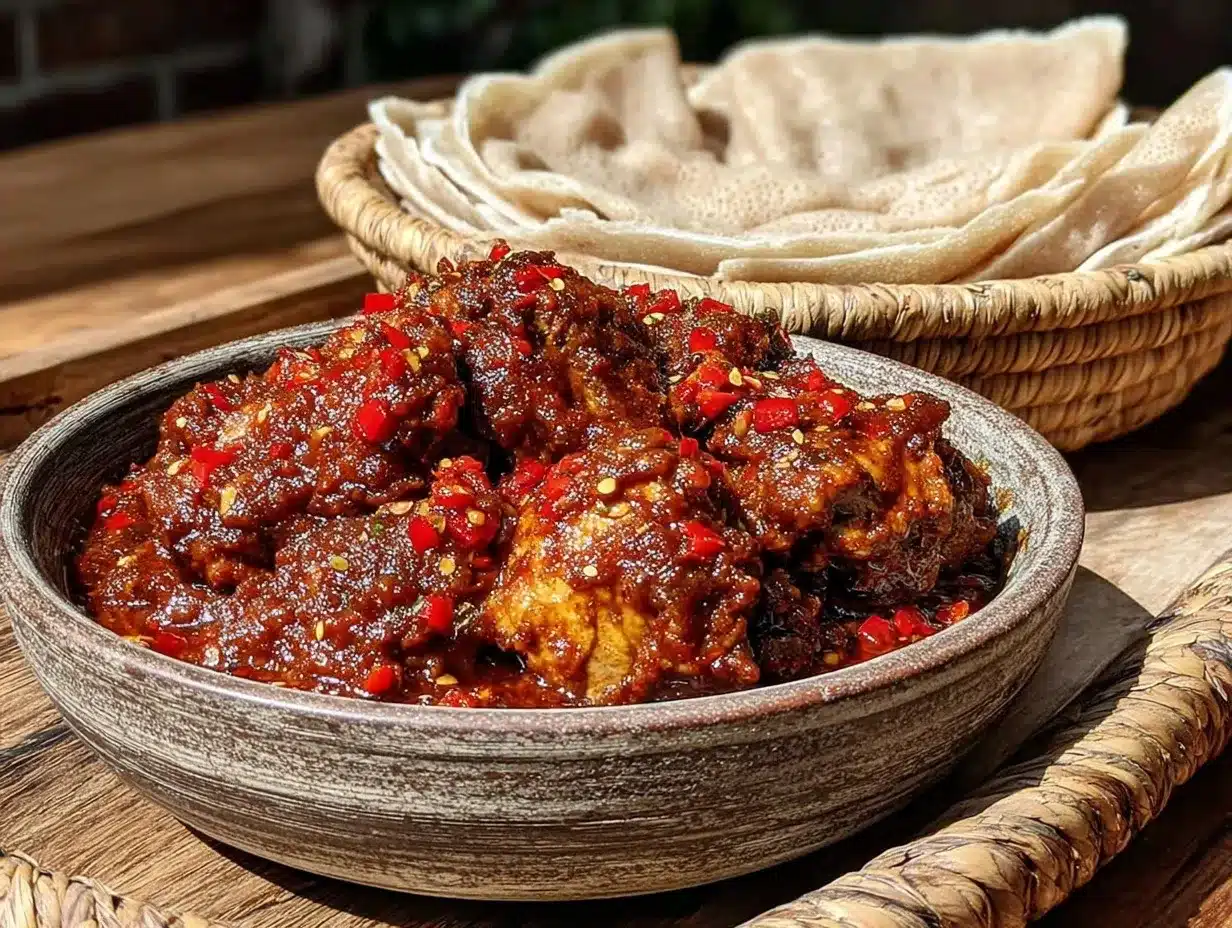
- Prepare the Chicken: Rinse and pat dry the chicken pieces. Season lightly with salt and pepper. Set aside while you prep the other ingredients. (5 minutes)
- Cook the Onions Slowly: In your pot or Dutch oven, melt the niter kibbeh over medium-low heat. Add the chopped onions and cook gently, stirring often, for about 20-25 minutes until they turn a deep golden brown and have caramelized slightly. This slow cooking is key to building the stew’s rich base.
- Add Garlic and Ginger: Stir in the minced garlic and ginger, cooking for another 2-3 minutes until fragrant. Be careful not to burn the garlic—it should smell warm and inviting.
- Incorporate the Berbere Spice: Sprinkle in the berbere spice blend, stirring constantly to coat the onions and aromatics. Cook for 2-3 minutes to toast the spices, which really wakes up their flavor.
- Mix in Tomato Paste: Add the tomato paste and stir well. Let it cook for 3-4 minutes, allowing the tomato paste to slightly caramelize and deepen the stew’s color and flavor.
- Add Chicken Pieces: Nestle the chicken into the pot, coating them with the spice and onion mixture. Cook for 5 minutes, turning occasionally, so the chicken starts absorbing the flavors.
- Pour in Chicken Broth: Add 2 cups (480 ml) of chicken broth, scraping the bottom of the pot to loosen any browned bits. Bring the stew to a gentle simmer.
- Simmer Slowly: Cover partially and let simmer on low heat for 40-45 minutes. The chicken should become tender, and the sauce will thicken beautifully. Stir occasionally and adjust heat to keep a gentle bubble.
- Add Lemon Juice and Season: Stir in the lemon juice and taste. Adjust salt and pepper as needed. The lemon brightens the stew and balances the spicy heat.
- Optional Hard-Boiled Eggs: If using, add peeled hard-boiled eggs to the stew during the last 10 minutes of cooking to absorb some of the flavors.
Note: If you notice the stew thickening too much, add a splash more broth or water. The texture should be thick but saucy, perfect for soaking up with injera or rice.
Trust me, the aroma at this stage is unbelievable. When I first made this, my cat kept trying to sneak in the kitchen because of the smell—just a little heads-up, you might want to keep curious pets away!
Cooking Tips & Techniques
Getting this Doro Wat just right can feel like a bit of an art form, but I’ve picked up some handy tricks along the way.
- Patience with Onions: Don’t rush the caramelizing of onions; it’s the foundation of the stew’s deep flavor. Low and slow wins every time.
- Use Fresh Spices: Berbere loses punch if it’s old. I buy mine in small batches or from trusted Ethiopian markets to keep it fragrant.
- Control the Heat: The stew should simmer gently. Too high a heat will toughen the chicken and risk burning the spices.
- Layer Flavors: Toasting the spices briefly before adding liquids really boosts the aroma. Don’t skip this step.
- Multitasking: While the onions cook, prep your garlic and ginger to keep things moving smoothly.
- For Creamier Texture: Some cooks add a splash of plain yogurt or a small handful of crushed roasted chickpeas towards the end to mellow the heat and thicken the sauce.
- Don’t Forget the Niter Kibbeh: It’s easy to substitute with butter, but that spiced butter adds a distinctive flavor that truly sets this stew apart.
I once forgot to remove the skin from my chicken, and the stew ended up a little greasy. Lesson learned: skinless chicken is best for this recipe to keep the sauce clean and vibrant.
Variations & Adaptations
This Flavorful Ethiopian Doro Wat Chicken Stew is wonderfully flexible, so feel free to make it your own.
- Vegetarian Version: Swap chicken for hearty vegetables like eggplant, mushrooms, or chickpeas. Use vegetable broth and add a bit more berbere for spice.
- Less Spicy: Reduce the berbere amount by half and add a touch of smoked paprika to keep some smokiness without the heat.
- Slow Cooker Adaptation: After browning onions and spices, transfer everything to a slow cooker and cook on low for 4-6 hours. Add lemon juice and seasoning at the end.
- Low-Carb Option: Serve over cauliflower rice instead of injera or traditional rice.
- Personal Twist: I’ve added a splash of red wine during the simmering step once, which gave the stew a subtle richness and complexity. Totally worth trying if you have it on hand.
Serving & Storage Suggestions
Serve your Doro Wat hot with traditional injera if you can find it, or steamed basmati rice if you prefer. The spongy injera soaks up the stew perfectly, making every bite a delight.
Pair it with simple sides like sautéed greens or a fresh cucumber salad to balance the bold flavors. A glass of dry red wine or a light beer also complements the spices beautifully.
Leftovers keep well in the fridge for up to 3 days. The flavors deepen overnight, making the stew even more delicious the next day. Reheat gently on the stove with a splash of broth to loosen the sauce.
If you want to freeze it, portion into airtight containers and freeze for up to 2 months. Thaw overnight in the fridge before reheating.
Nutritional Information & Benefits
This stew is a nourishing mix of protein, warming spices, and healthy fats. One serving (about 1 cup) contains roughly:
| Calories | 350 |
|---|---|
| Protein | 30g |
| Fat | 18g |
| Carbohydrates | 10g |
| Fiber | 2g |
The berbere spice blend includes antioxidants from chili peppers and fenugreek, while ginger and garlic add anti-inflammatory benefits. Using skinless chicken keeps saturated fat moderate. It’s naturally gluten-free and can be adapted for low-carb diets by adjusting the sides.
Personally, I find the warming spices comforting during cold weather and helpful for digestion. It feels like a meal that cares for you as much as you care for it.
Conclusion
If you’re looking to bring something truly flavorful and nourishing to your table, this Flavorful Ethiopian Doro Wat Spiced Chicken Stew is a fantastic choice. It’s got that perfect balance of heat, richness, and heartiness that keeps me coming back for more.
Don’t be afraid to tweak the spice levels or swap ingredients to suit your taste. The beauty of this recipe is how it welcomes personalization while still honoring the traditional flavors.
I love making this stew because it’s not just food—it’s a story, a memory, and a celebration all in one pot. Give it a try, and I’d love to hear how it turns out for you. Drop a comment or share your variations—I’m always excited to see how this recipe inspires your kitchen adventures!
Happy cooking, and here’s to many cozy meals filled with bold, joyful flavors.
FAQs
What is berbere spice, and can I make it at home?
Berbere is a traditional Ethiopian spice mix made from chili peppers, garlic, ginger, fenugreek, and other warming spices. You can make a simple version at home by blending smoked paprika, cayenne, garlic powder, ginger, coriander, fenugreek, and cinnamon.
Can I use other cuts of chicken for Doro Wat?
Absolutely! While thighs and drumsticks are preferred for their flavor and tenderness, you can use boneless chicken breasts if you prefer, just reduce cooking time to avoid drying out the meat.
Is niter kibbeh hard to find, and what’s a good substitute?
Niter kibbeh can be found in Ethiopian or East African markets. If unavailable, use unsalted butter infused with a pinch of fenugreek, cardamom, and cinnamon to mimic the flavor.
How spicy is this dish, and can I adjust it?
Doro Wat has a moderate to high spice level due to berbere. You can reduce the amount of berbere or add a bit of tomato paste to mellow the heat. Adding yogurt when serving also helps cool the spice.
What should I serve with Doro Wat?
Traditionally, it’s served with injera, a sourdough flatbread. If you can’t find injera, steamed rice or even crusty bread works well to soak up the flavorful sauce.
Pin This Recipe!
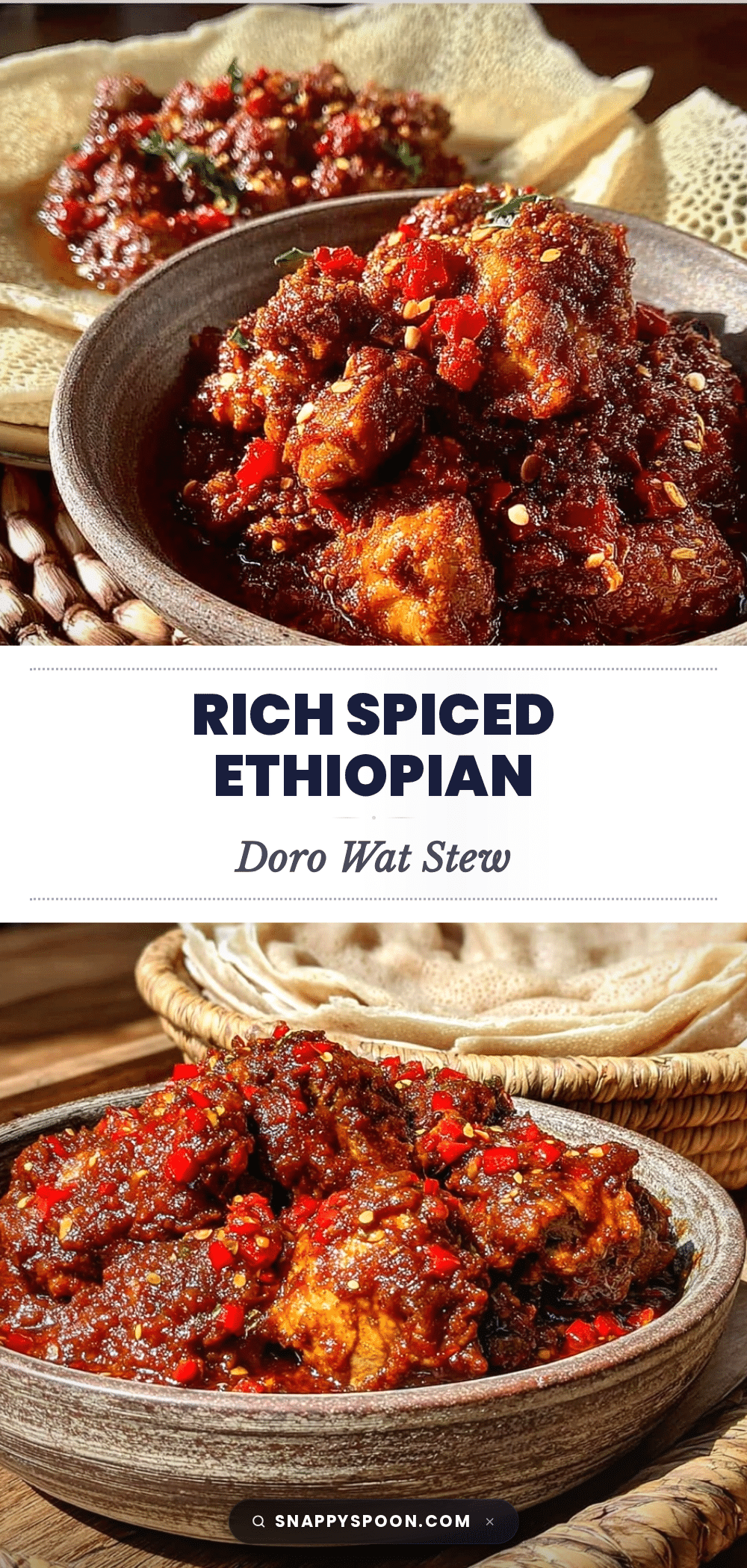
Flavorful Ethiopian Doro Wat Chicken Stew

A rich and authentic Ethiopian chicken stew simmered slowly with berbere spice and niter kibbeh, delivering a spicy, soulful, and comforting dish perfect for weeknight dinners or special occasions.
- Prep Time: 10 minutes
- Cook Time: 55 minutes
- Total Time: 1 hour 5 minutes
- Yield: 6 servings 1x
- Category: Main Course
- Cuisine: Ethiopian
Ingredients
- 2 lbs chicken drumsticks or thighs, skin removed
- 2 large onions, finely chopped
- 4 cloves garlic, minced
- 1-inch piece fresh ginger, minced
- 3 tablespoons berbere spice blend
- 3 tablespoons niter kibbeh (Ethiopian spiced clarified butter) or unsalted butter with fenugreek and cardamom
- 1/4 cup tomato paste
- 2 cups chicken broth, preferably low sodium
- Juice of 1 lemon
- Salt and freshly ground black pepper, to taste
- Injera (Ethiopian flatbread) or steamed rice, for serving
- 4–6 hard-boiled eggs, peeled (optional)
Instructions
- Rinse and pat dry the chicken pieces. Season lightly with salt and pepper. Set aside.
- In a large heavy-bottomed pot or Dutch oven, melt the niter kibbeh over medium-low heat.
- Add the chopped onions and cook gently, stirring often, for 20-25 minutes until deep golden brown and slightly caramelized.
- Stir in the minced garlic and ginger, cooking for 2-3 minutes until fragrant.
- Sprinkle in the berbere spice blend, stirring constantly to coat the onions and aromatics. Cook for 2-3 minutes to toast the spices.
- Add the tomato paste and stir well. Cook for 3-4 minutes to slightly caramelize and deepen the flavor.
- Nestle the chicken pieces into the pot, coating them with the spice and onion mixture. Cook for 5 minutes, turning occasionally.
- Pour in 2 cups of chicken broth, scraping the bottom of the pot to loosen browned bits. Bring to a gentle simmer.
- Cover partially and simmer on low heat for 40-45 minutes, stirring occasionally, until chicken is tender and sauce thickens.
- Stir in lemon juice and adjust salt and pepper to taste.
- If using, add peeled hard-boiled eggs during the last 10 minutes of cooking to absorb flavors.
- If stew thickens too much, add a splash more broth or water to maintain a thick but saucy texture.
Notes
Patience with caramelizing onions is key for deep flavor. Use fresh berbere spice for best results. Keep heat low to avoid burning spices. Niter kibbeh adds authentic flavor but can be substituted with spiced butter. If stew thickens too much, add broth or water. Optional additions include yogurt or crushed roasted chickpeas for creaminess. Skinless chicken is recommended to keep sauce clean.
Nutrition
- Serving Size: About 1 cup stew per
- Calories: 350
- Sugar: 3
- Sodium: 400
- Fat: 18
- Saturated Fat: 6
- Carbohydrates: 10
- Fiber: 2
- Protein: 30
Keywords: Ethiopian, Doro Wat, chicken stew, berbere spice, niter kibbeh, spicy chicken, authentic Ethiopian recipe, slow simmer, comfort food