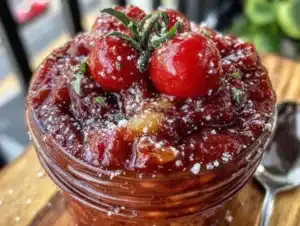
Love this? Save it for later!
Share the inspiration with your friends
“I wasn’t expecting a fruit salad crisis on a sunny Saturday afternoon, but there I was, staring at a soggy, watery mess that was supposed to be the star of our picnic.” That’s exactly how my journey began with figuring out how to keep fruit salad crisp and watery-free. I’d picked out the freshest berries, melons, and apples from the local market that morning, visions of a vibrant, refreshing treat dancing in my head. But as soon as I tossed everything together, the juices pooled at the bottom of the bowl like an unwanted swimming pool, threatening to turn my bright, fresh fruit into a soggy disappointment.
Maybe you’ve been there too—planning a simple, healthy dish only to have it turn out mushy and unappetizing. Honestly, it’s a frustrating experience, especially when you want your fruit salad to shine as a light, crisp side or a sweet snack without that dripping mess. After a few trial-and-error sessions (and a couple of kitchen mishaps involving a slippery cutting board and a rogue melon seed), I finally nailed down some fresh tips that keep fruit salad crisp and watery-free for hours.
Let me tell you, these aren’t your run-of-the-mill suggestions. They come from real kitchen experiments, interrupted by phone calls and the occasional “Are we there yet?” from the backseat. This recipe and guide have stuck with me ever since because they transform fruit salad from a soggy afterthought into a crisp, juicy delight that holds up beautifully whether you’re serving it at a picnic, potluck, or just craving a fresh snack. So, if you want to enjoy a fruit salad that stays fresh and inviting—without the watery mess—stick around. I promise you’ll want to keep these tips handy.
Why You’ll Love This Recipe
Over the years, I’ve tested countless fruit salad recipes and techniques, and honestly, this one stands out for a few solid reasons. Here’s why this guide for keeping your fruit salad crisp and watery-free is a winner:
- Quick & Easy: You can prep your fruit salad in under 20 minutes, perfect for those last-minute gatherings or healthy snack cravings.
- Simple Ingredients: No need for fancy additives or preservatives—just fresh, seasonal fruit and a few smart tricks you probably already know.
- Perfect for Any Occasion: Whether it’s a summer BBQ, brunch with friends, or a light dessert after dinner, this fruit salad holds up beautifully.
- Crowd-Pleaser: From kids to adults, everyone appreciates a salad that’s juicy but not soggy, sweet but not mushy.
- Unbelievably Delicious: The balance of crispness and natural fruit juices creates a texture and flavor combo that feels refreshing and indulgent at the same time.
This isn’t just about tossing fruit together. The key difference lies in the preparation techniques—like how to handle fruit that releases a lot of juice, the order of combining ingredients, and even a couple of surprising tricks to keep everything fresh and visually appealing. Trust me, this recipe will make you want to serve fruit salad more often, and you’ll be closing your eyes savoring that perfect crunch with every bite.
What Ingredients You Will Need
This recipe uses simple, wholesome ingredients to deliver bold flavor and satisfying texture without the fuss. Most of these are pantry staples or easy-to-find fresh fruits, and substitutions are straightforward if you have dietary preferences or seasonal availability concerns.
- Fresh Strawberries – hulled and halved (adds sweetness and color)
- Seedless Grapes – halved (choose firm, crisp varieties like red or green)
- Green Apples – cored and diced (use Granny Smith for tartness and crunch)
- Watermelon – cut into bite-sized cubes (drain excess juice before adding)
- Pineapple – peeled and chopped (fresh is best, canned can be used if drained well)
- Blueberries – whole, washed and dried (small berries help balance texture)
- Fresh Mint Leaves – chopped (optional, adds a refreshing note)
- Lemon or Lime Juice – freshly squeezed (helps prevent browning and adds brightness)
- Honey or Maple Syrup – optional, for light natural sweetness
- Chia Seeds – optional, for a subtle crunch and nutritional boost
Ingredient Tips: I recommend buying fruit from local farmers’ markets when possible; the difference in freshness really shows. For apples, firm and crisp varieties hold up best without turning mushy. When selecting watermelon, pick one that feels heavy and solid to avoid overly watery pieces. If you want a slightly more exotic twist, swapping pineapple for mango works beautifully during summer months.
Equipment Needed
- Sharp Chef’s Knife: Essential for clean cuts to prevent bruising and juice leakage from fruit.
- Cutting Board: A sturdy, non-slip board to handle all your chopping safely.
- Large Mixing Bowl: Preferably glass or stainless steel to avoid staining and odors.
- Salad Spinner: Useful for drying washed berries and greens before mixing.
- Measuring Spoons: For precise additions of lemon juice and sweeteners.
- Slotted Spoon: Handy for serving without excess juice.
If you don’t have a salad spinner, you can gently pat your fruit dry with a clean kitchen towel or paper towels. Also, investing in a quality, sharp knife makes a huge difference—not just for ease but for the longevity of your fruit’s texture. I learned that the hard way after hacking into a melon with a dull blade and ending up with a mushy mess!
Preparation Method
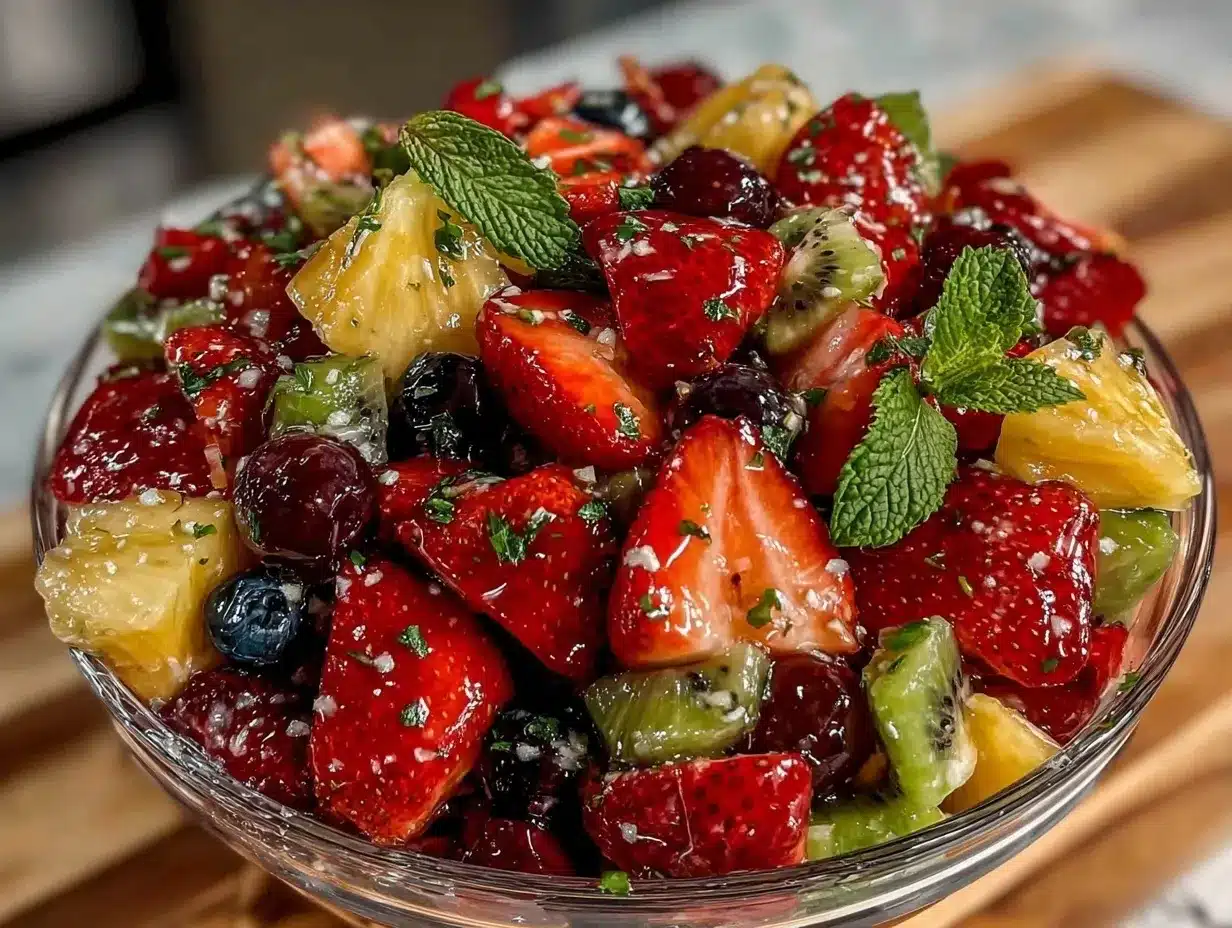
- Wash and Dry All Fruit Thoroughly (10 minutes): Begin by rinsing your fruit under cold water. Use a salad spinner for berries or pat dry with paper towels. Excess moisture is the enemy here, so take your time drying fruit properly.
- Prep Fruit in Stages (15 minutes): Start with firmer fruits like apples and watermelon. Cut into bite-sized pieces using a sharp knife to avoid bruising. For apples, toss diced pieces immediately with a tablespoon of lemon or lime juice to slow browning.
- Drain Juicy Fruit (5 minutes): Place watermelon and pineapple cubes in a fine mesh strainer over a bowl and allow excess juice to drain for 5 minutes. Save this juice for a refreshing drink or smoothie—it’s too good to waste!
- Combine Ingredients Gently (5 minutes): In your large bowl, layer fruits starting with apples and grapes at the bottom, then add drained watermelon and pineapple, followed by berries and mint. This layering helps separate watery fruits from the more delicate ones.
- Add Dressing and Sweetener Last (2 minutes): Drizzle lemon or lime juice evenly over the salad. If you like a bit of sweetness, add honey or maple syrup sparingly and gently toss using a large spoon or your hands for even coating without crushing the fruit.
- Chill Before Serving (at least 30 minutes): Refrigerate the fruit salad uncovered or loosely covered. This resting time allows flavors to meld without sweating, which keeps everything crisp.
Pro Tip: If your fruit salad is for later in the day, wait to add berries until just before serving—they tend to release juice faster. Use a slotted spoon to serve to keep excess liquid from pooling on plates.
Cooking Tips & Techniques
Keeping fruit salad crisp and watery-free is all about managing moisture and timing. Here are some tips I’ve picked up from both wins and slip-ups:
- Don’t Mix Too Early: Combining fruit too far ahead of time can cause juices to seep out and create a soggy salad. Prep fruits separately, then mix shortly before serving.
- Use Acid Wisely: Citrus juice does double duty—flavor and preserving color. I’ve seen salads turn brown within minutes without it.
- Choose Firmer Fruits: Some fruits like grapes and apples hold up better than softer berries. When I once used too many ripe peaches, it turned into a mushy mess fast.
- Drain High-Moisture Fruits: Watermelon and pineapple need that extra step. I learned this the hard way after dumping a big juicy scoop into a mixed bowl and regretting it.
- Layering Helps: Placing less juicy fruits at the bottom and berries on top prevents squashing and sogginess.
- Serve with a Slotted Spoon: This keeps watery juice from being served alongside the fruit, preserving texture and presentation.
- Keep It Cool: Refrigerate fruit salad until serving. Warm fruit sweats and releases more juice, which defeats the crispness.
Variations & Adaptations
Fruit salad is wonderfully flexible, so here are some ideas if you want to mix things up:
- Low-Sugar Version: Skip the honey or syrup and add a sprinkle of cinnamon or fresh herbs like basil for flavor without extra sweetness.
- Exotic Twist: Swap regular fruits for tropical options like mango, kiwi, and papaya. Just remember to drain juicy fruits well.
- Vegan Friendly: Use maple syrup instead of honey and add a splash of coconut water to the mix for extra hydration and flavor.
- Nutty Crunch: Add toasted almonds or walnuts just before serving for texture contrast.
- Frozen Fruit Salad: Use frozen berries or grapes for a chilled treat, but serve immediately to avoid melting and excess water.
One variation I adore is adding a sprinkle of chia seeds for a nutritional boost and subtle crunch. It’s unexpected but delicious, and it helps soak up some excess juice without compromising texture.
Serving & Storage Suggestions
Serve your fruit salad chilled, ideally within two hours of tossing together for the best texture. Presentation-wise, a clear glass bowl shows off the vibrant colors beautifully, and fresh mint leaves scattered on top add a lovely aroma.
This salad pairs wonderfully with creamy dishes like creamy avocado toast or alongside a light yogurt parfait. For beverages, a sparkling water with a splash of citrus complements the fresh fruit flavors perfectly.
Store leftover salad in an airtight container in the fridge for up to 24 hours. Avoid freezing as the fruit will release water and become mushy upon thawing. When reheating (if you must), do so gently at room temperature and stir lightly to redistribute juices.
Interestingly, the flavors tend to deepen after a few hours in the fridge, but texture is best on day one. So, plan accordingly if you want that ideal crisp bite every time.
Nutritional Information & Benefits
This fresh fruit salad is naturally low in calories and packed with vitamins, antioxidants, and fiber. Here’s a rough estimate per serving (about 1 cup or 150g):
| Calories | 70-90 kcal |
|---|---|
| Carbohydrates | 18-22g |
| Fiber | 3-4g |
| Vitamin C | 30-50% Daily Value |
| Sugar | 12-15g (natural fruit sugars) |
Fruits like berries and citrus provide antioxidants that support immune health, while apples and grapes contribute dietary fiber that aids digestion. This salad is naturally gluten-free and can be made vegan by skipping honey. It’s a refreshing way to boost your fruit intake, especially if you find eating whole fruits a bit repetitive.
Conclusion
Keeping fruit salad crisp and watery-free might seem like a small victory, but honestly, it transforms the entire eating experience. With these fresh tips, you’re no longer stuck with a soggy mess but a vibrant, juicy, and satisfying dish that’s easy to prepare and loved by all ages. I love this recipe because it’s forgiving, adaptable, and honestly, it makes me look forward to summer gatherings and casual snacking alike.
Give it a try, tweak it to your taste, and see how a few simple tricks can change everything. And hey, I’d love to hear how your fruit salad adventures go—drop a comment, share your variations, or just tell me which fruit you think stole the show in your bowl. Happy chopping and happy eating!
FAQs About Keeping Fruit Salad Crisp and Watery-Free
Q1: How long can I store fruit salad before it gets soggy?
Fruit salad is best eaten within 24 hours when stored in a sealed container in the fridge. After that, the fruit releases more juice, turning it watery and less crisp.
Q2: Can I prepare fruit salad a day ahead?
Yes, but prepare juicy fruits like watermelon and pineapple separately and add them just before serving to keep the salad fresh and crisp.
Q3: What fruits release the most water in fruit salad?
Watermelon, pineapple, and ripe peaches tend to release the most juice. Draining these fruits before mixing helps reduce sogginess.
Q4: Does adding lemon juice really help prevent browning?
Absolutely! The acid in lemon or lime juice slows oxidation, keeping apples and other cut fruits looking fresh longer.
Q5: Can I use canned fruit in my salad?
You can, but make sure to drain canned fruits thoroughly to avoid excess water. Fresh fruit generally yields the best texture and flavor.
Pin This Recipe!
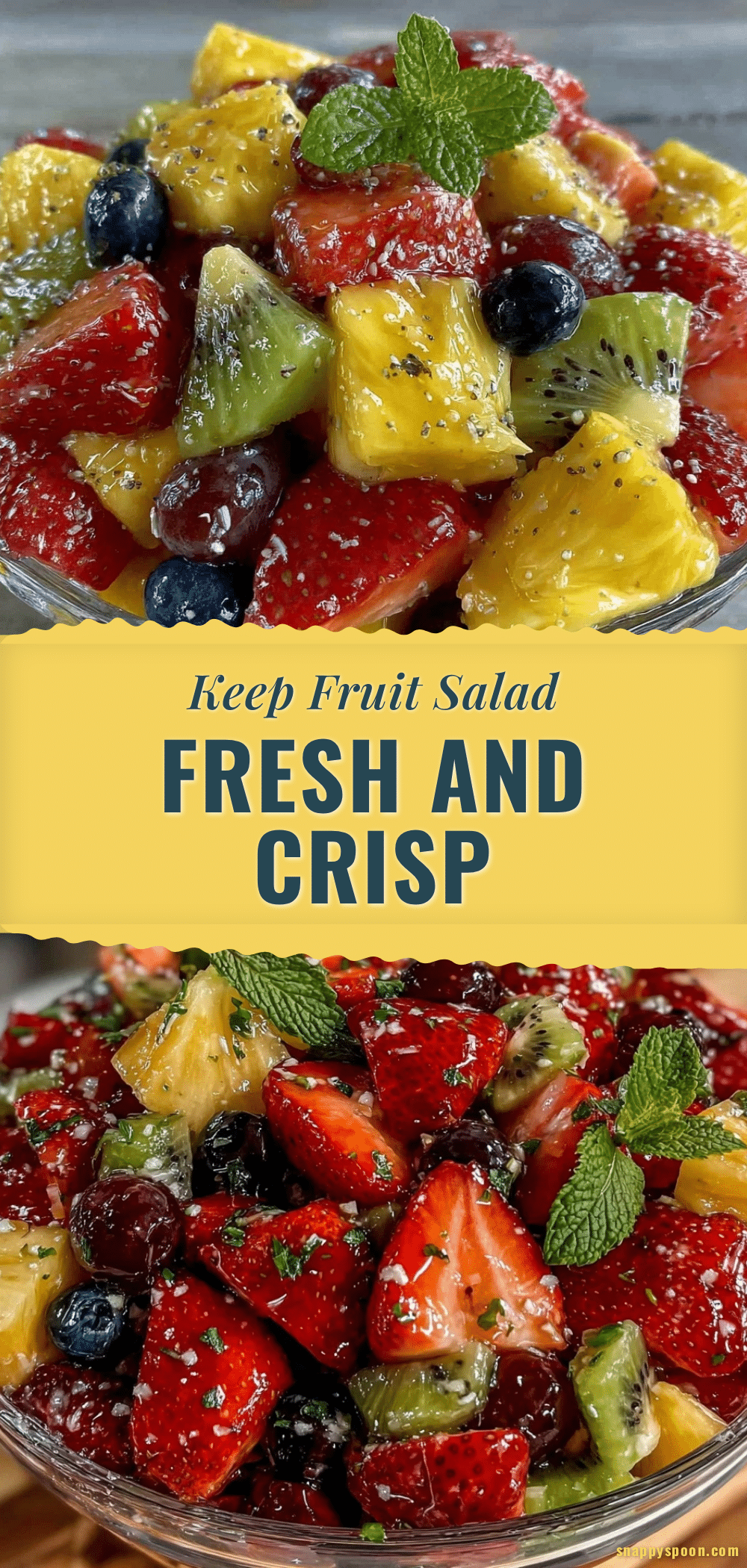
Fresh Fruit Salad Tips 5 Easy Ways to Keep It Crisp and Watery-Free

A fresh fruit salad recipe with expert tips to keep it crisp and watery-free, perfect for picnics, potlucks, or a healthy snack.
- Prep Time: 20 minutes
- Cook Time: 0 minutes
- Total Time: 50 minutes
- Yield: 6 servings
- Category: Side Dish
- Cuisine: American
Ingredients
- Fresh Strawberries – hulled and halved
- Seedless Grapes – halved (firm, crisp varieties like red or green)
- Green Apples – cored and diced (Granny Smith recommended)
- Watermelon – cut into bite-sized cubes (drain excess juice before adding)
- Pineapple – peeled and chopped (fresh preferred, canned if drained well)
- Blueberries – whole, washed and dried
- Fresh Mint Leaves – chopped (optional)
- Lemon or Lime Juice – freshly squeezed
- Honey or Maple Syrup – optional, for light natural sweetness
- Chia Seeds – optional, for subtle crunch and nutritional boost
Instructions
- Wash and dry all fruit thoroughly using a salad spinner or pat dry with paper towels to remove excess moisture.
- Prep fruit in stages, starting with firmer fruits like apples and watermelon. Cut into bite-sized pieces using a sharp knife to avoid bruising. Toss diced apples immediately with 1 tablespoon lemon or lime juice to prevent browning.
- Drain watermelon and pineapple cubes in a fine mesh strainer over a bowl for 5 minutes to remove excess juice.
- In a large mixing bowl, layer fruits starting with apples and grapes at the bottom, then add drained watermelon and pineapple, followed by berries and mint leaves.
- Drizzle lemon or lime juice evenly over the salad. Add honey or maple syrup sparingly if desired and gently toss to coat without crushing the fruit.
- Chill the fruit salad uncovered or loosely covered in the refrigerator for at least 30 minutes before serving.
- For best texture, add berries just before serving and use a slotted spoon to serve to avoid excess liquid.
Notes
Use a sharp knife to prevent bruising and juice leakage. Drain juicy fruits like watermelon and pineapple well before mixing. Add berries just before serving to keep salad crisp. Serve with a slotted spoon to avoid excess juice. Refrigerate uncovered or loosely covered to prevent sweating. Store leftovers in an airtight container in the fridge for up to 24 hours. Avoid freezing.
Nutrition
- Serving Size: About 1 cup (150g)
- Calories: 7090
- Sugar: 1215
- Sodium: 5
- Fat: 0.2
- Carbohydrates: 1822
- Fiber: 34
- Protein: 0.51
Keywords: fruit salad, fresh fruit salad, crisp fruit salad, watery-free fruit salad, healthy snack, picnic recipe, summer salad