Love this? Save it for later!
Share the inspiration with your friends
“I wasn’t expecting to find a buttermilk substitute while rummaging through my fridge at midnight,” I admit. It was one of those nights when I suddenly craved fresh pancakes, only to realize the recipe called for buttermilk—something I never keep on hand. Honestly, I had a tiny kitchen mess from digging through jars, and my cat was judging me from the counter. But the real surprise was how easily I whipped up a creamy buttermilk substitute that worked just as well as the original.
Maybe you’ve been there—staring at a baking recipe, eager to get started, only to find out you’re missing that one key ingredient. Buttermilk is one of those baking staples that adds moisture, tang, and tenderness, and it’s not always hanging out in the fridge. The good news is, you don’t have to run to the store or skip your favorite recipes. Over the years, I’ve tested several homemade buttermilk substitutes, and I’m sharing the five simplest, creamiest options that are perfect for baking.
This isn’t just about quick fixes. These substitutes bring their own magic to your baked goods, whether you’re making fluffy pancakes, tender biscuits, or rich cakes. I remember the first time I accidentally poured yogurt into my pancake batter instead of buttermilk—total kitchen chaos. Yet, that batch turned out surprisingly wonderful. Since then, I’ve perfected these easy swaps that keep the texture and flavor spot-on.
Stick around, because by the time you finish reading, you’ll have a small arsenal of creamy buttermilk alternatives ready for any baking adventure—no stress, no last-minute store runs, just smooth baking success.
Why You’ll Love This Recipe
Having tried countless buttermilk substitutes in my kitchen, I can tell you these five options are truly game changers. They’ve saved me from many baking disasters and made weekend baking more enjoyable.
- Quick & Easy: Each substitute comes together in under five minutes, so you’re never stuck waiting or scrambling.
- Simple Ingredients: These options use ingredients you probably already have—no need for special shopping trips.
- Perfect for Baking: Whether you’re making muffins, pancakes, or cakes, these substitutes maintain that tender crumb and slight tang.
- Crowd-Pleaser: My family and friends always compliment the texture and flavor, never guessing it wasn’t traditional buttermilk.
- Unbelievably Delicious: The creamy texture and subtle acidity add a depth of flavor to your baked goods that’s tough to beat.
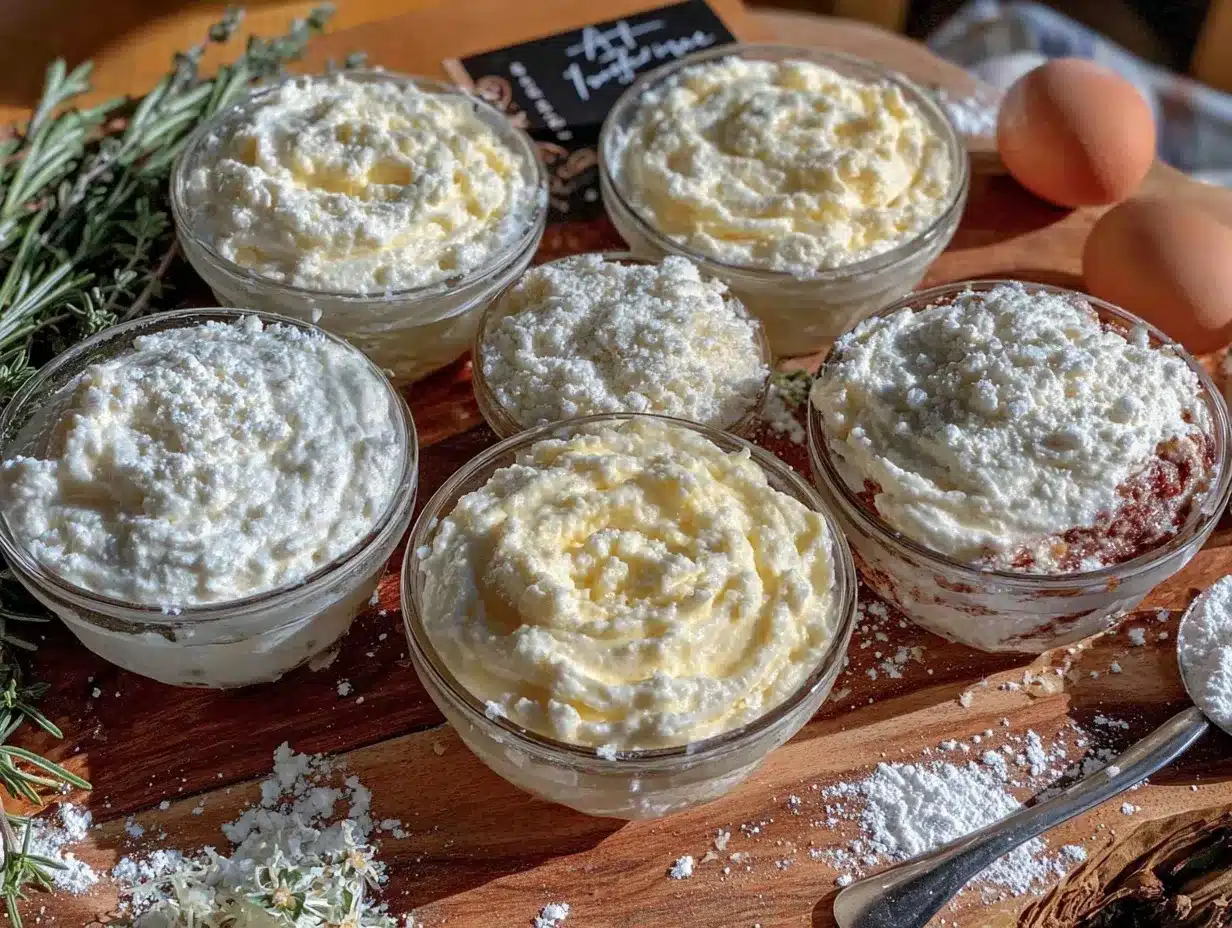
What sets these buttermilk substitutes apart? It’s the balance of creaminess and acidity, mimicking buttermilk’s signature tang without overpowering your batter. For example, mixing milk with lemon juice creates that gentle sourness, while yogurt adds richness and moisture. I’ve also found that blending cottage cheese until smooth can surprise you with its silky texture—perfect for when you want an ultra-creamy touch.
This recipe is more than a quick fix—it’s about keeping your baking soulful and satisfying. Whether you’re trying to impress guests with fluffy pancakes or baking a cozy batch of biscuits, these substitutes will have your back every time.
What Ingredients You Will Need
This recipe uses simple, wholesome ingredients to deliver bold flavor and satisfying texture without the fuss. Most are pantry staples or common fridge finds, making these buttermilk substitutes easy to mix up anytime.
- Milk (whole, 2%, or skim): The base for most substitutes; whole milk adds richness, but any milk works fine.
- Lemon juice or white vinegar: Adds acidity to mimic buttermilk’s tang. Freshly squeezed lemon juice is ideal, but bottled works in a pinch.
- Plain yogurt (full-fat or low-fat): Adds creaminess and a natural tang. Greek yogurt works well if you want a thicker texture.
- Sour cream: Rich and tangy, great for a creamy buttermilk alternative in baked goods needing extra moisture.
- Cottage cheese (small-curd): When blended smooth, it creates a surprisingly creamy and tangy substitute. Look for low-sodium versions if possible.
- Milk alternatives (almond, soy, oat milk): Can be used with lemon juice or vinegar for a dairy-free option.
Ingredient tips: I prefer Organic Valley milk for its consistent creaminess, and for yogurt, I find Stonyfield Organic plain yogurt delivers a lovely tang without overpowering the batter. When using vinegar, avoid flavored varieties to keep the taste clean. And if you’re swapping for dairy-free milk, almond milk with a splash of lemon juice works surprisingly well.
Substitution notes:
- For gluten-free baking, these substitutes work beautifully alongside almond or oat flour blends.
- To keep things vegan, opt for plant-based milks and use lemon juice or vinegar as your acid source.
- If you’re short on time, yogurt or sour cream gives you that creamy texture instantly without waiting.
Equipment Needed
Making these buttermilk substitutes requires minimal equipment—just the basics you likely already own.
- Measuring cups and spoons: For precise liquid and ingredient measurements. I like using glass measuring cups with clear markings for accuracy.
- Mixing bowl: Any medium-sized bowl will do. I tend to use a sturdy glass or ceramic bowl because it’s easy to clean and doesn’t retain odors.
- Whisk or fork: To mix the ingredients thoroughly. A whisk helps blend the acid into the milk evenly.
- Blender or food processor (optional): Helpful if you’re blending cottage cheese until smooth for a silky texture.
- Spoon or spatula: For scraping down the sides of the bowl and mixing yogurt or sour cream into milk.
If you don’t have a blender handy for cottage cheese, you can mash it vigorously with a fork, though it won’t be as smooth. For budget-conscious cooks, any basic hand whisk and measuring spoons will get the job done perfectly. Keeping your utensils clean and dry before mixing helps avoid clumps and ensures a smooth consistency.
Preparation Method
- Lemon Juice or Vinegar and Milk Substitute:
- Measure 1 cup (240 ml) of milk (whole or 2%).
- Add 1 tablespoon (15 ml) of fresh lemon juice or white vinegar to the milk.
- Stir gently, then let it sit at room temperature for 5-10 minutes until the milk curdles slightly and thickens.
- Use immediately as a direct replacement for 1 cup of buttermilk in your recipe.
Tip: Don’t skip the resting time—this curdling is what gives the acidity and texture that mimics buttermilk.
- Yogurt Substitute:
- Measure 3/4 cup (180 ml) plain yogurt (full-fat or low-fat).
- Add 1/4 cup (60 ml) water or milk to thin it out to the consistency of buttermilk.
- Whisk until smooth, then use as a 1:1 replacement for buttermilk.
Note: Greek yogurt may need a bit more water due to its thickness.
- Sour Cream Substitute:
- Mix 1/2 cup (120 ml) sour cream with 1/2 cup (120 ml) water or milk.
- Whisk until well combined and smooth.
- Use in place of buttermilk in equal amounts.
Warning: Sour cream adds richness, so it’s excellent for dense cakes or moist muffins.
- Blended Cottage Cheese Substitute:
- Place 1/2 cup (120 ml) small-curd cottage cheese in a blender.
- Add 1/2 cup (120 ml) milk.
- Blend until creamy and smooth (about 30 seconds).
- Use as a 1:1 substitute for buttermilk.
Tip: This option adds extra protein and creaminess, making it a great choice for pancakes or scones.
- Dairy-Free Milk and Acid Substitute:
- Choose 1 cup (240 ml) unsweetened almond, soy, or oat milk.
- Add 1 tablespoon (15 ml) lemon juice or apple cider vinegar.
- Mix and let sit for 5-10 minutes until slightly thickened.
- Use as a 1:1 replacement for buttermilk in vegan or dairy-free recipes.
Note: For best results, pick unsweetened and unflavored plant milks to avoid unintended sweetness or flavors.
Preparing these substitutes is straightforward, but keep an eye on the texture after resting—too thin or too thick can affect your batter. I always taste a tiny dollop before adding it in, just to be sure the tang is right. If it’s too mild, a splash more acid can help, but don’t overdo it or your batter might become too sour.
Cooking Tips & Techniques
Getting the buttermilk substitute just right can make or break your baked goods. Here are some tips I’ve learned through trial and error:
- Use room temperature milk: Cold milk straight from the fridge slows curdling and can affect batter texture.
- Don’t skip the resting time: When mixing milk with acid, wait 5-10 minutes for it to thicken slightly, or your batter might be too runny.
- Adjust consistency carefully: If your substitute feels too thick (like yogurt or sour cream blends), thin it with a splash of water or milk to match buttermilk’s pourable texture.
- Watch the acidity level: Too much acid can make baked goods dense or sour; too little won’t activate leavening agents like baking soda properly.
- Blend cottage cheese well: Avoid lumps by blending thoroughly; otherwise, you’ll get uneven texture in your batter.
- Multitask while waiting: Use the 5-10 minute resting time to prep dry ingredients or preheat your oven for efficient baking.
- Test small batches first: If you’re trying a new substitute, bake a small batch to see how it affects texture and flavor before committing.
One kitchen mishap I remember was rushing the lemon juice and milk mixture into batter without waiting. The pancakes turned out flat and rubbery. Lesson learned! Patience really pays off here, and now I keep a mental timer for those 10 minutes. Also, if you’re after fluffier baked goods, pairing these substitutes with fresh baking soda helps achieve that rise and tender crumb.
Variations & Adaptations
These buttermilk substitutes are flexible and can be tweaked depending on your dietary needs, flavor preferences, or what you have on hand.
- Vegan option: Use unsweetened almond or oat milk with lemon juice or apple cider vinegar. This works great for dairy-free pancakes or muffins.
- Low-fat option: Swap whole milk for 2% or skim milk with vinegar or lemon juice for a lighter batter.
- Flavor twist: Add a teaspoon of vanilla extract to yogurt or sour cream substitutes for a subtle sweetness that complements cakes and cupcakes.
- Seasonal adaptation: In warmer months, try adding a spoonful of fresh fruit puree (like blueberry or strawberry) to your yogurt substitute for an extra burst of flavor and color.
- For richer baked goods: Use sour cream or blended cottage cheese substitutes to make denser, moister breads or scones.
One personal favorite variation is mixing half plain yogurt and half buttermilk substitute made with milk and vinegar. It adds an extra creamy tang that’s hard to beat in my lemon blueberry muffins. Also, for a gluten-free twist, these substitutes pair wonderfully with almond or rice flour blends, making your baking inclusive without sacrificing texture.
Serving & Storage Suggestions
When using homemade buttermilk substitutes, your baked goods shine best fresh and warm. Pancakes or biscuits benefit from immediate serving to enjoy their tender crumb and moist texture.
- Serving temperature: Serve warm or at room temperature. For cakes, a slight chill after cooling can enhance flavor.
- Complementary dishes: Pair pancakes with fresh fruit and maple syrup, or serve biscuits alongside savory dishes like creamy garlic chicken for a comforting meal.
- Storage: Store baked goods in an airtight container at room temperature for 1-2 days or refrigerate up to 5 days.
- Freezing: Wrap tightly and freeze for up to 3 months. Thaw overnight in the fridge before reheating.
- Reheating tips: Warm in the oven at 300°F (150°C) for 5-10 minutes or microwave briefly to restore softness and moisture.
Flavors often develop over time, especially in cakes and breads made with these substitutes. Sometimes, letting a cake rest overnight actually improves the texture and tang, making it even more delightful the next day.
Nutritional Information & Benefits
Buttermilk substitutes vary in calories and fat depending on your choice, but generally, they provide a creamy texture with fewer additives than store-bought buttermilk.
- Milk and lemon juice substitute has roughly 100 calories per cup, low fat if using skim milk.
- Yogurt and sour cream options provide protein and probiotics, supporting digestion and gut health.
- Cottage cheese adds extra protein and calcium, making it a nutritious boost in baked goods.
- Dairy-free options tend to be lower in calories and fat but check labels for added sugars.
These alternatives are naturally gluten-free and can be tailored for vegan and low-fat diets, making them versatile for many dietary needs. While buttermilk itself is a traditional baking ingredient, these substitutes offer a wholesome, accessible way to enjoy the same benefits without compromise.
Conclusion
Making an easy creamy buttermilk substitute for baking has saved me countless times from last-minute store runs and recipe stalls. Whether it’s the classic milk and lemon juice combo or the surprising creaminess of blended cottage cheese, these five options bring the tang and moisture your baked goods need.
I encourage you to pick one that fits your pantry and preferences, then tweak it as you get comfortable. Baking is as much about experimenting and making recipes your own as it is about following instructions precisely. Honestly, I keep coming back to these substitutes because they’re simple, reliable, and delicious.
Give these a try and share your favorite substitute or how you’ve adapted it in the comments below—I love hearing your baking stories. Remember, every great recipe starts with a little creativity and a splash of confidence. Happy baking!
FAQs
What is the best substitute for buttermilk in baking?
The easiest and most reliable substitute is milk mixed with lemon juice or white vinegar, left to curdle for 5-10 minutes. It mimics buttermilk’s acidity and moisture well.
Can I use yogurt as a buttermilk substitute?
Yes! Plain yogurt thinned with a little water or milk works great, adding creaminess and tang similar to buttermilk.
Is sour cream a good alternative to buttermilk?
Sour cream can replace buttermilk in baking by mixing it with milk or water to thin it out. It adds richness and moisture to recipes.
How long can I store homemade buttermilk substitute?
It’s best to use your substitute immediately after preparing. If needed, it can be stored in the fridge for up to 24 hours but may lose some acidity and thickness.
Can I use dairy-free milk to make a buttermilk substitute?
Absolutely! Use unsweetened almond, soy, or oat milk with lemon juice or vinegar to create a dairy-free buttermilk substitute suitable for vegan baking.
Pin This Recipe!
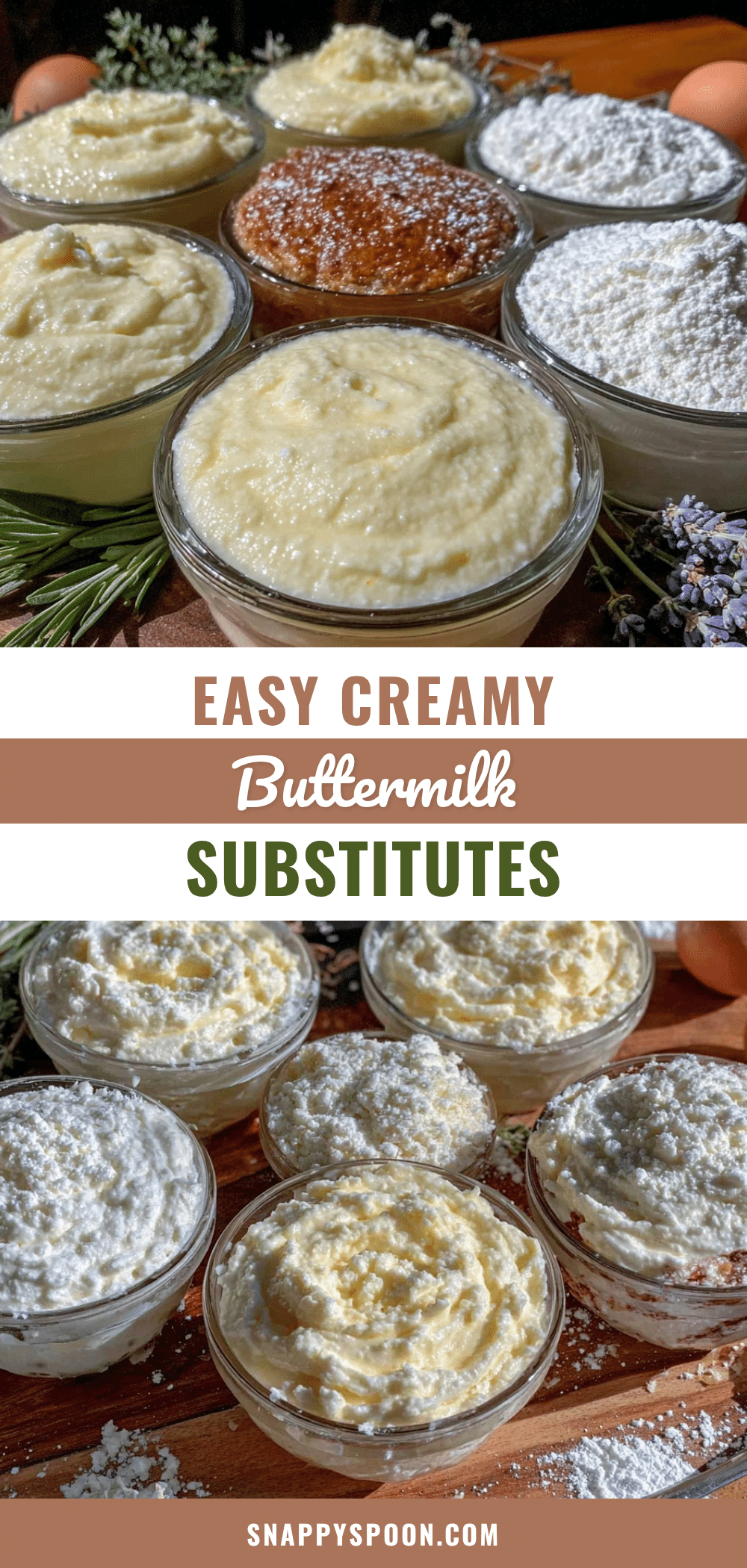
Easy Creamy Buttermilk Substitute for Baking: 5 Perfect Homemade Options
Discover five simple and creamy homemade buttermilk substitutes perfect for baking pancakes, muffins, cakes, and more. These quick and easy options use common ingredients to mimic buttermilk’s tang and moisture without a last-minute store run.
- Prep Time: 5 minutes
- Cook Time: 0 minutes
- Total Time: 5-10 minutes
- Yield: 1 cup substitute (serves as replacement for 1 cup buttermilk)
- Category: Baking Ingredient Substitute
- Cuisine: American
Ingredients
- Milk (whole, 2%, or skim)
- Lemon juice or white vinegar
- Plain yogurt (full-fat or low-fat)
- Sour cream
- Small-curd cottage cheese
- Milk alternatives (almond, soy, oat milk)
Instructions
- Lemon Juice or Vinegar and Milk Substitute: Measure 1 cup (8 fl oz) of milk (whole or 2%). Add 1 tablespoon (0.5 fl oz) of fresh lemon juice or white vinegar to the milk. Stir gently, then let it sit at room temperature for 5-10 minutes until the milk curdles slightly and thickens. Use immediately as a direct replacement for 1 cup of buttermilk in your recipe.
- Yogurt Substitute: Measure 3/4 cup (6 fl oz) plain yogurt (full-fat or low-fat). Add 1/4 cup (2 fl oz) water or milk to thin it out to the consistency of buttermilk. Whisk until smooth, then use as a 1:1 replacement for buttermilk.
- Sour Cream Substitute: Mix 1/2 cup (4 fl oz) sour cream with 1/2 cup (4 fl oz) water or milk. Whisk until well combined and smooth. Use in place of buttermilk in equal amounts.
- Blended Cottage Cheese Substitute: Place 1/2 cup (4 fl oz) small-curd cottage cheese in a blender. Add 1/2 cup (4 fl oz) milk. Blend until creamy and smooth (about 30 seconds). Use as a 1:1 substitute for buttermilk.
- Dairy-Free Milk and Acid Substitute: Choose 1 cup (8 fl oz) unsweetened almond, soy, or oat milk. Add 1 tablespoon (0.5 fl oz) lemon juice or apple cider vinegar. Mix and let sit for 5-10 minutes until slightly thickened. Use as a 1:1 replacement for buttermilk in vegan or dairy-free recipes.
Notes
Use room temperature milk for best curdling results. Allow milk and acid mixtures to rest 5-10 minutes before use. Thin yogurt or sour cream substitutes with water or milk to match buttermilk consistency. Blend cottage cheese thoroughly to avoid lumps. Test small batches first to adjust acidity and texture. Store substitutes in the fridge up to 24 hours but use immediately for best results.
Nutrition
- Serving Size: 1 cup substitute (eq
- Calories: 100
- Sugar: 57
- Sodium: 50150
- Fat: 25
- Saturated Fat: 13
- Carbohydrates: 57
- Protein: 38
Keywords: buttermilk substitute, homemade buttermilk, baking substitute, dairy-free buttermilk, yogurt substitute, sour cream substitute, cottage cheese substitute, vegan buttermilk substitute