Love this? Save it for later!
Share the inspiration with your friends
“The sizzle when the beef hits the hot pan was the first thing that caught me,” my neighbor Mark wasn’t making a big deal of it. I’d stopped by to borrow some sugar, and the spicy, savory aroma of something incredible pulled me right into his kitchen before I even set the bag down. Honestly, he was tossing thin strips of beef around like he’d done it a hundred times before — which, it turns out, he had. The gochujang mayo was just a quick dollop on the side, but it somehow made the whole dish sing. You know that feeling when a simple meal feels like a secret you want to keep? That’s what these Flavorful Korean Beef Bowls with Spicy Gochujang Mayo gave me. Maybe you’ve been there, unexpectedly pulled into a kitchen by a smell, a look, or a taste that sticks with you. Ever since that afternoon, I’ve been making this recipe on repeat — it’s quick, packs a punch, and honestly, there’s just something about the casual ease of it that keeps me coming back.”
Why You’ll Love This Recipe
This Flavorful Korean Beef Bowls recipe with Easy Spicy Gochujang Mayo is one of those dishes that checks all the boxes for busy cooks and flavor lovers alike. I’ve tested this recipe countless times to make sure it’s simple yet bursting with authentic Korean-inspired flavors.
- Quick & Easy: Ready in about 30 minutes, perfect for weekday meals or those last-minute dinner plans.
- Simple Ingredients: No need for a specialty store run — most ingredients are pantry staples or easy to find at any supermarket.
- Perfect for Any Occasion: Whether it’s a casual family dinner or a laid-back weekend lunch, this bowl fits the bill.
- Crowd-Pleaser: The spicy, sweet, and savory combo is a hit with kids and adults alike — I can vouch for that from my own family dinners.
- Unbelievably Delicious: The tender marinated beef paired with the creamy, spicy gochujang mayo creates a flavor harmony that makes you close your eyes after the first bite.
- Unique Twist: What sets this recipe apart is the quick marination and the homemade spicy gochujang mayo — it gives a fresh, vibrant kick that store-bought sauces just can’t match.
Honestly, it’s the kind of recipe that feels like comfort food but with a fun, spicy twist. If you’re looking for a meal that’s fuss-free but full of personality, this is it.
What Ingredients You Will Need
This recipe uses straightforward, wholesome ingredients to deliver bold Korean flavors with a satisfying texture. You probably have most of these in your kitchen already, and there’s room for some easy swaps if needed.
- For the Beef:
- 1 lb (450 g) ground beef (I prefer 80/20 for flavor and juiciness)
- 3 cloves garlic, minced (adds that punch of aroma)
- 1 tablespoon fresh ginger, grated (you can find this in the produce section or use paste)
- 3 tablespoons low sodium soy sauce (Kikkoman is a reliable brand)
- 1 tablespoon sesame oil (toasted for that nutty depth)
- 1 tablespoon brown sugar (balances the savory with a touch of sweetness)
- 1/2 teaspoon black pepper
- 1 teaspoon rice vinegar (optional, but adds a subtle tang)
- For the Spicy Gochujang Mayo:
- 1/4 cup mayonnaise (use full-fat for creaminess, or swap with vegan mayo if preferred)
- 1 to 2 tablespoons gochujang paste (adjust based on how spicy you like it)
- 1 teaspoon honey or maple syrup (to soften the heat)
- 1 teaspoon lime juice (brightens up the sauce)
- For Serving:
- 3 cups cooked white or brown rice (jasmine or short grain works well)
- 1 cup shredded carrots (adds crunch and color)
- 1 cup thinly sliced cucumber (for freshness)
- 2 green onions, thinly sliced (for garnish)
- 1 tablespoon toasted sesame seeds (optional but highly recommended)
Tip: If you want a gluten-free bowl, choose tamari instead of soy sauce. In summer, swapping shredded carrots for quick-pickled radishes adds a nice zing!
Equipment Needed
- Large non-stick skillet or cast-iron pan — I’ve tried both, but cast iron brings an extra sear that’s fantastic.
- Mixing bowls for marinade and sauce prep.
- Measuring spoons and cups — precision makes a difference, especially with the gochujang mayo.
- Sharp knife and cutting board for prepping garlic, ginger, and veggies.
- Rice cooker or pot for cooking rice (rice cooker makes life easier but a pot works just fine).
If you don’t have toasted sesame seeds, a quick toast in a dry pan will freshen up any batch, but store-bought toasted seeds work great too. For budget-friendly options, a simple non-stick skillet and wooden spoon will get the job done just fine.
Preparation Method
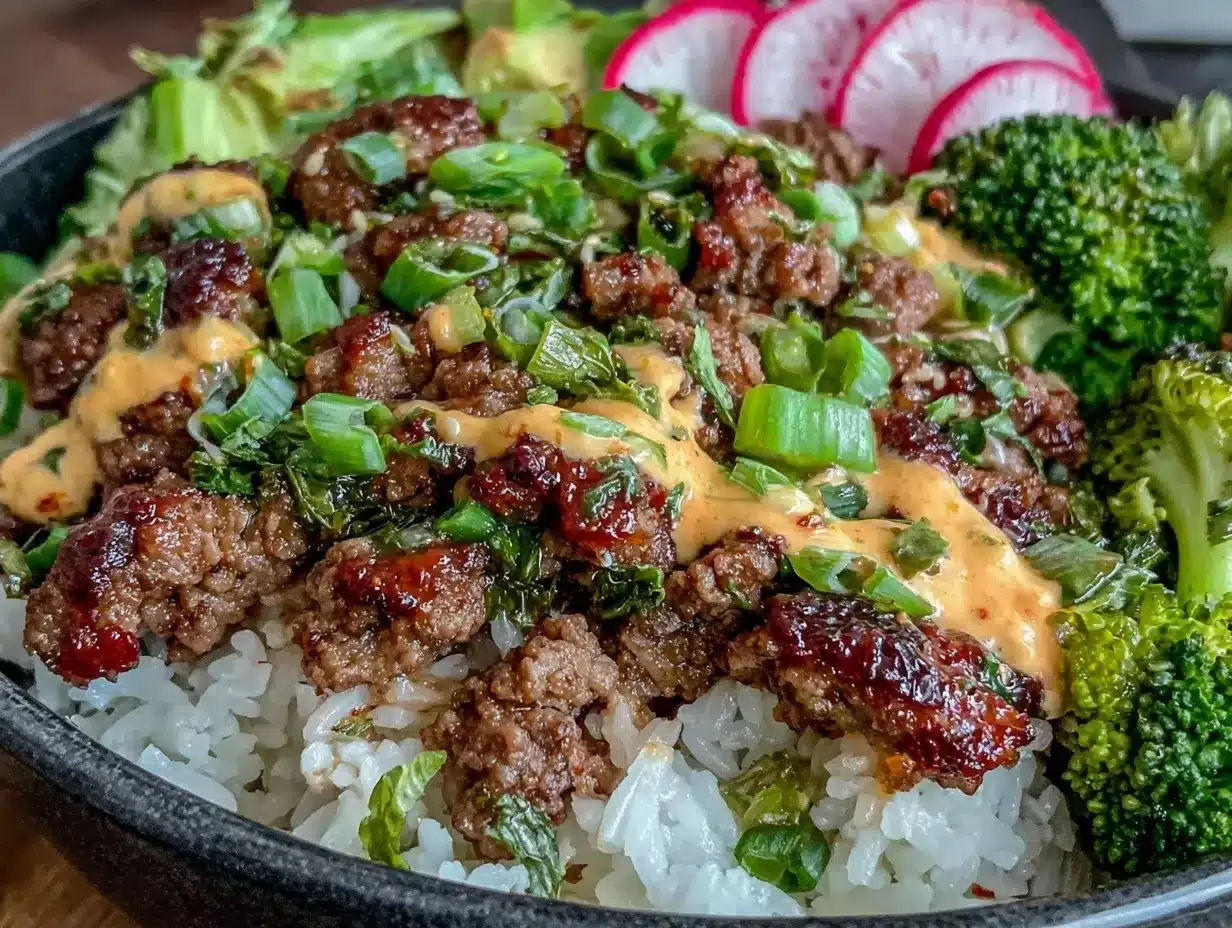
- Prepare the Rice (20-25 minutes): Cook 3 cups of rice according to package instructions. If using a rice cooker, this is hands-off. Set aside and keep warm while you prep the beef and sauce.
- Mix the Beef Marinade: In a medium bowl, combine minced garlic, grated ginger, soy sauce, sesame oil, brown sugar, black pepper, and rice vinegar. Stir well until the sugar dissolves.
- Cook the Beef (10-12 minutes): Heat a large skillet over medium-high heat. Add the ground beef and break it apart with a wooden spoon. Pour the marinade over the beef. Cook, stirring frequently, until the beef is browned and cooked through, about 8-10 minutes. The mixture should look glossy and fragrant. If it looks dry, splash a bit of water or extra soy sauce.
- Make the Spicy Gochujang Mayo: While the beef cooks, whisk together mayonnaise, gochujang paste, honey, and lime juice in a small bowl. Taste and adjust spice level by adding more gochujang if you like it hotter.
- Prep the Veggies: Thinly slice cucumbers and green onions. Shred carrots if you haven’t already. These fresh elements balance the rich beef and spicy mayo perfectly.
- Assemble the Bowls: Scoop rice into bowls, top with the cooked Korean beef, then add shredded carrots and cucumber slices on the side. Drizzle a generous spoonful of spicy gochujang mayo over the beef. Sprinkle with green onions and toasted sesame seeds.
- Serve Immediately: These bowls are best enjoyed fresh, but leftovers can be refrigerated and reheated gently.
Pro tip: If you want to speed things up, cook the rice ahead of time or use leftover rice. Also, stirring the beef continuously ensures even cooking and prevents clumps.
Cooking Tips & Techniques
Getting this Korean beef bowl just right is all about timing and layering flavors. Here are some tips I’ve picked up over the years:
- Don’t overcrowd the pan: If your skillet is too small, the beef will steam rather than sear. Cook in batches if needed for a better caramelized crust.
- Adjust your heat: Medium-high heat works best for browning without burning. If the pan gets too hot, lower it slightly to avoid bitter char.
- Balance the sweetness and saltiness: Taste your beef marinade as you go. Depending on your soy sauce brand, you might want a pinch more sugar or a splash more vinegar.
- Gochujang mayo consistency: If your sauce feels too thick, thin it out with a teaspoon of water or lime juice; too thin, add more mayo.
- Multitasking: While the beef cooks, prep your veggies and sauce simultaneously to save time.
- Leftover ideas: This beef also makes a killer filling for lettuce wraps or tacos, so keep that in mind for a quick next-day meal.
Variations & Adaptations
This recipe is flexible enough to suit different diets and seasons. Here are some ways to switch it up:
- Vegetarian option: Swap ground beef for crumbled tofu or cooked lentils. Add a splash of soy sauce and a pinch of smoked paprika for depth.
- Spice level: For a milder version, reduce the gochujang in the mayo or replace it with a mild chili sauce. For extra heat, add chili flakes or a dash of sriracha.
- Grain swap: Use quinoa, cauliflower rice, or soba noodles instead of white rice for different textures and nutritional profiles.
- Seasonal veggies: In cooler months, roasted sweet potatoes or steamed broccoli pair beautifully. Summer calls for fresh kimchi or pickled radishes for brightness.
- Personal touch: I once added a fried egg on top for a rich, runny yolk that made the whole bowl feel indulgent and extra comforting.
Serving & Storage Suggestions
Serve these Korean beef bowls warm to enjoy the full spectrum of flavors. The spicy gochujang mayo tastes best fresh but will keep well in the fridge for up to 3 days.
- Pair with a crisp cucumber salad or steamed greens to balance heat and richness.
- For drinks, cold barley tea or lightly sweetened iced green tea complements the meal nicely.
- Store leftovers in airtight containers in the refrigerator for 3-4 days. Keep the mayo separate to avoid sogginess.
- Reheat gently in a skillet or microwave; adding a splash of water helps keep the beef moist.
- Flavors deepen overnight — if you prep in advance, the beef will taste even more savory the next day.
Nutritional Information & Benefits
Each serving of these flavorful Korean beef bowls offers a balanced mix of protein, carbs, and healthy fats. Here’s a rough estimate per serving:
- Calories: ~450-500
- Protein: 30g
- Carbohydrates: 45g
- Fat: 15g
Ground beef provides iron and B vitamins, while sesame oil adds heart-healthy fats. The gochujang paste contains fermented chili, which may support digestion. Using brown rice boosts fiber content, making this a filling, balanced meal.
If you need a gluten-free option, just swap regular soy sauce with tamari. And for a lower-carb bowl, cauliflower rice is an excellent alternative. Personally, I appreciate how this dish satisfies cravings without feeling heavy or greasy.
Conclusion
If you’re after a quick, easy, and downright tasty meal, these Flavorful Korean Beef Bowls with Spicy Gochujang Mayo hit the spot every time. The recipe’s effortless vibe belies how impressive it tastes — like something you’d find at a street food stall but made right in your kitchen. Feel free to tweak the spice level or swap veggies to fit your mood or pantry. I keep making this because it’s reliable, comforting, and just plain fun to eat.
I’d love to hear how you customize your bowls or any twists you try — drop a comment below and let’s talk Korean flavors! Give it a go, and let this recipe become one of your kitchen go-tos.
Frequently Asked Questions
What can I use instead of ground beef for this recipe?
You can substitute ground beef with ground turkey, chicken, tofu, or even lentils to make a vegetarian version. Adjust the cooking time accordingly.
How spicy is the gochujang mayo?
The spice level depends on how much gochujang you use. Start with 1 tablespoon and add more if you like it hotter. The honey in the mayo helps balance the heat nicely.
Can I make the spicy mayo ahead of time?
Yes! The gochujang mayo can be made up to 3 days in advance and stored in the fridge. Just give it a quick stir before serving.
Is this recipe gluten-free?
It can be if you use gluten-free soy sauce like tamari and double-check your gochujang paste label. Most ingredients are naturally gluten-free.
What’s the best way to reheat leftovers?
Reheat the beef gently in a skillet over medium heat, adding a splash of water if it seems dry. Avoid overheating the mayo; add it fresh after reheating for the best flavor.
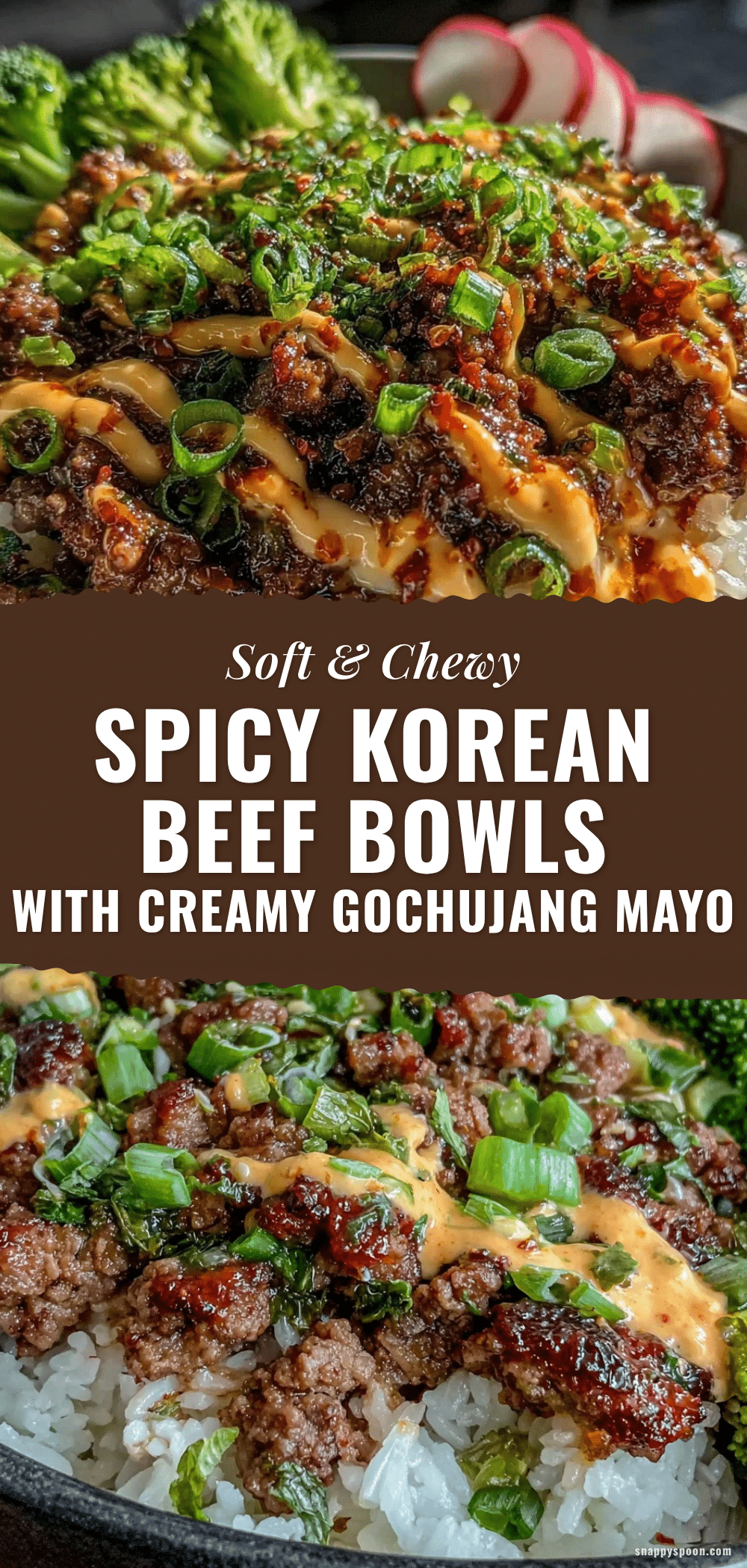
Pin This Recipe!
Flavorful Korean Beef Bowls Recipe with Easy Spicy Gochujang Mayo
A quick and easy Korean-inspired beef bowl featuring tender marinated ground beef and a creamy, spicy gochujang mayo, perfect for busy weeknights or casual meals.
- Prep Time: 10 minutes
- Cook Time: 20 minutes
- Total Time: 30 minutes
- Yield: 4 servings 1x
- Category: Main Course
- Cuisine: Korean
Ingredients
- 1 lb (450 g) ground beef (80/20 preferred)
- 3 cloves garlic, minced
- 1 tablespoon fresh ginger, grated
- 3 tablespoons low sodium soy sauce
- 1 tablespoon sesame oil (toasted)
- 1 tablespoon brown sugar
- 1/2 teaspoon black pepper
- 1 teaspoon rice vinegar (optional)
- 1/4 cup mayonnaise (full-fat or vegan mayo)
- 1 to 2 tablespoons gochujang paste
- 1 teaspoon honey or maple syrup
- 1 teaspoon lime juice
- 3 cups cooked white or brown rice
- 1 cup shredded carrots
- 1 cup thinly sliced cucumber
- 2 green onions, thinly sliced
- 1 tablespoon toasted sesame seeds (optional)
Instructions
- Cook 3 cups of rice according to package instructions and keep warm.
- In a medium bowl, combine minced garlic, grated ginger, soy sauce, sesame oil, brown sugar, black pepper, and rice vinegar. Stir until sugar dissolves.
- Heat a large skillet over medium-high heat. Add ground beef and break apart with a wooden spoon. Pour marinade over beef and cook, stirring frequently, until browned and cooked through, about 8-10 minutes. Add water or extra soy sauce if dry.
- While beef cooks, whisk together mayonnaise, gochujang paste, honey, and lime juice in a small bowl. Adjust spice level as desired.
- Thinly slice cucumbers and green onions; shred carrots.
- Assemble bowls by scooping rice, topping with cooked beef, shredded carrots, and cucumber slices. Drizzle spicy gochujang mayo over beef and sprinkle with green onions and toasted sesame seeds.
- Serve immediately. Refrigerate leftovers separately and reheat gently.
Notes
For gluten-free, use tamari instead of soy sauce. Adjust gochujang paste amount for desired spice level. Toast sesame seeds if not pre-toasted. Leftover beef works well in lettuce wraps or tacos. Reheat beef gently with a splash of water to keep moist. Gochujang mayo can be made up to 3 days ahead and stored in fridge.
Nutrition
- Serving Size: 1 bowl
- Calories: 475
- Sugar: 7
- Sodium: 700
- Fat: 15
- Saturated Fat: 3.5
- Carbohydrates: 45
- Fiber: 3
- Protein: 30
Keywords: Korean beef bowl, gochujang mayo, spicy beef bowl, quick Korean recipe, ground beef recipe, easy dinner, weeknight meal