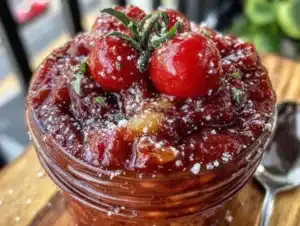
Love this? Save it for later!
Share the inspiration with your friends
“You won’t believe what I found scribbled in the corner of an old market receipt,” my friend Leyla said, flashing me a tiny scrap of paper covered in faded ink and a few smudges. It was a recipe for rose and apricot jam—something she claimed her grandmother made every summer in the small village of Şile, just outside Istanbul. I wasn’t expecting much, honestly. But that first spoonful of the Flavorful Turkish Rose and Apricot Jam on toasted sesame simit changed everything.
The jam’s delicate floral notes paired with the bright, sun-kissed apricots created a flavor that lingered long after the toast was gone. And the simit? Oh, the simit—the iconic Turkish sesame bread ring, toasted just right, with that crispy crust and chewy crumb that’s somehow both rustic and elegant. I mean, I’ve had plenty of simit on busy mornings, but slathering it with this jam felt like discovering a secret handshake to Istanbul’s morning cafés.
Maybe you’ve been there—standing in your kitchen thinking, “I want something different but simple for breakfast.” This jam recipe is that kind of unexpected delight. It’s got a bit of history, a splash of love, and just the right balance of sweetness and floral charm. I remember making a mess trying to skim the foam off the jam bubbling away, my cat pawing at the counter, and Leyla’s voice on the phone reminding me not to rush it. That imperfect moment is exactly why this recipe stuck with me—and why I keep coming back to it.
Why You’ll Love This Recipe
Honestly, this Flavorful Turkish Rose and Apricot Jam on toasted sesame simit is a game-changer for your breakfast table or afternoon snack. I’ve tested this jam over several seasons, tweaking the rose water amount and timing to get that perfect floral hint without overpowering the apricots. It’s family-approved by some pretty tough critics (including my picky neighbor Hasan, who usually just eats plain bread).
- Quick & Easy: Takes under an hour from fresh apricots to jar, perfect for a weekend kitchen session.
- Simple Ingredients: Uses fresh apricots, natural sugar, and a touch of rose water—no weird additives or preservatives here.
- Perfect for Breakfast & Tea Time: Pairs beautifully with toasted sesame simit, but also lovely on scones or yogurt.
- Crowd-Pleaser: Always sparks questions and compliments at brunch—people love that blend of fruity and floral.
- Unbelievably Delicious: The texture is jammy but still chunky, and the aroma is like a stroll through a Turkish bazaar.
What sets this jam apart is the balance—too much rose water can feel soapy, but this recipe hits that sweet spot. Plus, the toasted sesame simit adds a nutty, crunchy contrast that’s honestly addictive. This isn’t just jam; it’s a little taste of Turkish tradition that feels fresh and inviting. Whether you’re impressing guests or just treating yourself, this combo has that soul-warming magic.
What Ingredients You Will Need
This recipe calls for simple, wholesome ingredients that come together to create a bold and satisfying flavor without fuss. Most are pantry staples or easy to find in any grocery store with a good produce section. Here’s a quick rundown:
- Fresh Apricots: About 2 pounds (900 grams), ripe but firm. Look for ones with vibrant orange skin and no bruises. (In winter, frozen apricots can work, just thaw first.)
- Granulated Sugar: 2 cups (400 grams). I prefer organic cane sugar for a slight caramel hint, but plain white sugar works fine too.
- Fresh Lemon Juice: 2 tablespoons (from about 1 lemon). Adds a nice brightness and helps with preservation.
- Rose Water: 1 teaspoon. Use good-quality culinary rose water, like Altınbaşak or Heritage Rose. Be careful not to overdo it—it’s potent!
- Water: 1/2 cup (120 ml) to help the jam cook evenly.
- Optional: A pinch of ground cardamom or cinnamon for subtle warmth (I sometimes add this for a twist).
- Toasted Sesame Simit: Get fresh if you can, about 4 rings. If not, bagels or any sesame-topped bread can stand in.
Substitutions? Almond flour or gluten-free breads go great with the jam if you want a different base. And if you don’t have fresh apricots, peach or nectarine jam can be a good fallback, though the flavor changes. I recommend trying to get fresh apricots when possible though—their natural tartness is key.
Equipment Needed
- Heavy-Bottomed Saucepan: Essential for even cooking and avoiding hot spots that burn the jam. I use my trusty 3-quart stainless steel pan.
- Wooden Spoon or Heatproof Spatula: For stirring. A flat spatula helps scrape the sides and bottom well.
- Jam Jars or Glass Containers: Sterilized and dry. Mason jars are perfect for storage and presentation.
- Fine Mesh Strainer (Optional): If you want a smoother jam without chunks, though I personally love the texture as is.
- Juicer or Citrus Reamer: Handy for getting fresh lemon juice easily without seeds.
If you don’t have fancy jam jars, clean glass jars from store-bought preserves work fine. Just make sure they’re hot and dry before filling. For an affordable option, thrift shops often have vintage jam jars with character.
Preparation Method
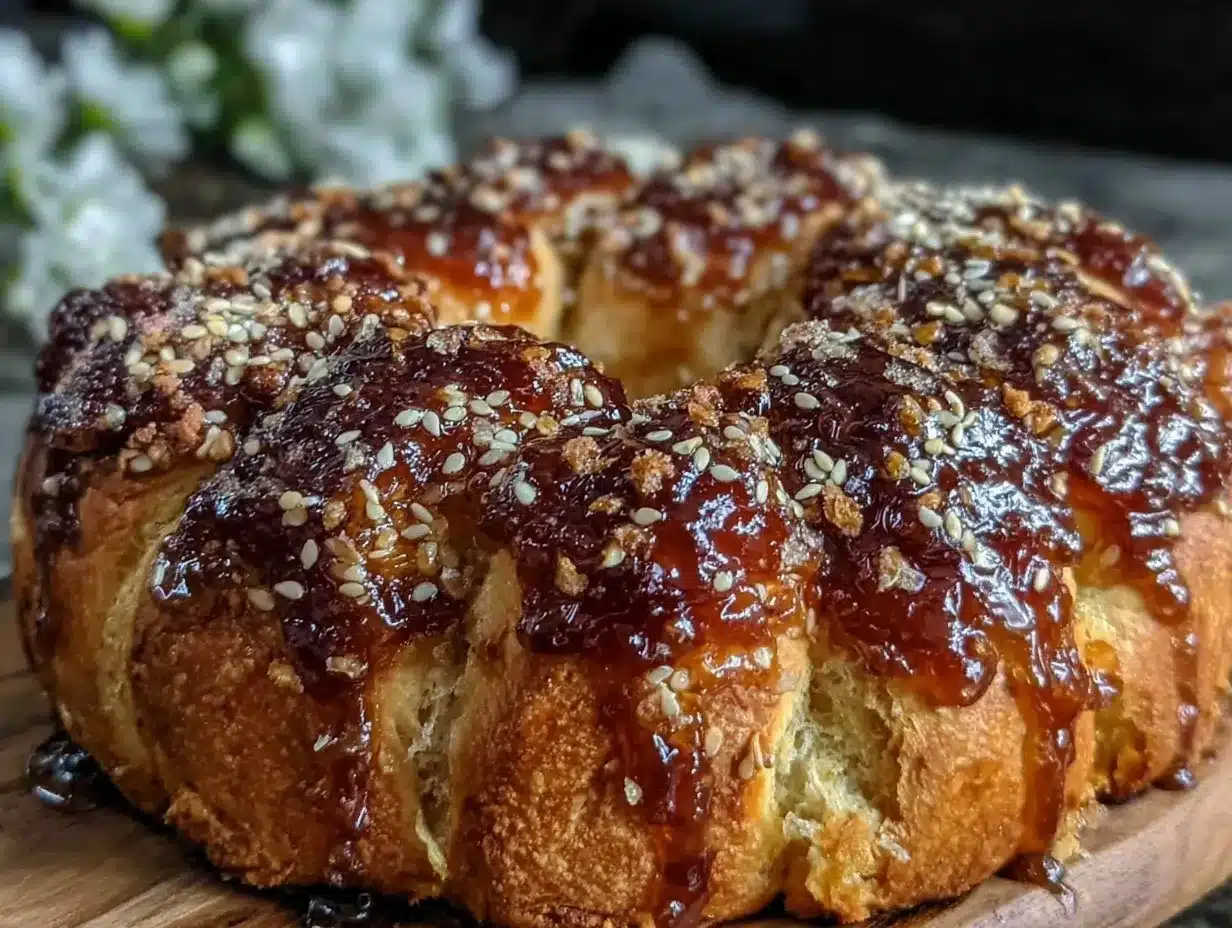
- Prepare the Apricots: Wash the apricots thoroughly, then cut them in half and remove the pits. Chop into small chunks—about 1/2 inch pieces work well for a nice jam texture. This should take around 10 minutes.
- Combine Ingredients: In your heavy-bottomed saucepan, add the chopped apricots, sugar, water, and lemon juice. Stir well to combine. Let this mixture sit for 15 minutes—this macerates the fruit and helps it release natural juices.
- Cook the Jam: Place the pan over medium heat and bring it to a gentle boil. Stir frequently to prevent sticking or burning (I learned this the hard way the first time!). Lower the heat to a simmer and cook uncovered for 30-40 minutes. You’ll notice the mixture thickening and the foam forming on top.
- Skim the Foam: Use a spoon to remove the foam that collects on the surface. This keeps the jam clear and helps with preservation. This step is optional but recommended for a shiny finish.
- Add Rose Water: About 5 minutes before finishing, stir in the rose water and optional spices. Taste carefully—if it’s too floral, add a squeeze more lemon juice to balance.
- Test the Jam: To check if the jam is ready, place a small spoonful on a chilled plate. Let it cool for a minute then push it with your finger. If it wrinkles and doesn’t flood back, it’s done. If not, cook a few minutes longer and test again.
- Jar the Jam: Pour the hot jam into sterilized jars, leaving about 1/4 inch of space at the top. Seal immediately and let cool at room temperature. The jam will thicken further as it cools.
- Toast the Simit: Just before serving, slice your sesame simit rings if needed and toast them lightly—either in a toaster oven or on a dry skillet—for about 3-4 minutes until golden and crisp.
- Serve: Spread a generous layer of the rose and apricot jam on your warm toasted simit and enjoy immediately!
Pro tip: If you want a chunkier jam, stir less during cooking. For smoother, stir more often and consider using the strainer.
Cooking Tips & Techniques
Jam-making is an art, but honestly, it’s forgiving if you watch your heat and timing. Here are some tips I picked up after a few kitchen misadventures:
- Don’t Rush the Cooking: Low and slow is your friend here. High heat can make the jam scorch or cook unevenly, leading to bitter flavors.
- Skimming Foam: I used to ignore the foam, but it really does make the jam clearer and more shelf-stable. A small fine-mesh skimmer makes this easy.
- Rose Water Caution: Add it near the end and taste as you go. Too much can overpower or taste soapy.
- Use Fresh Lemon Juice: Bottled lemon juice doesn’t have the same brightness and can dull flavors.
- Multitasking: While the jam simmers, prep your simit or clean your workspace so you’re ready to serve immediately.
- Storage Tip: Label your jars with the date and store in a cool, dark spot. Once opened, keep refrigerated and use within two weeks.
Variations & Adaptations
This jam is versatile and easy to tweak, depending on your tastes and dietary needs:
- Vegan-Friendly: Naturally vegan since it’s fruit and sugar-based. Just pair with vegan sesame simit or gluten-free bread.
- Spiced Twist: Add a pinch of ground cardamom, cinnamon, or even a star anise pod during cooking for a warm spice note.
- Seasonal Swap: Use fresh peaches or nectarines instead of apricots in late summer for a similar but slightly sweeter jam.
- Low-Sugar Version: Cut sugar by 1/3 and add a splash of apple cider vinegar to help balance and preserve.
- Personal Variation: Once, I mixed in crushed pistachios just before jarring for a crunchy surprise that was a hit at brunch.
Serving & Storage Suggestions
Serve this Turkish Rose and Apricot Jam spread thick on warm toasted sesame simit for breakfast or an afternoon snack. The warmth of the simit brings out the jam’s aromas and balances the sweetness. You can also pair it with plain yogurt or cream cheese for a creamy contrast.
Store unopened jars in a cool, dark place for up to 6 months. Once opened, keep refrigerated and consume within two weeks for best flavor. Reheat gently in a small saucepan or microwave before spreading if you like it softer. The flavors deepen over a day or two, so don’t hesitate to make it ahead.
Nutritional Information & Benefits
A typical serving of this jam (about 1 tablespoon or 20 grams) contains roughly 50 calories, mostly from natural sugars in the apricots and added sugar. Apricots provide vitamin A, C, and dietary fiber, while rose water adds a fragrant touch without calories.
This jam is gluten-free and vegan, making it accessible for many diets. Using fresh fruit and natural sugar keeps it wholesome compared to commercial spreads. Plus, the antioxidants in apricots make this a small but sweet way to support your wellness.
Conclusion
So, why not bring a little bit of Turkish charm to your kitchen with this Flavorful Turkish Rose and Apricot Jam on Toasted Sesame Simit? It’s a recipe that’s simple, memorable, and honestly, a joy to make—even if your kitchen gets a little sticky in the process. I love how it combines floral elegance with bright fruitiness and that sesame crunch. It’s perfect for lazy mornings or impressing guests without fuss.
Feel free to tweak the rose water or spices to your liking—that’s the beauty of homemade jam. If you try this recipe, I’d love to hear how it turns out or what variations you create. Leave a comment or share your jam stories—I’m always excited to learn new twists!
Happy jamming and simit toasting!
FAQs
Can I use frozen apricots for this jam?
Yes, thaw them completely and drain excess liquid before cooking. The flavor will be slightly different but still delicious.
How long does homemade apricot rose jam last?
Unopened and properly sealed, it can last up to 6 months in a cool, dark place. Once opened, refrigerate and consume within two weeks.
What can I substitute for rose water if I don’t have any?
You can use a small amount of vanilla extract or orange blossom water, but the flavor will change. Rose water is unique in its floral note.
Is toasted sesame simit necessary for this recipe?
Simit adds a wonderful nutty crunch, but you can use bagels, toasted bread, or crackers as alternatives.
How do I know when the jam is done?
Perform the wrinkle test by placing a spoonful on a cold plate and pushing it after a minute. If the surface wrinkles and doesn’t flood back, your jam is ready.
Pin This Recipe!
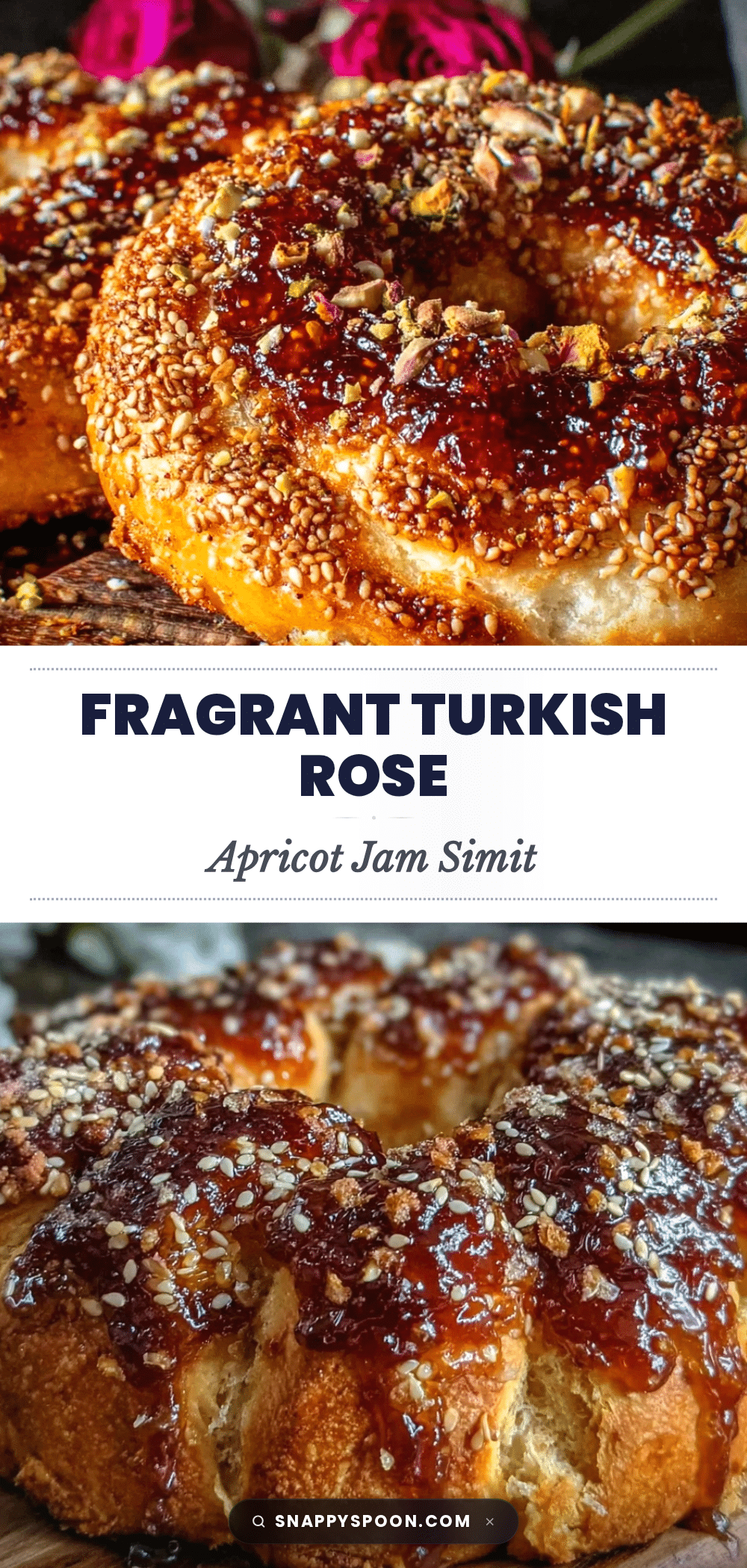
Flavorful Turkish Rose and Apricot Jam Recipe for Perfect Toasted Sesame Simit

A delightful jam combining floral rose water and bright apricots, perfect for spreading on toasted sesame simit or other breads. This recipe captures a traditional Turkish flavor with a balance of sweetness and floral charm.
- Prep Time: 25 minutes
- Cook Time: 35 minutes
- Total Time: 1 hour
- Yield: 4 servings 1x
- Category: Breakfast, Snack, Spread
- Cuisine: Turkish
Ingredients
- 2 pounds (900 grams) fresh apricots, ripe but firm
- 2 cups (400 grams) granulated sugar
- 2 tablespoons fresh lemon juice (about 1 lemon)
- 1 teaspoon culinary rose water
- 1/2 cup (120 ml) water
- Optional: pinch of ground cardamom or cinnamon
- 4 toasted sesame simit rings (or bagels/sesame-topped bread as substitute)
Instructions
- Wash apricots thoroughly, cut in half, remove pits, and chop into 1/2 inch pieces (about 10 minutes).
- In a heavy-bottomed saucepan, combine chopped apricots, sugar, water, and lemon juice. Stir well and let sit for 15 minutes to macerate.
- Place pan over medium heat and bring to a gentle boil, stirring frequently to prevent sticking or burning.
- Lower heat to a simmer and cook uncovered for 30-40 minutes until thickened and foam forms on top.
- Skim off foam with a spoon for a clearer jam (optional but recommended).
- About 5 minutes before finishing, stir in rose water and optional spices. Taste and adjust with more lemon juice if needed.
- Test jam readiness by placing a spoonful on a chilled plate; if it wrinkles and doesn’t flood back, it’s done. If not, cook a few minutes longer and test again.
- Pour hot jam into sterilized jars, leaving 1/4 inch headspace. Seal immediately and let cool at room temperature.
- Just before serving, slice and toast sesame simit rings for 3-4 minutes until golden and crisp.
- Spread a generous layer of jam on warm toasted simit and enjoy immediately.
Notes
Add rose water near the end and taste carefully to avoid overpowering floral notes. Skim foam for clearer jam and better preservation. Use fresh lemon juice for brightness. Store unopened jars in a cool, dark place up to 6 months; refrigerate after opening and consume within two weeks. Reheat gently before serving if desired.
Nutrition
- Serving Size: 1 tablespoon (20 gra
- Calories: 50
- Sugar: 12
- Carbohydrates: 13
- Fiber: 1
Keywords: Turkish jam, rose and apricot jam, simit, breakfast jam, homemade jam, floral jam, apricot jam, toasted sesame simit