Love this? Save it for later!
Share the inspiration with your friends
“I never thought a simple omelette could stop me mid-step on a busy weekday morning,” I confessed to my friend as we sat in a tiny Tokyo cafe one rainy afternoon. The chef, an elderly gentleman with a calm demeanor, was expertly rolling layers of golden egg in a special rectangular pan. What caught my attention wasn’t just the precision—it was the gentle steam rising, the subtle aroma of dashi broth mingling with the eggs, and the almost fluffy texture that seemed too delicate to be real.
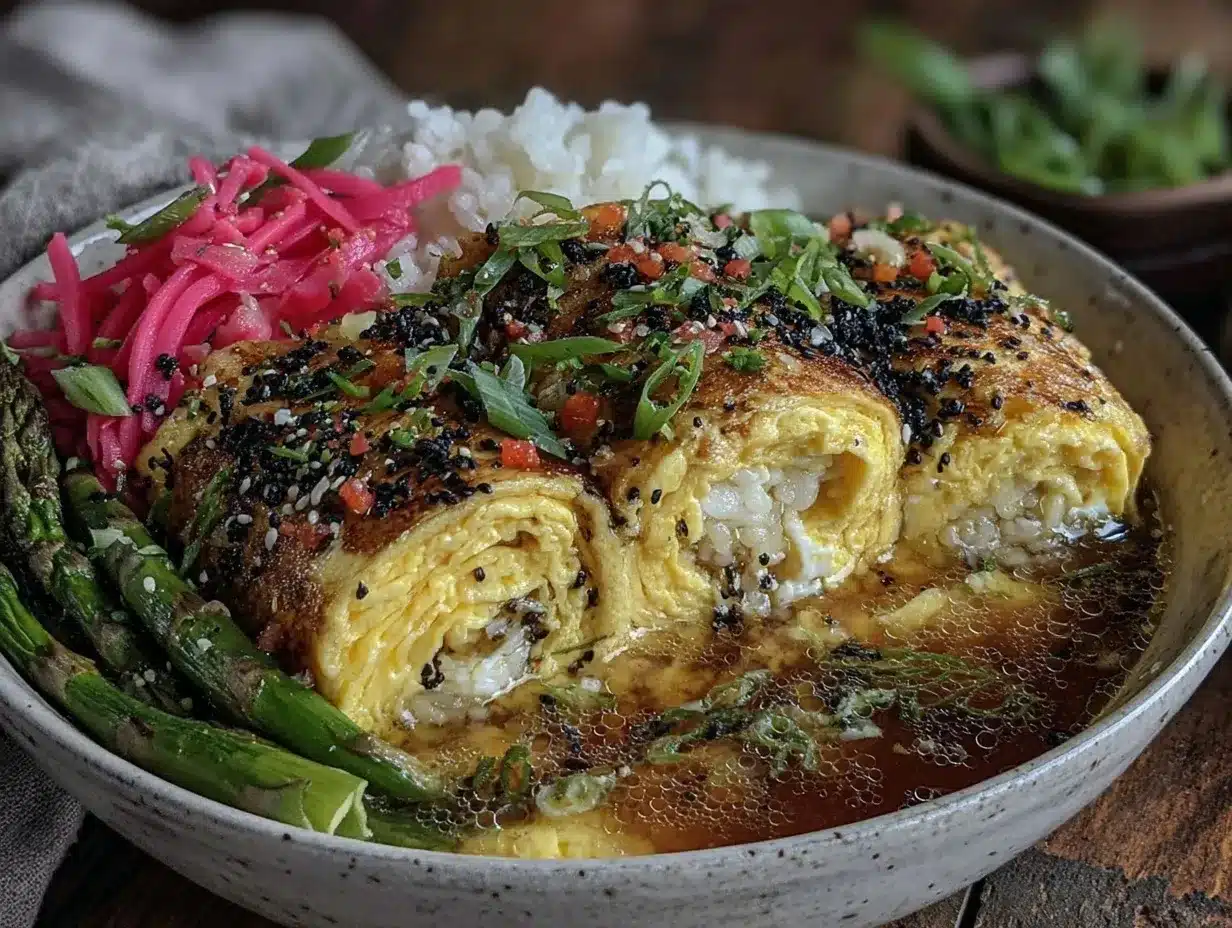
That day, I tasted the Fluffy Tamagoyaki Rolled Omelette Breakfast Bowl with Dashi for the first time. Honestly, I was skeptical—how could an omelette be both sweet and savory, tender and structured? But that first bite, with its umami depth and comforting warmth, was unforgettable. I scribbled down the recipe on a napkin, slightly smudged from the drizzle outside, determined to replicate it at home.
Maybe you’ve been there too—craving something both satisfying and light, something that feels like a hug but also fuels your day. This recipe stayed with me because it’s not just breakfast; it’s a little ritual that turns ordinary mornings into moments of calm and joy. So let me tell you how this Fluffy Tamagoyaki Rolled Omelette Breakfast Bowl with Dashi can become your new favorite start.
Why You’ll Love This Recipe
- Quick & Easy: Comes together in under 20 minutes, making it perfect for busy mornings or a leisurely weekend brunch.
- Simple Ingredients: No complicated shopping trips needed—just eggs, dashi, and a few pantry staples.
- Perfect for Breakfast Bowls: Pairs beautifully with steamed rice, pickles, and a splash of soy sauce for a balanced meal.
- Crowd-Pleaser: Kids and adults alike love the soft texture and subtle sweetness paired with savory notes.
- Unbelievably Delicious: The dashi infusion adds a depth that turns a humble omelette into something special.
This isn’t your run-of-the-mill omelette. The secret lies in the layering technique and just the right balance of dashi broth, which keeps the egg tender and packed with umami flavor. I’ve tested this recipe countless times in my kitchen, tweaking the sweetness and rolling method until it felt just right. It’s the kind of dish that makes you close your eyes while eating—pure comfort without heaviness.
Whether you’re looking to impress guests with an elegant yet simple breakfast or want to treat yourself on a quiet morning, this tamagoyaki bowl fits the bill. Honestly, it’s like having a little piece of Japan’s morning soul right in your own home.
What Ingredients You Will Need
This recipe uses simple, wholesome ingredients to deliver bold flavor and satisfying texture without fuss. Most are pantry staples, and a few key items bring authenticity and richness.
- Large eggs (4-5, room temperature) – Fresh eggs make all the difference in fluffiness.
- Dashi stock (¼ cup / 60ml) – The heart of the flavor; I recommend using instant dashi powder from trusted brands like Shimaya for convenience.
- Mirin (1 tablespoon) – Adds a subtle sweetness and sheen.
- Soy sauce (1 teaspoon) – For that gentle salty umami.
- Sugar (1 teaspoon) – Balances the savory notes perfectly.
- Vegetable oil (for cooking) – Neutral oil with a high smoke point works best.
- Steamed white rice (for serving) – Use freshly steamed Japanese short-grain rice for authentic texture.
- Optional toppings: finely sliced green onions, toasted sesame seeds, pickled ginger, or nori strips.
If you want a gluten-free version, swap soy sauce for tamari. For a dairy-free, egg-only dish, this recipe works perfectly as is. And if fresh dashi isn’t available, homemade kombu and bonito flakes dashi can be made in advance to deepen the flavor.
Equipment Needed
- Rectangular tamagoyaki pan (about 7×9 inches / 18×23 cm) – This is traditional, but a small non-stick skillet works in a pinch.
- Chopsticks or a silicone spatula – For folding and rolling the omelette layers gently.
- Mixing bowl – To whisk the eggs and dashi mixture smoothly.
- Measuring spoons and cups – For precise seasoning balance.
- Rice cooker or pot – For perfectly steamed rice, crucial to the breakfast bowl experience.
I started with a budget-friendly non-stick square pan from a local Asian market, which worked surprisingly well. Over time, I invested in a dedicated tamagoyaki pan, which made rolling easier and the layers more uniform. Whatever you use, keep the pan well-oiled and at medium-low heat to avoid browning too quickly. A clean pan surface is key for smooth rolls!
Preparation Method
- Prepare the dashi stock: If using instant powder, dissolve ¼ cup (60ml) dashi powder in ½ cup (120ml) warm water. Let it cool.
- Mix the egg base: In a medium bowl, crack 4 large eggs and whisk gently to combine without adding air bubbles.
- Add seasoning: Stir in ¼ cup (60ml) of the prepared dashi stock, 1 tablespoon mirin, 1 teaspoon soy sauce, and 1 teaspoon sugar. Mix until sugar dissolves and everything is smooth.
- Heat the pan: Place your tamagoyaki pan over medium-low heat. Lightly oil the surface with a paper towel dipped in vegetable oil. Be careful not to over-oil; a thin layer is enough.
- Cook the first layer: Pour a thin layer of egg mixture (about ¼ cup / 60ml) into the pan, tilting to cover evenly. Let it cook until almost set but still slightly wet on top (about 1-2 minutes).
- Roll the omelette: Using chopsticks or a spatula, gently roll the egg from one side to the other. Push rolled egg back to the starting edge of the pan.
- Add more egg mixture: Oil the pan lightly again, pour another thin layer beneath the rolled egg, lifting the roll to let the uncooked egg flow underneath. Cook until nearly set.
- Repeat rolling: Roll the egg again toward the opposite side. Continue layering and rolling until all egg mixture is used (usually 3-4 layers total).
- Shape and rest: Remove the rolled omelette and shape gently with a bamboo sushi mat or towel if desired. Let it rest for 2-3 minutes to set.
- Slice and assemble: Cut the tamagoyaki into ¾-inch (2cm) thick slices. Place over a bowl of steamed rice, and garnish with sliced green onions, sesame seeds, or nori.
Pro tip: Keep your heat moderate—too hot, and the egg browns and loses softness; too low, and it takes forever to set. You’ll get a feel for the ideal temperature after a couple tries. Also, don’t worry if your first roll isn’t perfect. It’s part of the charm!
Cooking Tips & Techniques
- Whisk gently: Over-whisking can introduce too much air, making the texture less smooth. Aim for a uniform yellow without bubbles.
- Oil sparingly: Use a paper towel to spread oil thinly between layers; too much oil causes slipping and uneven cooking.
- Patience is key: Let each layer set almost fully before rolling. Rushing can cause breakage or tearing.
- Use the right pan temperature: Medium-low heat prevents browning and keeps the egg tender and pale.
- Rolling technique: Practice the motion to gently roll without pressing too hard. Think of it like folding a delicate crepe.
- Multitasking: While the omelette cooks, prepare toppings or rice to keep things moving smoothly.
- Storage tip: Tamagoyaki can be made ahead and gently reheated in a pan or microwave wrapped in a damp towel.
Variations & Adaptations
- Vegetarian version: Swap dashi with kombu (seaweed) broth to keep it plant-based without losing umami.
- Flavor twists: Add finely chopped scallions, grated ginger, or a pinch of shichimi togarashi for a kick.
- Gluten-free: Use gluten-free tamari instead of soy sauce, and check your mirin for gluten content.
- Cheesy tamagoyaki: Sprinkle a little shredded mild cheese on layers before rolling for a creamy surprise.
- Seasonal: Serve with fresh seasonal veggies or pickled radish for bright contrast.
I once tried adding a spoonful of finely chopped shiitake mushrooms into the egg mixture for an earthy note. It was a hit during a chilly fall brunch!
Serving & Storage Suggestions
Serve your Fluffy Tamagoyaki Rolled Omelette Breakfast Bowl with Dashi warm, ideally within 10 minutes of cooking to enjoy its soft texture. Presentation-wise, place the sliced tamagoyaki atop a steaming bowl of freshly cooked white rice, then garnish with green onions, toasted sesame seeds, or a small sheet of nori for that authentic touch.
This dish pairs beautifully with a side of pickled vegetables or a light miso soup to complete the meal. A warm cup of green tea complements the subtle umami flavors perfectly.
For storage, wrap the rolled omelette tightly in plastic wrap and refrigerate for up to 2 days. Reheat gently in a non-stick pan over low heat or microwave wrapped in a damp paper towel to maintain moisture. Keep rice separate and reheat just before serving to preserve texture.
Flavors tend to mellow and meld overnight, so leftovers can sometimes taste even better the next day—if they last that long!
Nutritional Information & Benefits
Each serving of this tamagoyaki breakfast bowl provides approximately:
| Calories | 250-300 kcal |
|---|---|
| Protein | 15-18g |
| Fat | 12-15g |
| Carbohydrates | 20-25g (mostly from rice) |
| Sodium | 400-500mg |
Eggs are a fantastic source of high-quality protein and essential vitamins like B12 and D. Dashi adds umami without excess salt or fat, made from wholesome seaweed and bonito flakes, which contain beneficial minerals. This recipe is naturally gluten-free if you choose appropriate soy sauce, and low in carbs if served without rice.
For me, this breakfast bowl strikes the perfect balance of nutrition and comfort—a nourishing start that fuels the day without weighing me down.
Conclusion
The Fluffy Tamagoyaki Rolled Omelette Breakfast Bowl with Dashi is more than just a meal; it’s a little morning ceremony that brings warmth, flavor, and a sense of calm to hectic days. The combination of tender, layered eggs infused with delicate dashi and perfectly steamed rice feels like a gentle embrace you didn’t know you needed.
Feel free to customize it with your favorite toppings or seasonings—maybe a sprinkle of chili flakes or fresh herbs. Honestly, this recipe invites you to make it your own, while still honoring its simple roots.
I hope you enjoy making and eating this as much as I do. If you try it, please share your tweaks and stories—I’d love to hear how it fits into your morning routine. Here’s to many cozy breakfasts ahead!
FAQs
What is the best pan to use for tamagoyaki?
A rectangular tamagoyaki pan is ideal because it helps create neat, even layers. However, a small non-stick skillet works fine if you don’t have one.
Can I make tamagoyaki without dashi?
You can skip dashi, but the flavor will be less umami-rich. Using dashi powder or homemade broth adds a subtle depth that makes this recipe special.
How do I store leftover tamagoyaki?
Wrap leftovers tightly in plastic wrap and refrigerate for up to 2 days. Reheat gently in a pan or microwave with a damp towel to keep it moist.
Is tamagoyaki gluten-free?
Yes, if you use gluten-free soy sauce (tamari) and check the mirin brand for gluten content, this recipe is naturally gluten-free.
Can I prepare tamagoyaki in advance for meal prep?
Definitely! Tamagoyaki stores well and can be sliced and packed for lunchboxes or quick breakfasts. Just reheat gently before serving.
Pin This Recipe!

Fluffy Tamagoyaki Rolled Omelette Breakfast Bowl Easy Recipe with Dashi

A delicate and fluffy Japanese rolled omelette infused with dashi broth, perfect for a comforting and flavorful breakfast bowl served over steamed rice.
- Prep Time: 10 minutes
- Cook Time: 8-10 minutes
- Total Time: 18-20 minutes
- Yield: 2 servings 1x
- Category: Breakfast
- Cuisine: Japanese
Ingredients
- 4–5 large eggs (room temperature)
- 1/4 cup (60 ml) dashi stock (instant dashi powder recommended)
- 1 tablespoon mirin
- 1 teaspoon soy sauce
- 1 teaspoon sugar
- Vegetable oil (for cooking)
- Steamed white rice (for serving)
- Optional toppings: finely sliced green onions, toasted sesame seeds, pickled ginger, nori strips
Instructions
- Prepare the dashi stock: If using instant powder, dissolve 1/4 cup (60 ml) dashi powder in 1/2 cup (120 ml) warm water. Let it cool.
- Mix the egg base: In a medium bowl, crack 4 large eggs and whisk gently to combine without adding air bubbles.
- Add seasoning: Stir in 1/4 cup (60 ml) of the prepared dashi stock, 1 tablespoon mirin, 1 teaspoon soy sauce, and 1 teaspoon sugar. Mix until sugar dissolves and everything is smooth.
- Heat the pan: Place your tamagoyaki pan over medium-low heat. Lightly oil the surface with a paper towel dipped in vegetable oil. Be careful not to over-oil; a thin layer is enough.
- Cook the first layer: Pour a thin layer of egg mixture (about 1/4 cup / 60 ml) into the pan, tilting to cover evenly. Let it cook until almost set but still slightly wet on top (about 1-2 minutes).
- Roll the omelette: Using chopsticks or a spatula, gently roll the egg from one side to the other. Push rolled egg back to the starting edge of the pan.
- Add more egg mixture: Oil the pan lightly again, pour another thin layer beneath the rolled egg, lifting the roll to let the uncooked egg flow underneath. Cook until nearly set.
- Repeat rolling: Roll the egg again toward the opposite side. Continue layering and rolling until all egg mixture is used (usually 3-4 layers total).
- Shape and rest: Remove the rolled omelette and shape gently with a bamboo sushi mat or towel if desired. Let it rest for 2-3 minutes to set.
- Slice and assemble: Cut the tamagoyaki into 3/4-inch (2 cm) thick slices. Place over a bowl of steamed rice, and garnish with sliced green onions, sesame seeds, or nori.
Notes
Keep the pan well-oiled and at medium-low heat to avoid browning too quickly. Whisk eggs gently to avoid air bubbles. Let each layer set almost fully before rolling to prevent breakage. Tamagoyaki can be made ahead and gently reheated wrapped in a damp towel. For gluten-free, substitute soy sauce with tamari. Vegetarian version can use kombu broth instead of dashi.
Nutrition
- Serving Size: 1 bowl with 3-4 slic
- Calories: 275
- Sugar: 3
- Sodium: 450
- Fat: 13.5
- Saturated Fat: 3.5
- Carbohydrates: 22.5
- Fiber: 0.5
- Protein: 16.5
Keywords: tamagoyaki, rolled omelette, Japanese breakfast, dashi, easy breakfast, fluffy omelette, breakfast bowl