Love this? Save it for later!
Share the inspiration with your friends
My neighbor Jen wasn’t trying to impress anyone. I’d stopped by to borrow a ladder—mine had mysteriously vanished after last year’s fence painting project—and the smell hit me before I even knocked. Something savory, slightly funky, with a sweetness that made my mouth water instantly. She opened the door holding a pair of tongs, apron strings dangling, and waved me in like it was nothing. “Oh, just throwing together some salmon for dinner,” she said, gesturing at these gorgeous skewers lined up on a baking sheet, all glossy and caramelized. Just throwing together. Honestly, I stood there in her kitchen for twenty minutes, ladder completely forgotten, watching her work.
That’s how this sticky miso-glazed salmon skewers recipe found me. Not in a fancy cooking class or a glossy magazine, but in a slightly messy kitchen on a Tuesday evening, with a neighbor who didn’t realize she was doing anything special. The glaze was this incredible balance of salty miso, sweet honey, and a kick of ginger—it coated the salmon in this sticky, lacquered layer that caught the light. And alongside it? A quick-pickled cucumber salad that was bright, tangy, and cut through the richness perfectly. I asked for the recipe before I left, and she scribbled it on the back of a grocery receipt.
Maybe you’ve been there—you taste something at someone’s house and you just know it’s going to become a staple in your own kitchen. That’s exactly what happened here. I’ve made these sticky miso-glazed salmon skewers at least a dozen times since that night, tweaking the glaze here, adjusting the pickling liquid there, until it felt like mine. And now I’m passing it along to you. Trust me, you’re going to want this one.
Why You’ll Love This Recipe
Let me be straight with you—I’ve tested this recipe more times than I care to count. Burnt a few skewers, oversalted a batch of pickles, learned the hard way that your grill grate needs to be clean for this glaze. But every single failure taught me something, and what I’m sharing today is the version I’d serve to anyone without hesitation. Here’s why it works:
- Quick & Easy: From start to finish, you’re looking at about 30 minutes. The glaze comes together in one bowl, the pickles in another, and the salmon cooks in under 10 minutes. Perfect for a weeknight when you want something that feels special without spending hours in the kitchen.
- Simple Ingredients: White miso paste, honey, soy sauce, rice vinegar, fresh ginger—these are things I keep in my fridge and pantry anyway. No obscure specialty items that you’ll use once and forget about.
- Perfect for Entertaining: These skewers are gorgeous on a platter. The sticky glaze makes them look like something from a restaurant menu, but you made them in your own kitchen. Great for summer barbecues, dinner parties, or even a fancy date night at home.
- Crowd-Pleaser: I’ve served these to kids, picky eaters, and friends who “don’t really like fish.” Every single time, the skewers disappear first. The miso glaze is savory-sweet and not at all fishy—it wins people over.
- Unbelievably Delicious: That sticky, caramelized exterior with tender, flaky salmon inside? Paired with the crisp, tangy cucumber salad? It’s one of those combinations that just clicks. The flavors work together beautifully, and it feels like a complete meal in under 30 minutes.
This isn’t just another salmon recipe. The technique of broiling the skewers on a wire rack (more on that later) gives you that lacquered, slightly charred finish without firing up the grill. And the quick-pickled cucumber salad? It’s the kind of side dish you’ll start making for everything—burgers, tacos, grilled chicken. I’m not exaggerating.
What Ingredients You Will Need
This recipe uses simple, pantry-friendly ingredients that come together to create something genuinely impressive. The miso glaze does the heavy lifting here, and the pickled cucumber salad provides the perfect bright, crunchy contrast. Here’s what you’ll need:
For the Sticky Miso-Glazed Salmon Skewers
- 1 ½ pounds skinless salmon fillet, cut into 1 ½-inch cubes (look for center-cut fillets for even cooking; I prefer wild-caught when possible)
- 3 tablespoons white miso paste (I use the brand Hikari or Miso Master—they’re widely available and have a nice balance of salty and sweet)
- 2 tablespoons honey (or maple syrup for a slightly different sweetness)
- 2 tablespoons soy sauce (use tamari for gluten-free)
- 1 tablespoon rice vinegar (unseasoned is best here)
- 1 tablespoon toasted sesame oil
- 1 teaspoon fresh ginger, grated (about a 1-inch piece—don’t skip this; it adds warmth and depth)
- 2 cloves garlic, minced
- 1 tablespoon sesame seeds, for garnish
- 2 green onions, thinly sliced, for garnish
- Wooden or metal skewers (if using wooden, soak them in water for 30 minutes before grilling or broiling)
For the Quick-Pickled Cucumber Salad
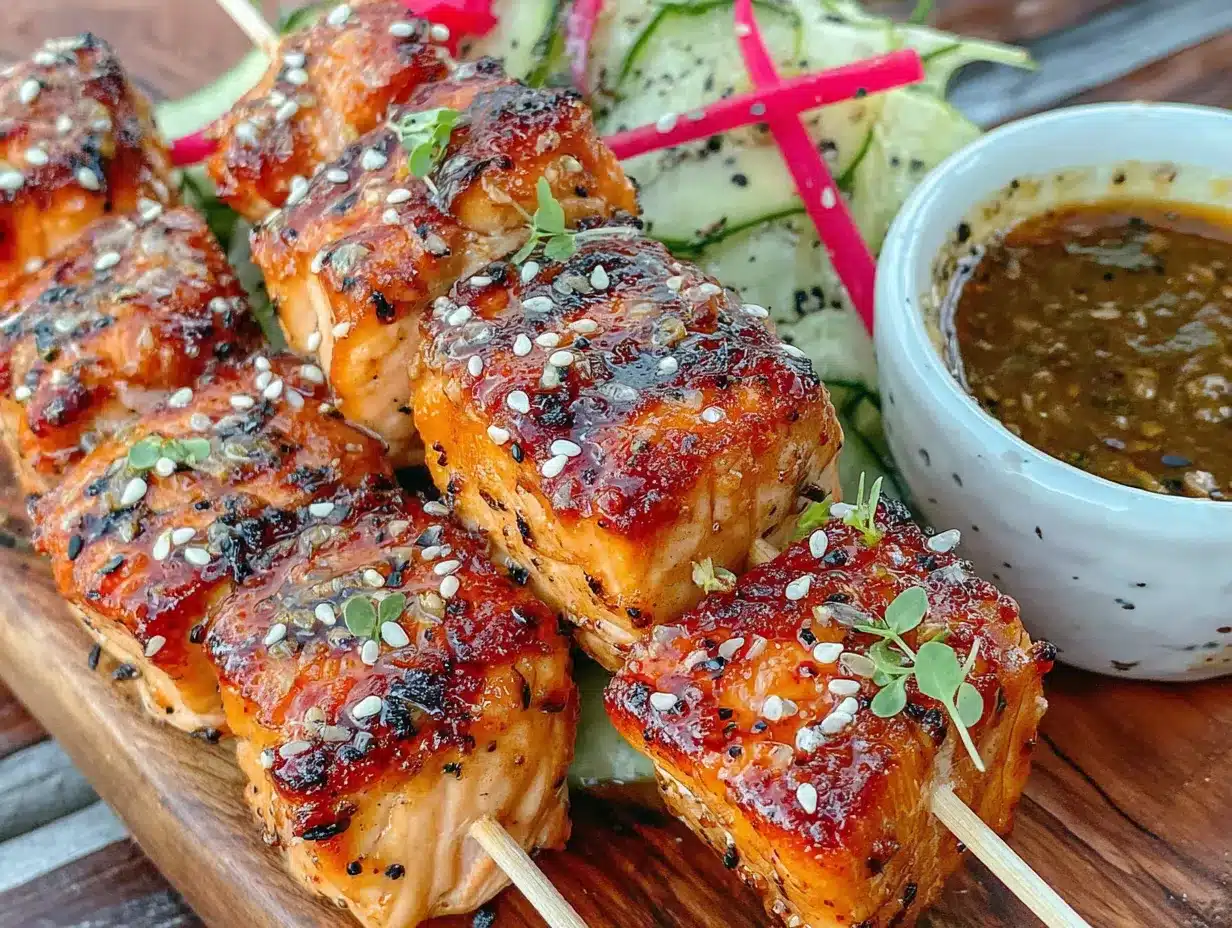
- 1 large English cucumber, thinly sliced (English cucumbers are less watery and have tender skin—no need to peel)
- ¼ cup rice vinegar
- 2 tablespoons granulated sugar
- ½ teaspoon salt
- ¼ teaspoon red pepper flakes (optional, but I love the little kick)
- 1 tablespoon fresh dill, chopped (or cilantro if that’s more your style)
Ingredient Tips: White miso (also called shiro miso) is milder and sweeter than red or brown miso, which makes it perfect for this glaze. If you only have red miso, use 2 tablespoons and add an extra teaspoon of honey to balance the saltiness. For the cucumber salad, English cucumbers really are the way to go—they stay crunchy and don’t release as much water as regular cucumbers. If you use regular cucumbers, peel them and scoop out the seeds before slicing.
Equipment Needed
You don’t need a ton of fancy equipment for this recipe, which is part of what makes it so great. Here’s what you’ll need:
- Baking sheet with a wire rack—this is key for getting that sticky, caramelized glaze without the salmon sitting in its own juices. If you don’t have a wire rack, you can line the baking sheet with foil and lightly grease it, but the rack really does give better results.
- Wooden or metal skewers. I prefer flat metal skewers because the salmon doesn’t spin around on them, but wooden ones work fine too. Just remember to soak wooden skewers for at least 30 minutes so they don’t burn under the broiler.
- Small saucepan for the glaze (or you can use a microwave-safe bowl in a pinch).
- Mixing bowls—one for the glaze, one for the cucumber salad.
- Sharp knife and cutting board for cubing the salmon and slicing the cucumber.
- Microplane or fine grater for the ginger and garlic. I used to just mince them, but grating releases more flavor and helps the glaze come together more smoothly.
- Tongs for turning the skewers.
- Pastry brush for applying the glaze (optional, but helpful).
If you’re on a budget, skip the wire rack and just line your baking sheet with foil. The glaze might pool a little, but it’ll still be delicious. And if you don’t have a pastry brush, a regular basting brush or even a spoon works fine—just drizzle the glaze over the salmon and spread it around.
Preparation Method
Alright, let’s get cooking. This recipe moves quickly once you start, so I recommend prepping everything before you turn on the heat. Trust me on this one—I learned the hard way that scrambling to grate ginger while your glaze is bubbling over is not fun.
- Make the quick-pickled cucumber salad first. In a medium bowl, whisk together the rice vinegar, sugar, salt, and red pepper flakes until the sugar dissolves. Add the sliced cucumber and chopped dill, toss to coat, and set aside. That’s it—no heating required. The cucumbers will start pickling immediately and will be ready by the time your salmon is cooked. Give them a stir every now and then to make sure everything gets coated.
- Prepare the miso glaze. In a small saucepan over medium heat, combine the white miso paste, honey, soy sauce, rice vinegar, toasted sesame oil, grated ginger, and minced garlic. Whisk until smooth and the miso has fully dissolved. Bring it to a gentle simmer, then reduce the heat and let it cook for 2-3 minutes, stirring occasionally, until it thickens slightly. It should be glossy and smell incredible—that savory-sweet aroma is the sign you’re on the right track. Remove from heat and set aside to cool slightly.
- Prep the salmon. Cut your salmon fillet into 1 ½-inch cubes. Try to make them as uniform as possible so they cook evenly. Pat the cubes dry with paper towels—this helps the glaze stick better. Thread the salmon onto skewers, leaving a little space between each piece so the heat can circulate. I usually get about 4-5 pieces per skewer, depending on the size.
- Preheat your broiler. Position an oven rack about 6 inches from the heating element and turn the broiler to high. If you’re using a grill instead, preheat it to medium-high heat. Line a baking sheet with foil (for easy cleanup) and place a wire rack on top. Lightly oil the rack to prevent sticking.
- Glaze the salmon. Place the skewers on the wire rack. Using a pastry brush or a spoon, generously brush the miso glaze over all sides of the salmon cubes. Don’t be shy—you want a nice, thick coating. Reserve about a third of the glaze for basting later.
- Broil the skewers. Place the baking sheet under the broiler and cook for 4-5 minutes. The glaze should start bubbling and caramelizing. Pull the sheet out, carefully flip the skewers using tongs, and brush on another layer of the reserved glaze. Return to the broiler for another 3-4 minutes, until the salmon is cooked through and the glaze is sticky and slightly charred in spots. The internal temperature should reach 125-130°F for medium (my preference) or 135-140°F for well-done. Keep an eye on them—broilers vary in intensity, and you don’t want burnt glaze.
- Rest and garnish. Remove the skewers from the oven and let them rest for 2-3 minutes. This helps the glaze set and the salmon finish cooking gently. Sprinkle with sesame seeds and sliced green onions.
- Serve immediately. Arrange the skewers on a platter with the quick-pickled cucumber salad on the side. The contrast between the warm, sticky salmon and the cool, tangy cucumbers is absolutely perfect. I like to drizzle a little of the pickling liquid over the salad right before serving for extra brightness.
Pro tip: If you’re making a larger batch, work in batches to avoid overcrowding the baking sheet. The skewers need space around each piece for the heat to circulate and the glaze to caramelize properly. Overcrowding will steam the salmon instead of caramelizing it, and you’ll miss that gorgeous sticky texture.
Cooking Tips & Techniques
I’ve made this recipe enough times to know exactly where things can go wrong—and how to fix them. Here are the lessons I learned the hard way so you don’t have to:
Don’t skip the wire rack. The first time I made these, I put the skewers directly on a foil-lined baking sheet. The glaze pooled underneath, the salmon sat in its own liquid, and I ended up with steamed fish instead of sticky, caramelized skewers. The wire rack lets air circulate underneath, which gives you that beautiful lacquered finish. If you don’t have a wire rack, you can use a broiler pan—just make sure the slats are clean.
Watch the broiler like a hawk. Broilers are unpredictable. I once got distracted by my phone for just a minute, and the glaze went from perfectly caramelized to blackened and bitter. Stay close, check the skewers at the 4-minute mark, and adjust your oven rack position if needed. If you notice the glaze browning too quickly, move the rack down a notch.
Pat the salmon dry. Wet salmon won’t hold the glaze well. Before you cube the fish, pat it dry with paper towels. This helps the glaze cling to the surface and creates a better caramelization. It’s a small step that makes a big difference.
Double the cucumber salad. Seriously. The quick-pickled cucumber salad is so good that I always make extra. It keeps in the fridge for up to 3 days and goes with everything—grilled chicken, tacos, burgers, even just as a snack. I’ve been known to eat it straight from the bowl with a fork.
Let the glaze cool slightly before brushing. If you brush hot glaze onto cold salmon, it will slide right off. Let the glaze cool for 5-10 minutes after simmering. It should be warm, not hot, when you apply it. This gives it a chance to adhere to the fish and build up in layers.
Use room temperature salmon. Take the salmon out of the fridge about 15 minutes before you start cooking. Cold salmon cooks unevenly—the outside will be done before the center is cooked through. Room temperature salmon cooks more evenly and gives you that perfect flaky texture.
Variations & Adaptations
One of the things I love about this recipe is how flexible it is. Here are some variations I’ve tried and loved:
Grilled version: If you have a grill, these skewers are incredible cooked over charcoal or gas. Thread the salmon onto metal skewers (or soaked wooden ones) and grill over medium-high heat for 3-4 minutes per side, basting with the glaze after flipping. The smoky char adds another layer of flavor that’s hard to beat.
Spicy miso glaze: Add 1-2 teaspoons of sriracha or gochujang to the glaze for a spicy kick. I tried this on a whim one night when I was craving something with heat, and it was fantastic. The spicy-sweet combination works beautifully with the rich salmon.
Low-carb option: Replace the honey with a sugar-free sweetener like monk fruit or allulose. The glaze won’t caramelize quite as deeply, but it will still be delicious. Serve with extra cucumber salad or cauliflower rice instead of regular rice.
Different protein: This glaze works beautifully on chicken thighs, shrimp, or even firm tofu. For chicken, cut into 1 ½-inch cubes and cook until the internal temperature reaches 165°F. For shrimp, use large or jumbo shrimp and cook for just 2-3 minutes per side. For tofu, use extra-firm, press it well, and cook for 4-5 minutes per side.
Citrus twist: Add a tablespoon of fresh orange juice and a teaspoon of orange zest to the glaze. The citrus brightens up the miso and adds a lovely floral note. I tried this during a summer barbecue and it was a hit—the orange pairs especially well with the sesame oil.
Herb variation: Swap the dill in the cucumber salad for mint or Thai basil. Both herbs add a fresh, aromatic quality that complements the pickled cucumbers beautifully. I’ve also used a combination of dill and mint when I had both on hand.
Serving & Storage Suggestions
These sticky miso-glazed salmon skewers are best served hot, right off the broiler or grill. The glaze is at its stickiest and most flavorful when it’s fresh, and the salmon is perfectly tender. Here’s how to make the most of them:
Serving temperature: Serve the skewers warm, with the cucumber salad at room temperature or slightly chilled. The temperature contrast is part of what makes this dish so satisfying. If you’re making the cucumber salad ahead of time, pull it out of the fridge 15 minutes before serving to take the chill off.
What to serve alongside: These skewers pair beautifully with steamed jasmine rice or coconut rice (the sticky-sweet glaze soaks into the rice, and it’s incredible). A simple green salad with a ginger-sesame dressing would also work well. For a low-carb option, serve with extra cucumber salad or roasted broccoli. And if you’re feeling fancy, a side of edamame or seaweed salad rounds out the meal nicely.
Beverage pairings: A crisp Sauvignon Blanc or a dry Riesling complements the miso glaze beautifully. For beer drinkers, a Japanese lager like Sapporo or an IPA with citrus notes works well. And for a non-alcoholic option, iced green tea with a squeeze of lemon is refreshing and pairs nicely with the Asian-inspired flavors.
Storage: Leftover salmon skewers can be stored in an airtight container in the refrigerator for up to 3 days. The glaze will soften and lose some of its stickiness, but the flavor will still be great. The cucumber salad will keep for up to 3 days as well—it will soften slightly but stay crunchy and flavorful. I actually think the pickles get better after a day in the fridge.
Reheating: The best way to reheat leftover skewers is in a hot oven or toaster oven at 350°F for 5-7 minutes. This helps re-crisp the glaze without drying out the salmon. You can also reheat them in a skillet over medium heat for 2-3 minutes per side. Avoid the microwave—it will make the salmon rubbery and the glaze soggy.
Freezer-friendly: You can freeze the cooked salmon skewers for up to 2 months. Place them in a single layer on a baking sheet and freeze until solid, then transfer to a freezer-safe bag or container. To serve, thaw overnight in the refrigerator and reheat in the oven as described above. The glaze won’t be quite as sticky after freezing, but the flavor is still excellent.
Nutritional Information & Benefits
This recipe is not only delicious but also packed with nutrients that make you feel good about eating it. Here’s a rough breakdown per serving (based on 4 servings, with cucumber salad):
- Calories: Approximately 380-420
- Protein: 35-40g
- Fat: 18-22g (mostly healthy omega-3s from the salmon)
- Carbohydrates: 18-22g (from honey and miso)
- Fiber: 2-3g
- Sugar: 12-15g (natural sugars from honey and miso)
- Sodium: 800-900mg (miso and soy sauce are naturally high in sodium)
Health highlights: Salmon is one of the best sources of omega-3 fatty acids, which support heart health, brain function, and reduce inflammation. Miso is a fermented food that contains probiotics beneficial for gut health—though cooking does reduce the live cultures, you still get some benefits. Cucumbers are hydrating and low in calories, while the vinegar in the pickling liquid may help with blood sugar regulation.
Dietary considerations: This recipe is naturally dairy-free and nut-free. For a gluten-free version, use tamari instead of soy sauce. For a lower-sodium option, use low-sodium soy sauce and reduce the miso by half (add a little extra honey to balance the flavor). The recipe is not suitable for a strict low-FODMAP diet due to the garlic and honey, but you could try using garlic-infused oil and maple syrup as alternatives.
Allergens: This recipe contains fish (salmon), soy (miso and soy sauce), and sesame (sesame oil and seeds). If you have allergies, you can substitute the salmon with chicken or tofu, use coconut aminos instead of soy sauce, and skip the sesame seeds. The glaze will still be delicious.
Conclusion
If there’s one recipe I hope you try this week, it’s these sticky miso-glazed salmon skewers. They’re the kind of dish that makes you look like a culinary genius without actually requiring much effort—the kind that gets rave reviews from everyone who tries them. The miso glaze is sweet, savory, and deeply satisfying, while the quick-pickled cucumber salad provides the perfect bright, crunchy contrast. Together, they create a meal that feels special but comes together in under 30 minutes.
I love this recipe because it reminds me of that Tuesday evening at Jen’s house, when I walked in expecting a ladder and left with a new favorite dish. It’s proof that the best recipes often come from the most unexpected places. And now it’s yours to make your own. Play with the glaze, adjust the pickling liquid, find your perfect version. That’s the beauty of cooking—it’s never exactly the same twice.
I’d love to hear how these turn out for you! Drop a comment below and let me know if you tried any variations, or tag me in your photos on social media. Did you grill them? Add some heat? Make a double batch of the cucumber salad? (I won’t judge—I do the same thing.) Happy cooking, friends!
Frequently Asked Questions
Can I use frozen salmon for this recipe?
Yes, but make sure to thaw it completely in the refrigerator overnight before using. Pat it very dry with paper towels—frozen salmon tends to release more water as it thaws, and excess moisture will prevent the glaze from sticking properly.
Can I make the miso glaze ahead of time?
Absolutely! The glaze can be made up to 5 days in advance and stored in an airtight container in the refrigerator. Let it come to room temperature before using, or warm it gently on the stove or in the microwave. You may need to whisk it to re-emulsify after refrigeration.
What if I don’t have white miso?
You can use red or brown miso, but they’re saltier and more intense. Use about 2 tablespoons instead of 3, and add an extra teaspoon of honey to balance the saltiness. You can also try chickpea miso for a soy-free option—it’s milder and slightly sweeter, which works well in this glaze.
How do I know when the salmon is cooked through?
The easiest way is to use an instant-read thermometer. Salmon is cooked to medium at 125-130°F (my preference—it’s still slightly translucent in the center and very tender) or well-done at 135-140°F (opaque and flaky). If you don’t have a thermometer, look for the salmon to turn opaque and flake easily with a fork. The glaze should be bubbling and caramelized on the surface.
Can I make this recipe without skewers?
Yes! If you don’t have skewers, you can cook the salmon cubes directly on a wire rack or in a single layer on a foil-lined baking sheet. Just keep an eye on them—they’ll cook a little faster without the skewers, so check for doneness at the 6-7 minute mark. You can also use the glaze on a full salmon fillet—just increase the cooking time to 12-15 minutes, depending on thickness.
Pin This Recipe!
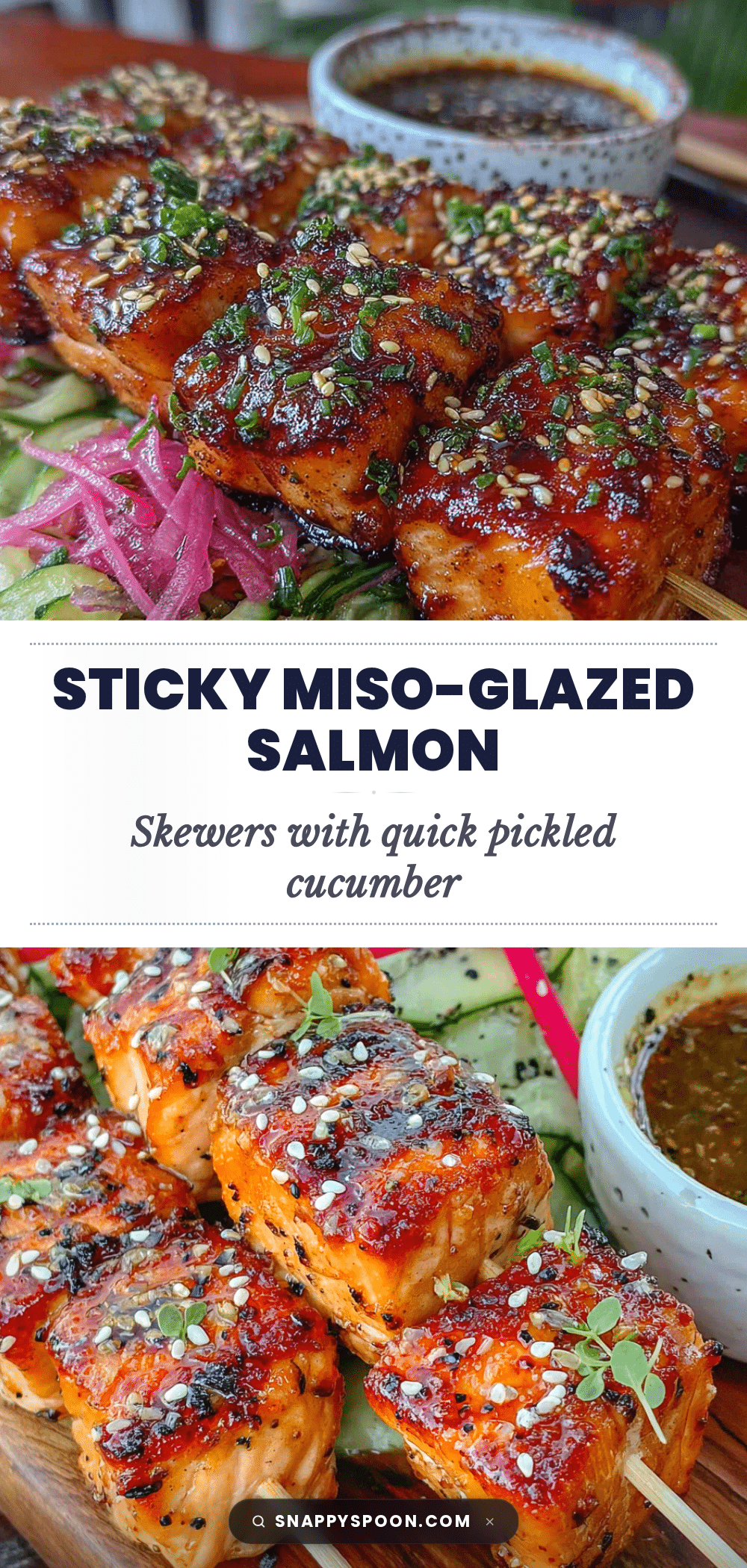
Sticky Miso-Glazed Salmon Skewers with Quick-Pickled Cucumber Salad

These sticky miso-glazed salmon skewers are quick, easy, and perfect for weeknights or entertaining. The savory-sweet miso glaze caramelizes under the broiler, while a bright, tangy quick-pickled cucumber salad provides the perfect crunchy contrast.
- Prep Time: 15 minutes
- Cook Time: 10 minutes
- Total Time: 25 minutes
- Yield: 4 servings 1x
- Category: Main Course
- Cuisine: Asian
Ingredients
- 1 ½ pounds skinless salmon fillet, cut into 1 ½-inch cubes
- 3 tablespoons white miso paste
- 2 tablespoons honey
- 2 tablespoons soy sauce
- 1 tablespoon rice vinegar
- 1 tablespoon toasted sesame oil
- 1 teaspoon fresh ginger, grated
- 2 cloves garlic, minced
- 1 tablespoon sesame seeds, for garnish
- 2 green onions, thinly sliced, for garnish
- Wooden or metal skewers (if using wooden, soak in water for 30 minutes)
- 1 large English cucumber, thinly sliced
- ¼ cup rice vinegar
- 2 tablespoons granulated sugar
- ½ teaspoon salt
- ¼ teaspoon red pepper flakes (optional)
- 1 tablespoon fresh dill, chopped
Instructions
- Make the quick-pickled cucumber salad first. In a medium bowl, whisk together the rice vinegar, sugar, salt, and red pepper flakes until the sugar dissolves. Add the sliced cucumber and chopped dill, toss to coat, and set aside.
- Prepare the miso glaze. In a small saucepan over medium heat, combine the white miso paste, honey, soy sauce, rice vinegar, toasted sesame oil, grated ginger, and minced garlic. Whisk until smooth and the miso has fully dissolved. Bring to a gentle simmer, then reduce heat and cook for 2-3 minutes, stirring occasionally, until slightly thickened. Remove from heat and set aside to cool slightly.
- Prep the salmon. Cut the salmon fillet into 1 ½-inch cubes, pat dry with paper towels, and thread onto skewers, leaving a little space between each piece.
- Preheat the broiler with an oven rack about 6 inches from the heating element. Line a baking sheet with foil and place a wire rack on top. Lightly oil the rack.
- Place the skewers on the wire rack. Generously brush the miso glaze over all sides of the salmon cubes. Reserve about a third of the glaze for basting later.
- Broil the skewers for 4-5 minutes. Remove from the oven, carefully flip the skewers using tongs, and brush on another layer of the reserved glaze. Return to the broiler for another 3-4 minutes, until the salmon is cooked through and the glaze is sticky and slightly charred. Internal temperature should reach 125-130°F for medium or 135-140°F for well-done.
- Remove from the oven and let rest for 2-3 minutes. Sprinkle with sesame seeds and sliced green onions.
- Serve immediately with the quick-pickled cucumber salad on the side.
Notes
For best results, use a wire rack to allow air circulation and achieve a lacquered finish. Watch the broiler closely to prevent burning. Pat salmon dry before glazing. Let glaze cool slightly before brushing onto cold salmon. Use room temperature salmon for even cooking. Double the cucumber salad if desired—it keeps for up to 3 days in the fridge.
Nutrition
- Serving Size: 1 skewer with cucumb
- Calories: 400
- Sugar: 14
- Sodium: 850
- Fat: 20
- Saturated Fat: 3
- Carbohydrates: 20
- Fiber: 2
- Protein: 38
Keywords: miso glazed salmon, salmon skewers, quick pickled cucumber, miso glaze, easy salmon recipe, weeknight dinner, healthy salmon